
Milanese schnitzel
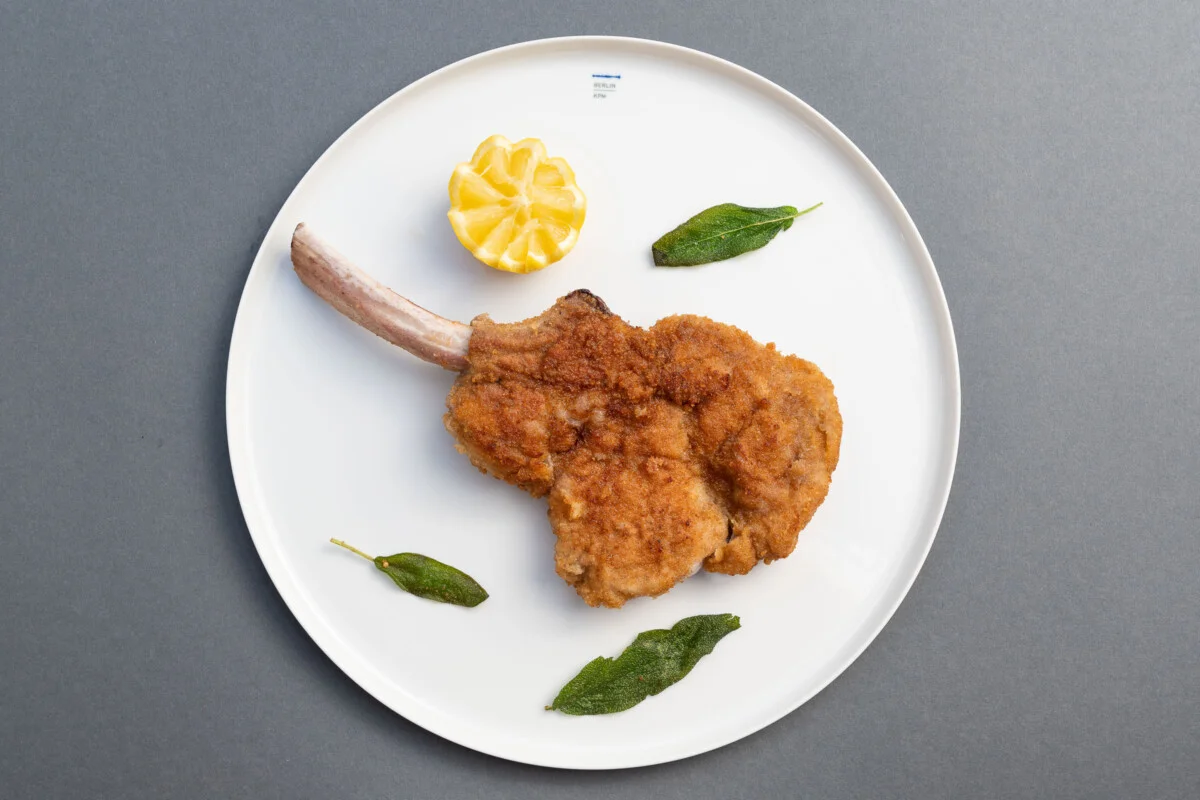
A bone-in veal chop is coated in egg and Parmesan-free breadcrumbs, then fried in clarified butter until crisp and golden. Sage leaves and lemon add a fragrant, bright finish to this generous Milanese-style plate.
Ingredients
- 400 gbone-in veal chop
- 4 pinchesUrsalz
- 4 pinchesblack pepper
- a few sprigssage
- 2eggs
- 100 gbreadcrumbs
- 1organic lemon
- 150 gclarified butter
Instructions
- 1
Prepare the ingredients
Prepare any accompaniments first. Then measure out and set aside the ingredients for the veal.
- 2
Trim the chop
Make small cuts through the sinew along the side of the veal chop so it is less likely to curl as it cooks.
- 3
Season the eggs
Crack the eggs into a deep dish and season them with salt and pepper.
- 4
Beat the eggs
Whisk the eggs vigorously until combined.
- 5
Set out breadcrumbs
Put the breadcrumbs in a separate deep dish. Regular or gluten-free breadcrumbs can be used; finely grated dried, crustless white bread is another option.
- 6
Flatten and season
Flatten the chop gently with the heel of your hand or more firmly with a meat mallet. Season both sides generously with salt and pepper.
- 7
Dip in egg
Place the veal in the beaten egg.
- 8
Coat both sides
Turn the chop in the egg so it is evenly and generously coated on both sides.
- 9
Start the coating
Lay one side of the egg-coated chop in the breadcrumbs.
- 10
Press on crumbs
Turn the chop to coat the other side, pressing the breadcrumbs firmly onto the meat.
- 11
Heat the butter
Heat the clarified butter in a suitably large frying pan over a medium heat; a deep roasting pan can be used instead. Preheat the oven to 150°C fan. Do not use ordinary butter, which can burn during frying.
- 12
Pick the sage
Remove the sage leaves from their stems and set them aside for frying.
- 13
Shake off crumbs
Hold the coated chop by the bone and gently shake off loose breadcrumbs, which can brown too quickly in the pan.
- 14
Fry the first side
Carefully lower the chop into the hot clarified butter, first side down. The meat should be surrounded by the fat rather than frying dry.
- 15
Turn the chop
Keep an eye on the pan temperature, reducing it after adding the chop so the relatively thick meat cooks through over a lower heat. Turn it and brown the second side, keeping the chop surrounded by clarified butter.
- 16
Fry the sage
After turning the chop for the first time, add the sage leaves to the pan and fry them until crisp, about 2–3 minutes.
- 17
Drain the sage
Lift the crisp leaves onto kitchen paper to drain and season them lightly with salt straight away.
- 18
Baste the chop
Continue cooking the chop, spooning hot clarified butter over its upper side.
- 19
Brown evenly
Keep basting the coating so the chop cooks and colours evenly.
- 20
Check the centre
Check the centre with a digital meat thermometer if desired. The recipe gives about 55°C for very pink veal, 58°C for medium and at least 60°C for fully cooked veal; its author cooked the meat above 72°C and advises holding that temperature for at least 10 minutes.
- 21
Rest in the oven
Before serving, put the chop in the preheated oven for about 10 minutes to let the juices settle through the meat.
- 22
Lift from the pan
Transfer the cooked veal chop from the pan to kitchen paper.
- 23
Blot excess fat
Use another piece of kitchen paper to blot the top and absorb excess fat.
- 24
Plate and serve
Arrange the chop on a warmed plate with the sage. Add a lemon garnish and serve with the accompaniments of your choice.
What is Milanese schnitzel?
Milanese-style schnitzel is a breaded cutlet associated with Milan and northern Italian cooking. It is traditionally made with veal, often on the bone, and fried in fat until its coating is crisp.
This version keeps the chop on the bone and serves it with fried sage and lemon. The careful coating and basting help the thick cut brown while it cooks through.
Nutrition and macros by portion
The nutrition label shows one serving as written: 1300 calories, 80g protein, 42g carbs, 80g fat.
| Portion | Adjustment | kcal | Protein | Carbs | Fat |
|---|---|---|---|---|---|
| Lighter | Use less clarified butter | 910 kcal | 56g | 29g | 56g |
| This serving | As written | 1300 kcal | 80g | 42g | 80g |
| Hungry | Add potatoes and vegetables | 1950 kcal | 120g | 63g | 120g |
The veal supplies most of the protein, while the breadcrumbs and egg contribute carbohydrates and some protein. Clarified butter carries much of the fat, so serve the chop with vegetables or a salad and a modest portion of potatoes to round out the plate.
Choosing the coating
Breadcrumbs: Fine crumbs make an even coating that clings to the egg. Shake off any loose excess before frying so it does not burn in the pan.
Egg: Season and whisk the eggs thoroughly, then turn the chop through them to coat both sides evenly before adding the crumbs.
Flatten the veal gently
The recipe offers a gentle option—pressing with the heel of your hand—or a firmer approach with a meat mallet. Either way, take care around the bone and aim for an even thickness so the chop cooks more consistently.
Cutting through the side sinew also helps keep the meat from curling as it fries.
Frying and browning
Clarified butter: Heat it over a medium setting and lower the heat after the chop goes in. The cut is relatively thick, so steady, gentler frying gives it time to cook without over-browning the coating.
Basting: Spoon hot fat over the upper surface as the chop cooks. The recipe also advises keeping the meat surrounded by fat rather than letting it fry dry.
Check doneness
A digital thermometer can help check the centre of the chop. The source gives about 55°C for very pink veal, 58°C for medium and at least 60°C for fully cooked veal; it describes cooking this chop above 72°C and holding it there for at least 10 minutes.
Because a thermometer reading and personal preference matter more than the breading's colour, check the meat itself rather than relying on browning alone.
Sage and lemon to finish
Sage: Add the leaves after the first turn and fry for 2–3 minutes, until crisp. Drain them on kitchen paper and season lightly straight away.
Lemon: A lemon garnish brings a fresh contrast to the crisp, buttery coating. Serve it alongside the chop so each person can add it to taste.
Plan the timing
Prepare any accompaniments before you start frying, as the recipe suggests. Then set out the egg and crumbs so the breaded chop can go straight into the pan.
Allow about 10 minutes in the preheated 150°C fan oven at the end of cooking, followed by a brief blot on kitchen paper before plating.
Recipe notes & tips
- Prepare your chosen accompaniments before breading the veal.
- Cut through the side sinew to help prevent the chop from curling.
- Press the breadcrumbs on firmly, then shake off any loose crumbs.
- Reduce the heat after adding the chop so the thick meat cooks more gently.
- Fry the sage after the chop's first turn and season it as soon as it is drained.
- Use a thermometer to check the centre if you want a precise doneness reading.
Variations
- Fine crumbs: Make your own by finely grating dried, crustless white bread.
- Gluten-free coating: Use gluten-free breadcrumbs in place of regular crumbs.
- Gentle flattening: Use the heel of your hand instead of a meat mallet.
- Crisp sage: Fry the leaves for 2–3 minutes and serve them over the chop.
- Lemon garnish: Cut the lemon into a simple garnish and serve it alongside.
Common mistakes to avoid
- Skipping the sinew cuts: The chop may curl as it fries; snip through the side sinew first.
- Leaving loose crumbs on: They can brown too quickly in the fat; gently shake the chop before frying.
- Using ordinary butter: It can burn during frying; use clarified butter as directed.
- Cooking over high heat throughout: The thick chop may brown too fast; lower the heat after adding it.
- Frying the chop dry: The meat can lose moisture; keep it surrounded by clarified butter as the recipe instructs.
- Salting sage too late: Season the leaves gently as soon as they come out of the pan.
How to store
Refrigerate leftovers in an airtight container and use within 2 days. Reheat in an oven or air fryer until hot; the breadcrumb coating may soften during storage and reheating.
Frequently asked questions
Can I use ordinary breadcrumbs?
Yes. The recipe allows regular breadcrumbs, gluten-free breadcrumbs or finely grated dried, crustless white bread.
Can I flatten the chop without a meat mallet?
Yes. The recipe suggests gently pressing it with the heel of your hand instead.
Why cut the sinew before cooking?
The cuts help stop the chop from curling as it fries.
When should I add the sage?
Add it after the chop's first turn and fry for about 2–3 minutes, until crisp.
How do I check whether the veal is cooked?
Use a digital meat thermometer in the centre. The recipe lists about 55°C for very pink, 58°C for medium and at least 60°C for fully cooked veal, and describes cooking its chop above 72°C for at least 10 minutes.
Can I prepare the accompaniments while the chop fries?
The recipe recommends preparing them before starting the meat, so you can focus on controlling the pan and turning the chop.
Cook it from the original
This recipe comes from thomassixt.de. Their page has the author’s own photos, notes and tips — the best place to cook it from.
Open the recipe on thomassixt.de