
Ukrainian Pickled Tomatoes (Canned)
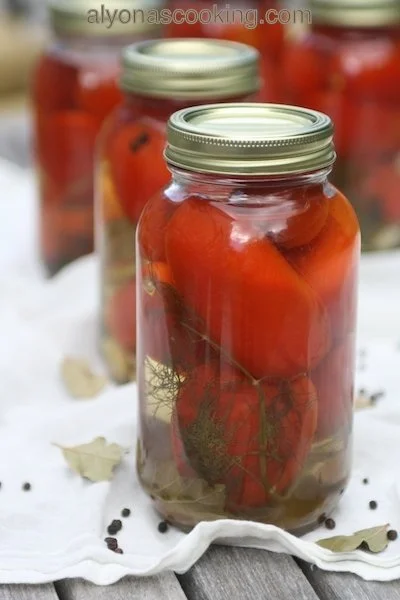
Whole tomatoes are packed with dill, garlic and peppercorns, then preserved in a sweet-sour vinegar brine. Make them as a tangy side to serve with hearty meals, allowing at least 30 days for the flavour to develop.
Ingredients
- 3.63 kg (8 lb)tomatoes
- 7 sprigsfresh dill
- 28peppercorns
- 7 cloves, halvedgarlic
- 7bay leaves
- 7blackcurrant leaves
- 7 jars, 946 ml (1 quart) eachjars
- 3 litreswater
- 473 ml (2 cups)vinegar
- 300 g (1½ cups)sugar
- 9 tablespoonskosher salt
Instructions
- 1
Boil the water
Bring 3 litres of water to the boil in a large pot.
- 2
Fill the jars
Wash the jars with warm water and wipe them clean. Put 1 sprig of dill, 4 peppercorns, 1 halved garlic clove, 1 bay leaf and 1 blackcurrant leaf into each jar, then pack in as many tomatoes as will fit.
- 3
Soak the tomatoes
Pour the boiling water to the top of each filled jar and quickly cover and tighten the lids. Wearing heatproof gloves, turn the jars upside down on a large warm blanket, cover them and leave for 20 minutes.
- 4
Season the brine
After 20 minutes, pour the water from the jars back into the pot. Add 473 ml vinegar, 300 g sugar and 9 tablespoons kosher salt, then bring the liquid to the boil.
- 5
Seal the jars
Pour the seasoned liquid back into the jars and quickly seal them tightly with their lids. Turn them upside down on the blanket again, wrap them and leave overnight.
- 6
Leave to mature
Store the jars upright in a cool place and wait at least 30 days before opening, so the brine can flavour the tomatoes.
What are Ukrainian pickled tomatoes?
These are whole tomatoes preserved in a vinegar brine flavoured with dill, garlic, peppercorns and leaves. Pickled vegetables are familiar in Ukrainian and neighbouring Eastern European food traditions, where they are served alongside substantial meals.
This version balances vinegar's sharpness with sugar and uses whole tomatoes for a juicy, firm bite. The brine is part of the appeal too, though it is salty and should be tasted in moderation.
Nutrition and macros by portion
The nutrition label shows one serving as written: 45 calories, 1g protein, 9g carbs, 0g fat.
| Portion | Adjustment | kcal | Protein | Carbs | Fat |
|---|---|---|---|---|---|
| Lighter | Use less brine | 31 kcal | 1g | 6g | 0g |
| This serving | As written | 45 kcal | 1g | 9g | 0g |
| Hungry | Serve two tomatoes | 68 kcal | 2g | 14g | 0g |
The tomatoes provide most of the carbohydrates, with sugar adding more; they contribute only a modest amount of protein and fat. The salt contributes most of the sodium, and the vinegar brine can add further sodium if consumed. Balance a tomato with a protein-rich main and a plain vegetable or grain, and use the brine sparingly.
The flavouring ingredients
Dill and garlic: One sprig of dill and a halved clove of garlic go into each jar, lending the brine its herbal and savoury character.
Peppercorns and leaves: The peppercorns add gentle spice, while the bay and blackcurrant leaves are included in the method for each jar. Keep the tomatoes whole and fit them snugly without crushing them.
Getting the brine right
Vinegar, sugar and salt: These are added to the water poured back from the jars, then brought to the boil. The recipe specifically calls for kosher salt; salt brands and crystal sizes can differ, so use the stated type and measure carefully.
Jar capacity: The quantities are intended for seven 946 ml jars, but the number of tomatoes that fit can vary with their size. Leave enough room for the liquid to cover them.
The upside-down resting step
Warm jars: The method calls for clean jars, boiling water and a warm blanket. Handle hot jars with heatproof gloves, and set them on a stable surface where they cannot roll or be knocked over.
Overnight rest: The jars are turned upside down again after the seasoned brine is added and left wrapped overnight. This recipe does not give a tested water-bath processing time, so do not treat the blanket rest as a substitute for validated canning instructions.
When the tomatoes are ready
Wait at least 30 days before opening, as the recipe directs, to give the brine time to flavour the tomatoes. The tomatoes should be covered by brine and have a pickled, tangy taste.
For shelf-stable storage, use a tested canning recipe and follow its jar preparation, headspace and processing directions. If following this method without validated processing, refrigerate the jars rather than storing them at room temperature.
How to serve them
Serve a tomato as a sharp, juicy accompaniment to roast or grilled meat, potatoes, or a grain-based meal. A little of the brine can also be spooned over the plate for extra tang.
Because the tomatoes and brine are salty, pair them with relatively simply seasoned foods. Drain the tomatoes before serving if you would prefer less brine on the plate.
Recipe notes & tips
- Choose firm tomatoes that are small enough to fit into the jars without forcing them.
- Divide the dill, peppercorns, garlic and leaves evenly among the seven jars.
- Keep the tomatoes covered by brine when packing the jars.
- Use heatproof gloves when handling the hot jars and liquid.
- Label each jar with the date so you can keep track of the 30-day wait.
- For room-temperature storage, follow a tested canning process rather than relying on the blanket rest.
Variations
- Adjust the sweetness: Use a tested pickling recipe if changing the sugar-to-vinegar balance.
- Add chilli: Include a small chilli in each jar for a hotter pickle, using a tested preserving recipe.
- Use smaller tomatoes: Choose firm cherry or plum tomatoes that fit neatly into the jars.
- Serve chilled: Refrigerate a jar after opening for a cool, crisp accompaniment.
- Add herbs: Try a different herb only when following a tested preserving formula.
Common mistakes to avoid
- Overpacking the jars: Tomatoes can split when forced in; choose smaller fruit or leave some out.
- Uneven seasoning: Divide the listed aromatics evenly so each jar gets a similar flavour.
- Using the wrong salt: The recipe specifies kosher salt; do not casually swap types because salt measures vary.
- Skipping the wait: Open the jars only after at least 30 days, as the recipe recommends.
- Assuming the blanket seals the jars safely: Use a tested canning process for shelf-stable storage.
- Leaving tomatoes above the brine: Pack them so the liquid can cover them.
How to store
The recipe instructs storing sealed jars upright in a cool place and waiting at least 30 days, but it does not provide a validated processing time for safe room-temperature storage. Unless you use a tested canning method, refrigerate the jars and keep them chilled; refrigerate promptly after opening and follow standard food-safety guidance for leftovers.
Frequently asked questions
Can I use a different kind of salt?
The recipe explicitly calls for kosher salt. Different salts have different crystal sizes and weights, so a direct volume swap may change the result; use kosher salt or follow a tested recipe that specifies the alternative.
How long should I wait before opening a jar?
Wait at least 30 days, as directed, so the brine has time to flavour the tomatoes.
Can I store these jars in a cupboard?
The method does not include a tested canning process, so it cannot establish that the jars are safe for room-temperature storage. Use validated canning instructions for shelf storage, or refrigerate the jars.
Why does the method turn the jars upside down?
The recipe calls for turning them over during the resting stages. That step is not a substitute for a tested canning process or proof that a jar is safely sealed.
Can I use larger tomatoes?
Yes, provided they fit into the jars without being crushed and can be covered by brine. If they are too large, use smaller tomatoes instead.
What can I serve with pickled tomatoes?
They work well as a tangy side with potatoes, grains, or a simply seasoned meat or vegetable main. Drain them first if you want less brine on the plate.
Cook it from the original
This recipe comes from alyonascooking.com. Their page has the author’s own photos, notes and tips — the best place to cook it from.
Open the recipe on alyonascooking.com