
Vegan Colombian Sancocho
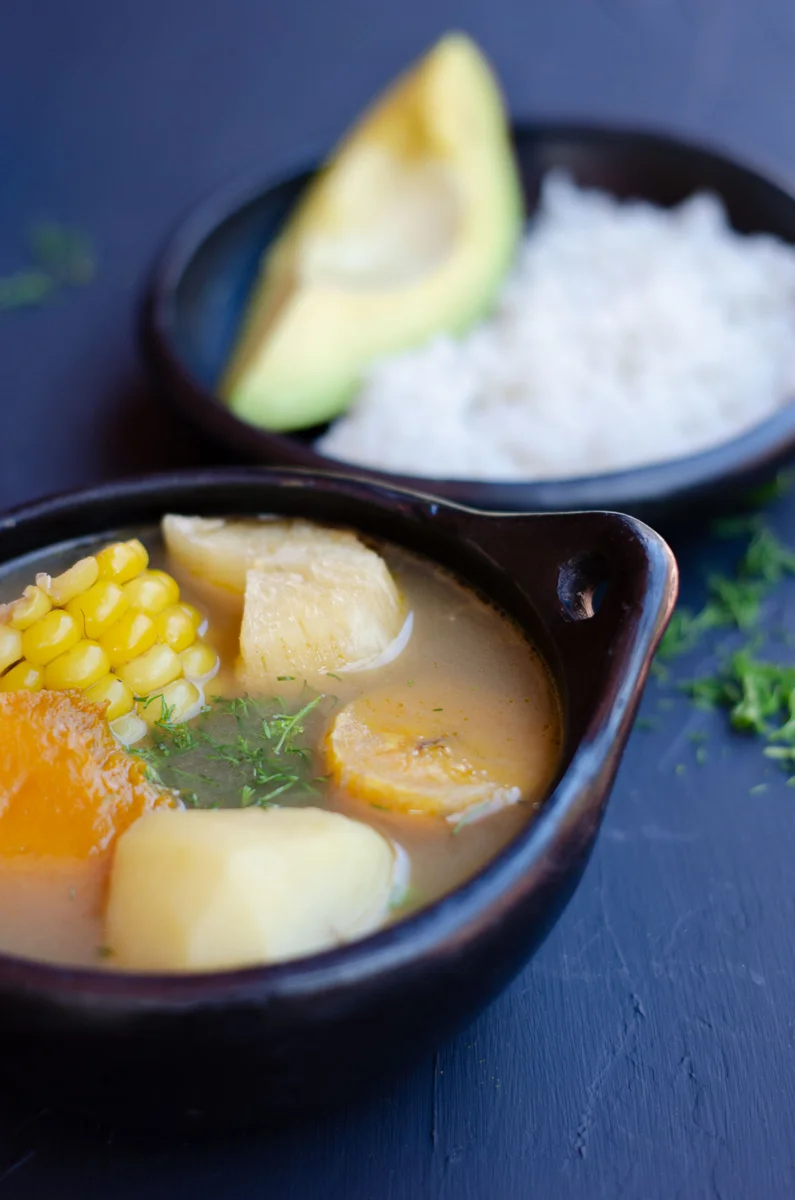
Vegan Colombian sancocho is a hearty soup of cassava, plantain, corn and other vegetables simmered in a deeply flavoured vegetable stock. Serve it with white rice and avocado for a comforting, filling meal.
Ingredients
- 6 tbspolive oil
- 2onions, roughly chopped
- 1 bulbgarlic, chopped
- 1leek, roughly chopped
- 1carrot, chopped
- 1 handfulmushrooms, chopped
- 4bay leaves
- sprigscilantro
- 2 tspsalt
- 1 tbspwhite vinegar
- 2.5 litreswater
- 2 tbspnutritional yeast (optional)
- 1/2white onion
- 2 clovesgarlic
- 1 tspground cumin
- 1/2 tspsmoked paprika
- to tasteolive oil
- 2 litresvegetable stock
- 200–300 gcassava, peeled, cleaned and cut into 8 pieces
- 1green plantain, peeled and cut into 8 pieces
- 1 cobcorn, cleaned and cut into 4 pieces
- to tastesalt and pepper
- 400 gpumpkin, cleaned with the skin on and cut into 8 pieces
- 2 largewhite potatoes, peeled and each cut into 4 pieces
- 2–3 sprigscilantro
- to tastecooked beans or chickpeas (optional)
- to tastecooked white rice
- to tasteavocado, cut into chunks
- 1 handfulcilantro, chopped
Instructions
- 1
Make the stock
Heat 4 tablespoons of the oil in a large soup pot over high heat. Add the 2 roughly chopped onions, bulb of garlic, leek, carrot and mushrooms, and cook for about 15 minutes, until coloured. Add the bay leaves, cilantro sprigs, salt, water, remaining 2 tablespoons of oil, vinegar and nutritional yeast, if using. Stir, bring to the boil, then reduce the heat, cover and simmer for 3 hours, or less if time is short. Strain the stock.
- 2
Blend aromatics
Finely chop or blend the half onion, 2 garlic cloves, cumin and smoked paprika together.
- 3
Cook the onion
Heat olive oil in the soup pot over a medium heat. Add the onion mixture and cook for a couple of minutes, until fragrant.
- 4
Simmer root vegetables
Add the vegetable stock, cassava, plantain, corn, salt and pepper, and cilantro sprigs. Bring to the boil, then reduce the heat, cover and simmer for 35 minutes.
- 5
Add pumpkin
Add the pumpkin and potatoes and cook for a further 25 minutes, or until all the vegetables are tender. Remove the cilantro sprigs.
- 6
Serve the soup
Divide the sancocho between individual soup bowls. If using cooked beans or chickpeas, add them to the bowls. Distribute the cooked vegetables evenly, ladle over the broth and scatter with chopped cilantro. Serve the white rice and avocado chunks on a separate plate.
What is Colombian sancocho?
Sancocho is a traditional Colombian-style soup, often made as a substantial meal with broth, starchy vegetables and accompaniments. Recipes vary by region and household; this version keeps it plant-based and builds its broth from vegetables.
The long-simmered stock gives the soup depth, while cassava, plantain, corn, pumpkin and potatoes make each bowl hearty. Rice and avocado are served alongside rather than stirred into the pot.
Nutrition and macros by portion
The nutrition label shows one serving as written: 650 calories, 11g protein, 108g carbs, 20g fat.
| Portion | Adjustment | kcal | Protein | Carbs | Fat |
|---|---|---|---|---|---|
| Lighter | Less rice, more vegetables | 455 kcal | 8g | 76g | 14g |
| This serving | As written | 650 kcal | 11g | 108g | 20g |
| Hungry | Larger rice portion | 975 kcal | 17g | 162g | 30g |
Cassava, plantain, potatoes, corn and the rice served alongside provide most of the carbohydrates; olive oil and avocado contribute much of the fat. The vegetables and optional beans or chickpeas add some protein, though the total depends on the portions of rice, avocado and legumes. For a balanced plate, serve a moderate portion of rice and include beans or chickpeas if using them.
Building the vegetable stock
Brown the vegetables: the stock starts by cooking onion, garlic, leek, carrot and mushrooms in oil until coloured. Give them room in the pot and stir now and then so they brown rather than catch.
Simmer gently: bay leaves, cilantro, vinegar and optional nutritional yeast go in with the water. A long, covered simmer draws flavour into the liquid; strain before using it in the soup.
The key vegetables
Cassava and plantain: these bring the soup its distinctive starchy, filling character. Cut them into the specified pieces so they cook at a similar pace.
Pumpkin and potatoes: these go in later because they need less time than the first group of vegetables. Keeping the pumpkin skin on also helps the pieces hold their shape as they simmer.
Getting the timing right
First simmer: cassava, plantain and corn cook in the stock for 35 minutes before the next vegetables are added. Keep the pot covered at a gentle simmer rather than letting it boil hard.
Second simmer: allow another 25 minutes after adding the pumpkin and potatoes, checking that the vegetables are tender before serving. The stock can be prepared in advance, which makes the overall cooking time easier to manage.
Texture and flavour cues
Tender pieces: the vegetables should be soft enough to pierce easily but still hold together in the bowl. If they are not ready after the stated cooking time, continue simmering and check again.
Fragrant base: the onion, garlic, cumin and smoked paprika need only a couple of minutes in the pot. Take them off the heat if they begin to brown heavily or stick.
Serving the sancocho
In the bowl: ladle broth over an even share of the cooked vegetables, then finish with chopped cilantro. Optional cooked beans or chickpeas can be added directly to each serving.
On the side: serve cooked white rice and avocado chunks separately, so everyone can add them as they like. The rice makes the meal more substantial, while avocado adds a creamy contrast to the broth.
Recipe notes & tips
- Prepare and strain the vegetable stock ahead of time to shorten the cooking session on the day.
- Cut the cassava, plantain, corn, pumpkin and potatoes into the specified pieces so they cook evenly.
- Keep the stock at a gentle simmer once it comes to the boil.
- Add the pumpkin and potatoes only after the first 35-minute simmer.
- Taste the broth before serving and adjust the salt and pepper to your preference.
- If using beans or chickpeas, put them in the serving bowls as directed rather than relying on them to cook in the soup.
Variations
- Add legumes: serve cooked beans or chickpeas in the bowls for an optional extra.
- Skip the yeast: leave out the nutritional yeast when making the stock.
- Use prepared stock: substitute good-quality premade vegetable stock or bouillon for the homemade stock.
- Adjust the cassava: use an amount within the listed 200–300 g range to suit what you have.
- Serve extra avocado: offer more chunks at the table for a creamier accompaniment.
Common mistakes to avoid
- Rushing the stock vegetables: cook them for about 15 minutes until coloured so the stock has a well-developed base.
- Boiling the soup hard: lower the heat after it comes to the boil and simmer it covered.
- Adding everything at once: wait until after the first 35-minute simmer before adding pumpkin and potatoes.
- Cutting uneven pieces: make the vegetables similar to the specified sizes so they become tender at a more even pace.
- Serving before the vegetables are tender: check with a knife and continue simmering if needed.
How to store
Refrigerate leftover soup in a covered container and use within 3 days. Reheat gently in a saucepan until piping hot, adding a little water or stock if the broth has thickened; store rice and avocado separately where possible.
Frequently asked questions
Can I make the vegetable stock ahead?
Yes. The method allows the stock to be prepared in advance; strain it once simmered and refrigerate it until you are ready to make the sancocho.
How do I know when the vegetables are cooked?
They should be tender when pierced with a knife but still hold together. Continue simmering and check again if they are still firm after the stated cooking time.
Can I use shop-bought vegetable stock?
Yes. The recipe suggests good-quality premade stock or bouillon as an alternative to the homemade stock.
Are beans or chickpeas essential?
No, they are optional. If you use them, add the cooked beans or chickpeas to the individual bowls before ladling in the soup.
Why are the rice and avocado served separately?
The recipe serves them alongside the soup, so they can be added to each portion to taste. Keeping them separate also means leftover soup can be stored without the accompaniments.
Cook it from the original
This recipe comes from vecinavegetariana.com. Their page has the author’s own photos, notes and tips — the best place to cook it from.
Open the recipe on vecinavegetariana.com