
Pasta with tomato and butternut squash sauce
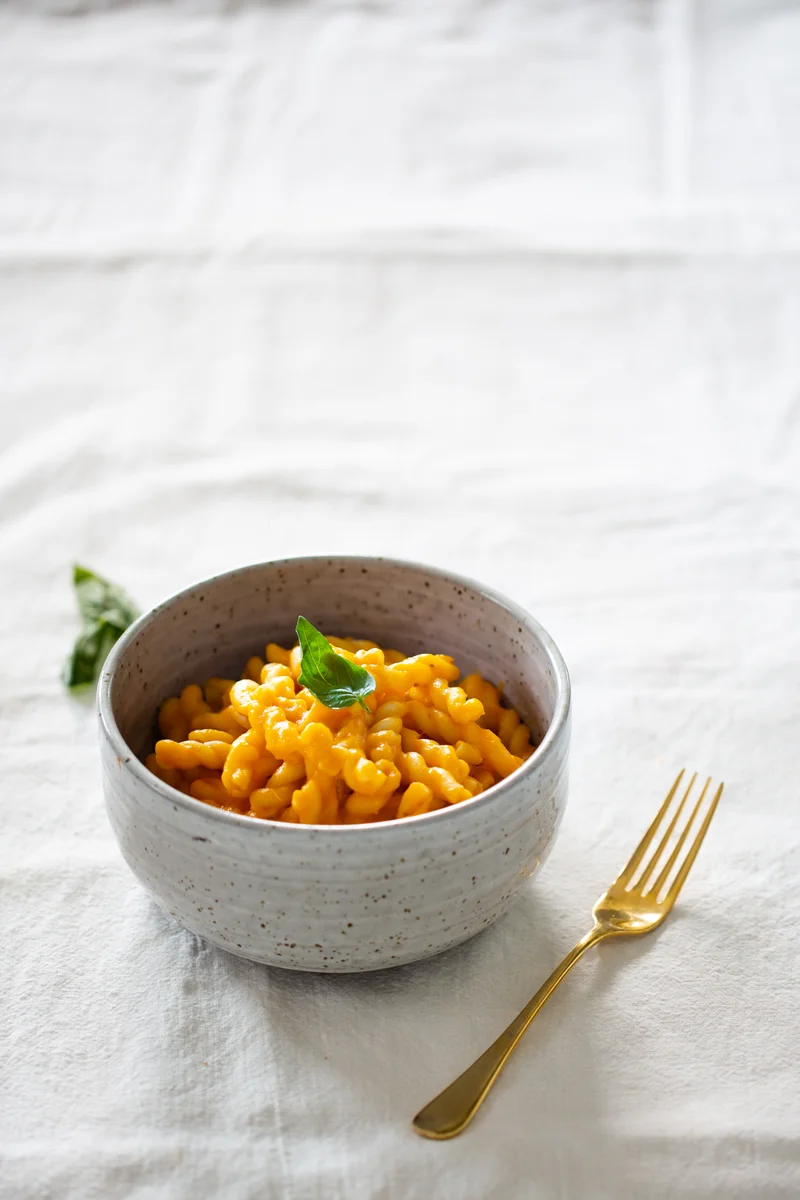
Roasted tomatoes, butternut squash, onion and garlic blend into a smooth, gently sweet sauce for pasta. It is a straightforward way to bring vegetables to the table, and the reserved pasta water helps make the sauce creamy without cream.
Ingredients
- 30 ml (2 tablespoons), dividedolive oil
- 350 g (2½ cups)butternut squash, cubed
- 3–4tomatoes, cut into large pieces
- ½onion, cut into large slices
- 2 clovesgarlic, unpeeled
- 1 pinch, or 1 wholedried árbol chilli
- 1 teaspoondried oregano
- ½ teaspoon, plus more to tastesalt
- to tastefreshly ground black pepper
- 454 g (1 packet)pasta
Instructions
- 1
Roast the vegetables
Heat the oven to 230°C and line a baking tray with a silicone mat or baking paper. Arrange the squash, tomatoes, onion and unpeeled garlic in a single layer, tucking the garlic beneath the tomatoes so it does not burn. Drizzle with 15 ml of the oil and sprinkle with the salt. Roast for 20–25 minutes, until golden with caramelised edges.
- 2
Cook the pasta
While the vegetables roast, cook the pasta according to the packet instructions. Drain it, reserving 240 ml (1 cup) of the cooking water.
- 3
Blend the sauce
Peel the roasted garlic and blend it with all the roasted vegetables and a little pasta water. Start on a low speed and gradually increase it, blending until smooth.
- 4
Season the sauce
In the same pan used for the pasta, heat the remaining 15 ml of oil with the oregano and árbol chilli for 1 minute, until fragrant. Pour in the sauce, stir, then taste and adjust the salt and black pepper.
- 5
Combine and serve
Return the pasta to the pan and toss it with the sauce. If it is too thick, add more reserved pasta water until it reaches your preferred consistency. Serve straight away.
What is pasta with tomato and butternut squash sauce?
This is a vegetable-based pasta sauce made by roasting tomatoes, squash, onion and garlic, then blending them until smooth. The recipe is an American-style take on pasta with a tomato sauce, with butternut squash lending sweetness and body.
Roasting the vegetables together concentrates their flavour and adds caramelised edges. A little pasta water helps the blended sauce cling to the pasta without adding cream.
Nutrition and macros by portion
The nutrition label shows one serving as written: 171 calories, 4g protein, 42g carbs, 1g fat.
| Portion | Adjustment | kcal | Protein | Carbs | Fat |
|---|---|---|---|---|---|
| Lighter | Use less pasta | 120 kcal | 3g | 29g | 1g |
| This serving | As written | 171 kcal | 4g | 42g | 1g |
| Hungry | Add a larger pasta portion | 257 kcal | 6g | 63g | 2g |
Most of the carbohydrates come from the pasta, with the squash and tomatoes contributing some too. The olive oil supplies most of the fat, while the pasta provides some protein; pair a serving with a green salad or vegetables for a more balanced plate.
Choosing the vegetables
Butternut squash: Cut it into similarly sized cubes so the pieces roast evenly. Its natural sweetness balances the tomatoes and gives the sauce a fuller texture.
Tomatoes and onion: Large pieces are easy to arrange on the tray and blend smoothly once roasted. Keep the garlic cloves whole and tucked under the tomatoes, as directed, to help protect them from scorching.
Roasting for flavour
A single layer gives the vegetables room to roast rather than steam. Use a large enough tray, or divide the vegetables between trays if they are crowded.
Look for golden patches and some caramelisation around the edges after 20–25 minutes. The exact timing can vary with the size of the pieces, so check that the squash is tender before blending.
Blending a smooth sauce
Start with only a little pasta water and add more as needed. Beginning on a low blender speed and increasing it gradually helps the vegetables become a smooth purée.
Pasta water contains starch released during cooking, which helps the sauce coat the pasta. Add it gradually at the end too, as a thick sauce is easier to loosen than a watery one is to thicken.
Seasoning with chilli and oregano
Warm the oregano and dried árbol chilli in the second measure of olive oil for 1 minute, just until fragrant. This quick step flavours the oil before the blended vegetables go into the pan.
Árbol chilli can vary in heat, so use a pinch for a gentler result or a whole chilli for more warmth. Taste the sauce after mixing in the vegetables and adjust the salt and pepper.
Timing the pasta and sauce
Start the pasta while the vegetables are roasting, as the method allows both parts to cook at the same time. Reserve the cooking water before draining; it is difficult to recreate its texture once discarded.
Toss the pasta with the sauce just before serving. If the two finish at different times, keep the pasta and sauce separate until you are ready to combine them.
What to serve alongside
Serve the pasta hot, on its own or with a crisp green salad for freshness. Steamed greens or roasted vegetables also make a simple accompaniment.
A modest portion of bread can help make the meal more filling, though it adds more carbohydrate. If you have extra sauce, it can also be thinned with stock and served as a soup base.
Recipe notes & tips
- Cut the squash into even-sized cubes so they roast at a similar rate.
- Keep the garlic beneath the tomatoes to reduce the chance of it burning.
- Reserve the pasta water before draining, and add it to the sauce a little at a time.
- Blend the vegetables starting on a low speed, then increase it gradually.
- Taste the sauce after adding the chilli and adjust the seasoning to suit.
- Toss the pasta with the sauce just before serving for the best coating.
Variations
- More heat: Use a whole árbol chilli instead of a pinch.
- Milder sauce: Leave out the árbol chilli.
- Extra herbs: Add a little more dried oregano to the oil.
- Soup base: Blend in stock to thin the sauce to a soup-like consistency.
- Different pasta: Use another shape and cook it according to its packet instructions.
Common mistakes to avoid
- Crowded tray: The vegetables may steam rather than brown; spread them out or use another tray.
- Burnt garlic: Tuck the unpeeled cloves under the tomatoes as instructed.
- Too much pasta water: The sauce can turn thin; add the reserved water in small amounts.
- Lumpy sauce: Blend the vegetables until smooth, increasing the blender speed gradually.
- Forgotten pasta water: Reserve a cup before draining so you can loosen the sauce later.
- Overcooked pasta: Follow the packet timing and toss it with the sauce just before serving.
How to store
Refrigerate leftover pasta in an airtight container and eat within 3 days. Reheat gently in a pan or microwave, adding a splash of water if the sauce has thickened. Store extra sauce separately, if possible, and use within 3 days.
Frequently asked questions
Can I make the sauce ahead?
Yes. Blend the roasted vegetables and refrigerate the sauce in an airtight container for up to 3 days. Warm it in a pan and loosen it with pasta water or a little water when you cook the pasta.
How do I know when the vegetables are roasted?
They should have golden patches and caramelised edges after 20–25 minutes. The squash should also be tender enough to blend smoothly.
Can I make this without a blender?
A food processor can blend the vegetables instead. For a less smooth sauce, mash them thoroughly with a fork or potato masher, then stir in the pasta water.
How can I adjust the sauce thickness?
Add reserved pasta water a little at a time until the sauce coats the pasta as you like. If you have added too much, let the sauce simmer briefly to reduce.
Can I use a different pasta shape?
Yes. Use your preferred pasta and cook it according to its packet instructions, reserving some cooking water before draining.
Can I use the sauce as soup?
Yes. Add stock to the blended sauce until it reaches a soup-like consistency, then warm it through and adjust the seasoning.
Cook it from the original
This recipe comes from piloncilloyvainilla.com. Their page has the author’s own photos, notes and tips — the best place to cook it from.
Open the recipe on piloncilloyvainilla.com