
Brioche Col Tuppo (Sicilian Brioche)
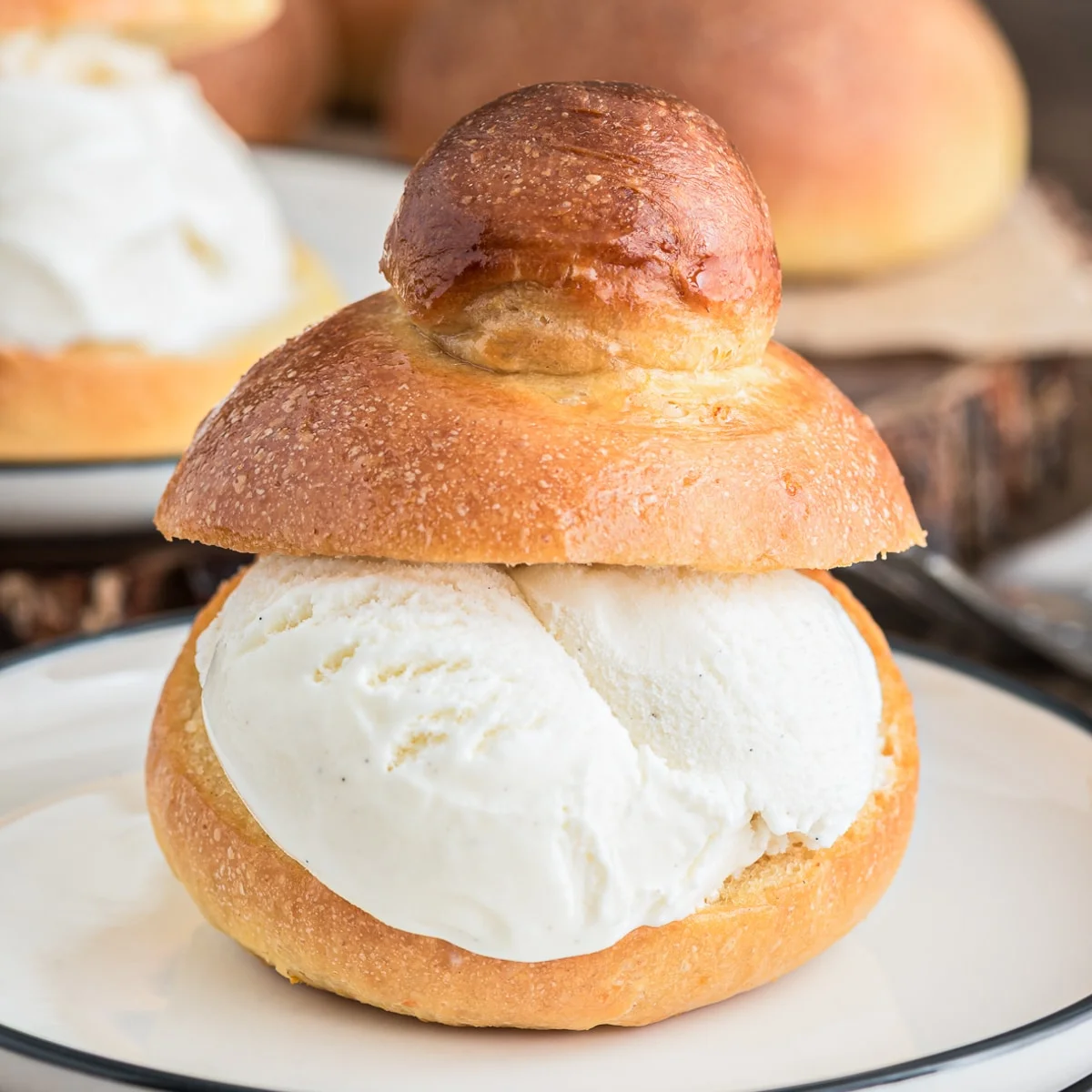
Brioche col tuppo is a soft, lightly sweet Sicilian bun, shaped with a small ball of dough perched on top. Its citrus-scented dough is lovely at breakfast and especially good split open with a scoop of vanilla ice cream.
Ingredients
- 1 tablespoon (15 ml)honey
- 1 teaspoon (5 ml)vanilla extract
- 1 tablespoonlemon zest
- 1 tablespoonorange zest
- 2 teaspoons (about 6 g)active dried yeast
- 1 teaspoon (about 4 g)granulated sugar
- about 200 g00 flour, or a 50:50 mix of pastry flour and plain flour
- 150 g total, lukewarmmilk (whole milk; double this amount if doubling the recipe)
- about 300 gplain flour
- 6⅓ tablespoons (about 79 g)granulated sugar
- 2 large, at room temperatureeggs
- 1 large, at room temperatureegg yolk
- 7¼ tablespoons (about 103 g), softenedbutter
- ½ teaspoon; use ¾ teaspoon if using unsalted buttersalt
- 2 largeeggs
- 2 tablespoons (30 ml)milk or water
- to tasteicing sugar, for dusting
Instructions
- 1
Mix the flavouring
In a small bowl, combine the honey, vanilla extract, lemon zest and orange zest. Cover and leave the mixture to stand.
- 2
Start the dough
Put 1 teaspoon of sugar and the lukewarm milk in the stand mixer bowl. Sprinkle the yeast over the top and leave for 5–10 minutes, then stir to combine. Add the 00 flour and mix to make a fairly firm batter. Cover and leave to rest for 1 hour.
- 3
Knead the dough
Add the plain flour, remaining sugar, eggs and egg yolk to the first dough. Knead for 5 minutes, then add the honey and citrus mixture and knead for about 3–5 minutes, until combined. Add the softened butter a little at a time, letting each addition incorporate before adding more. Add the salt and knead until smooth and elastic, about 12–15 minutes; total kneading time should be about 25–30 minutes. If the dough is too wet, add flour; if it is too dry, add milk.
- 4
Let it rise
Turn the dough onto a lightly floured surface and gently knead it into a ball. Put it in a greased bowl, cover and leave to rise for 2–4 hours, or until doubled in size.
- 5
Shape the buns
Turn the dough onto a lightly floured surface and knead it a few times. Divide it into larger pieces of about 80 g and smaller pieces of about 15 g, then shape each piece into a ball.
- 6
Add the tuppo
Set each larger ball on a baking sheet lined with parchment paper. Make a small hole in the top with your finger or a ½-inch (about 1.3 cm) teaspoon measure. Lightly brush the hole with egg wash, place a smaller ball in the centre, then cover the buns with a clean tea towel. Leave to rise in a warm, draught-free place for about 1–2 hours.
- 7
Heat the oven
Preheat the oven to 180°C.
- 8
Bake and serve
Bake for about 20 minutes. Transfer the buns to a wire rack to cool, then dust with icing sugar before serving. Alternatively, slice a bun in half and add a scoop of vanilla ice cream.
What is brioche col tuppo?
Brioche col tuppo is a Sicilian sweet bread named for its distinctive topknot: a small ball of dough set on a larger bun. It is traditionally enjoyed at breakfast or alongside gelato.
This version builds flavour with honey, vanilla and both lemon and orange zest. A long rise and gradual addition of butter help give the enriched dough its soft, fluffy crumb.
Nutrition and macros by portion
The nutrition label shows one serving as written: 289 calories, 8g protein, 42g carbs, 10g fat.
| Portion | Adjustment | kcal | Protein | Carbs | Fat |
|---|---|---|---|---|---|
| Lighter | Smaller bun portion | 202 kcal | 6g | 29g | 7g |
| This serving | As written | 289 kcal | 8g | 42g | 10g |
| Hungry | Add vanilla ice cream | 434 kcal | 12g | 63g | 15g |
The flour and sugar provide most of the carbohydrates, while butter and egg yolks contribute much of the fat. Eggs, milk and flour all contribute protein. Pair a bun with fruit or yoghurt if you want a more balanced breakfast plate.
Build the first dough
Yeast mixture: Lukewarm milk and a little sugar give the yeast a chance to activate before flour is added. After the yeast has stood for 5–10 minutes, stir it in and mix the 00 flour to a firm batter.
First rest: Cover the mixture for 1 hour before making the main dough. This gives the starter time to develop while keeping the method straightforward.
Add the butter gradually
Enriched dough: Knead the flour, sugar, eggs and yolk into the first dough before adding the citrus mixture. Add softened butter in small portions, allowing each one to absorb before continuing.
Texture check: The finished dough should be smooth and elastic after about 12–15 minutes of kneading at this stage. Use the recipe's small adjustments—more flour if it is too wet, or more milk if too dry—rather than adding a large amount at once.
Shape the topknot
Two sizes: Divide the dough into 80 g and 15 g pieces and roll each into a ball. The smaller ball forms the tuppo on each bun.
Secure the join: Make a small hole in each larger ball and brush it lightly with egg wash before setting the smaller ball in place. This helps the topknot sit in the centre as the shaped buns rise.
Watch the rises
First rise: The bulk rise takes 2–4 hours, or until the dough has doubled. The time varies, so use the dough's increase in size as the cue.
Second rise: Once shaped, the buns need about 1–2 hours in a warm, draught-free place. Keep them covered with a clean tea towel while they rise.
Check the bake
Oven: Bake at 180°C for about 20 minutes. The recipe gives time and temperature rather than a separate colour test, so begin checking as the baking time nears its end.
Cooling: Let the buns cool on a wire rack before dusting with icing sugar. For the Sicilian-style serving suggested here, slice a bun and add vanilla ice cream.
What to serve alongside
Breakfast: Serve the buns plain or with a hot drink for a gently sweet start to the day. Their citrus flavour also pairs well with fresh fruit.
Dessert: Split a bun and fill it with vanilla ice cream for the serving described in the recipe. Add the ice cream just before eating so the bread does not become soggy.
Recipe notes & tips
- Use milk that is lukewarm rather than hot when combining it with the yeast.
- Bring the eggs to room temperature before mixing them into the dough.
- Add the butter in small amounts and let each addition incorporate fully.
- Use the dough's doubled size to judge the first rise rather than relying only on the clock.
- Keep the shaped buns covered and away from draughts during their final rise.
- Let the buns cool on a wire rack before dusting them with icing sugar.
Variations
- More citrus: Increase the lemon or orange zest to suit your taste.
- Pastry flour blend: Use equal parts pastry flour and plain flour in place of the 00 flour.
- Ice-cream filling: Add a scoop of vanilla ice cream between two halves just before serving.
- Simple finish: Serve the cooled buns without icing sugar for a less sweet finish.
- Citrus choice: Use only lemon zest or only orange zest if you prefer one flavour.
Common mistakes to avoid
- Milk too hot: Hot milk can interfere with the yeast; use lukewarm milk.
- Adding butter all at once: The dough may struggle to absorb it; add it gradually and wait between additions.
- Skipping the first rest: The first dough needs its full 1-hour rest before the remaining ingredients are added.
- Guessing the rise: Use the dough's doubled size as the first-rise cue, and allow the shaped buns about 1–2 hours.
- Loose topknot: Make a small hole and brush it with egg wash before setting the smaller ball in place.
- Dusting while hot: Let the buns cool on a rack first so the icing sugar stays on the surface.
How to store
Keep cooled buns in an airtight container at room temperature and eat within 2–3 days. Warm briefly in a low oven or microwave before serving; add ice cream only when ready to eat.
Frequently asked questions
Can I make the dough without a stand mixer?
Yes. Knead by hand, allowing extra time to work the butter into the dough and reach a smooth, elastic texture.
How do I know when the first rise is finished?
The dough should have doubled in size. This may take anywhere from 2–4 hours according to the recipe.
Can I prepare the dough ahead?
The recipe does not specify an overnight rise. For best results, follow its rise times and shape and bake the buns on the day you make the dough.
Can I use water instead of milk for the egg wash?
Yes. The recipe allows either 2 tablespoons of milk or water for the egg wash.
How should I serve brioche col tuppo?
Dust it with icing sugar, or slice it in half and fill it with a scoop of vanilla ice cream.
Cook it from the original
This recipe comes from anitalianinmykitchen.com. Their page has the author’s own photos, notes and tips — the best place to cook it from.
Open the recipe on anitalianinmykitchen.com