
Flavorful and Versatile Vendhaya Dosa (Fenugreek Dosa)
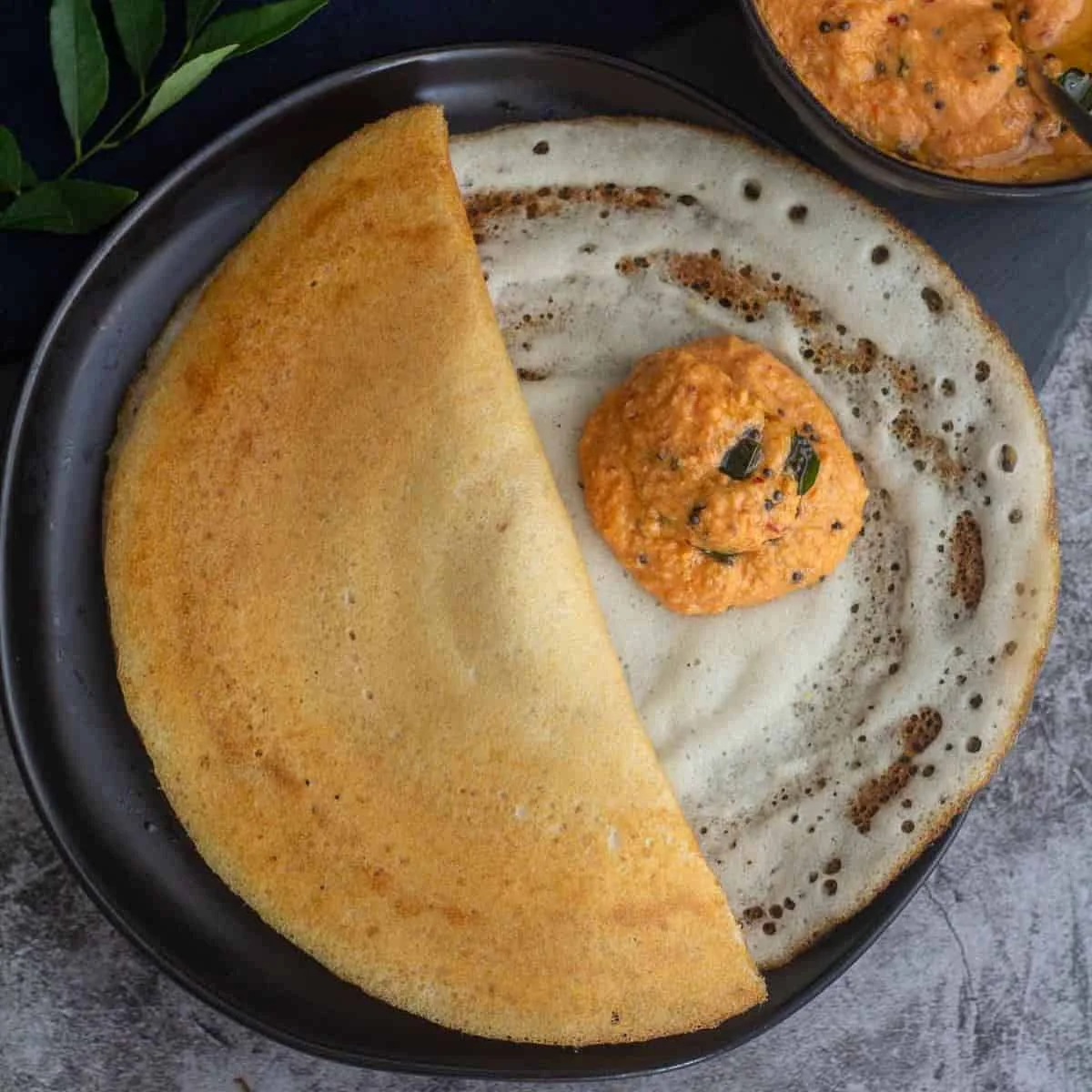
Vendhaya dosa is a South Indian fermented rice-and-lentil dosa scented with fenugreek seeds. Its soft, gently savoury batter makes a versatile dosa to serve with chutney, sambar or vada curry.
Ingredients
- 200 g (1 cup)raw rice
- 200 g (1 cup)idli rice
- 100 g (½ cup)whole urad dal
- 10 g (1 tbsp)fenugreek seeds
- 10 g (2 tsp)salt
- 360–480 ml (1½–2 cups), plus extra for soakingwater
- 60 ml (4 tbsp), about 2.5–5 ml (½–1 tsp) per dosaoil
Instructions
- 1
Rinse and soak
Put the urad dal and fenugreek seeds in one bowl, and the raw rice and idli rice in another. Rinse each mixture thoroughly 4–5 times, until the water runs clear, then cover with enough water and soak for at least 6–8 hours.
- 2
Grind the batter
Drain the urad dal and fenugreek seeds. Add 60 ml (¼ cup) water to a wet grinder, then add the dal mixture and grind to a fine batter, gradually adding 80–120 ml (⅓–½ cup) water as needed; this takes about 15 minutes. Drain the rice and grind it until smooth, adding 120 ml (½ cup) ice-cold water as you grind. Transfer the batter to a large vessel or the inner pot of an Instant Pot, rinse the grinder with 60 ml (¼ cup) water and add that to the batter. Stir in the salt.
- 3
Ferment the batter
For an Instant Pot, cover the pot with a separate lid rather than the Instant Pot lid, then select Yogurt Mode for 10–12 hours. Fermentation can take 8–14 hours depending on the climate. When fermented, stir gently, add 60–120 ml (¼–½ cup) water and mix until pourable.
- 4
Cook the dosa
Heat a well-seasoned cast-iron pan, then lower the heat to medium-low. Pour on a ladleful of batter and spread gently to your preferred thickness. Drizzle about 2.5 ml (½ tsp) oil around the edges, cover and cook in the steam; flipping is not necessary, though you can flip if you wish.
- 5
Serve hot
When the top is fully cooked, loosen the edges and lift the dosa from the pan. Cook the remaining batter in the same way and serve hot with chutney, sambar or vada curry.
What is vendhaya dosa?
Vendhaya dosa, also called fenugreek dosa, is a South Indian dosa made from a fermented batter of rice, urad dal and fenugreek seeds. Dosas are a familiar part of South Indian cooking, and this version gets its name from vendhayam, the Tamil word for fenugreek.
Two kinds of rice give the batter its base, while urad dal and a long fermentation help it cook into a tender dosa. Fenugreek seeds bring a distinct, gently bitter aroma that sets this version apart.
Nutrition and macros by portion
The nutrition label shows one serving as written: 364 calories, 9g protein, 59g carbs, 10g fat.
| Portion | Adjustment | kcal | Protein | Carbs | Fat |
|---|---|---|---|---|---|
| Lighter | Use less oil | 255 kcal | 6g | 41g | 7g |
| This serving | As written | 364 kcal | 9g | 59g | 10g |
| Hungry | Serve with sambar | 546 kcal | 14g | 89g | 15g |
The rice supplies most of the carbohydrates, while urad dal contributes protein and the oil adds much of the fat. For a more balanced plate, serve a dosa with sambar and a vegetable-rich side or chutney.
Why use two kinds of rice?
Raw rice: it forms one part of the batter and helps give the dosa structure.
Idli rice: combined with raw rice, it makes a batter suited to soft, steamed cooking in the covered pan.
Urad dal: grind it finely so it blends evenly with the rice and produces a cohesive batter.
Soaking and grinding
Separate bowls: soak the dal with fenugreek seeds and the two rices separately, as directed. Rinsing each mixture 4–5 times removes cloudy rinse water before soaking.
Grinding order: grind the drained dal and fenugreek first, then grind the rice until smooth. Add the measured water gradually so you can control the texture rather than making the batter too thin.
Fermentation cues
Time: the method gives 10–12 hours on the Instant Pot Yogurt Mode, while the overall fermentation can vary from 8–14 hours with the climate. Use the batter's progress, as well as the clock, to judge it.
After fermenting: stir gently and add the final 60–120 ml (¼–½ cup) water until the batter can be poured and spread. Avoid vigorous mixing, which can knock down the airy texture.
Getting the pan right
Seasoned iron: heat the cast-iron pan first, then reduce the heat to medium-low before adding batter. A very hot pan can set the batter before you have time to spread it.
Covered cooking: spread the batter gently, add oil around the edges and cover the pan. The dosa cooks through in the steam, so turning it is optional rather than essential.
Serving ideas
Chutney: serve alongside a chutney for a bright, savoury contrast to the fenugreek-scented dosa.
Sambar or vada curry: either makes a more substantial accompaniment and can be served alongside the dosa while it is hot.
Recipe notes & tips
- Keep the rice and dal mixtures in separate bowls while soaking.
- Add grinding water gradually to help keep the batter at a manageable consistency.
- Use a separate lid on the Instant Pot during fermentation, as described in the method.
- Stir the fermented batter gently before adjusting it with water.
- Lower the heat after heating the cast-iron pan so the dosa can be spread before it sets.
- Cover the pan to let the dosa cook through in its own steam.
Variations
- Serve with chutney: pair the hot dosa with your preferred chutney.
- Add sambar: serve it alongside for a more substantial meal.
- Try vada curry: use it as the accompaniment suggested in the recipe.
- Adjust the thickness: spread each ladleful more or less thinly to suit your preference.
Common mistakes to avoid
- Rushing the soak: give the rice and dal at least 6–8 hours in water.
- Adding all the grinding water at once: pour it in gradually so the batter does not become too thin.
- Grinding the rice coarsely: continue until it is smooth, as specified in the method.
- Overmixing after fermentation: stir gently before adding water to preserve the batter's airy texture.
- Cooking over high heat: reduce the pan to medium-low before spreading the batter.
- Skipping the lid: cover the pan so steam can cook the top of the dosa.
How to store
Refrigerate leftover batter in a covered container and use it within 2–3 days. Stir gently and adjust with a little water if needed before cooking; cooked dosas are best served hot.
Frequently asked questions
How long should the ingredients soak?
Soak the rice mixture and the dal-fenugreek mixture separately for at least 6–8 hours.
How long does the batter take to ferment?
The method uses 10–12 hours on Instant Pot Yogurt Mode, but fermentation can take 8–14 hours depending on the climate.
Can I make the batter without an Instant Pot?
The recipe specifies an Instant Pot for fermentation. It notes that the time varies with climate but does not give an alternative appliance method.
Does vendhaya dosa need to be flipped?
No. The covered dosa cooks through in its own steam, though the method says you can flip it if you prefer.
How thick should I spread the batter?
Spread it gently to your preferred thickness. The recipe does not specify a single thickness.
What should I serve with vendhaya dosa?
Serve it hot with chutney, sambar or vada curry.
Cook it from the original
This recipe comes from vidhyashomecooking.com. Their page has the author’s own photos, notes and tips — the best place to cook it from.
Open the recipe on vidhyashomecooking.com