
Game-Day Wings
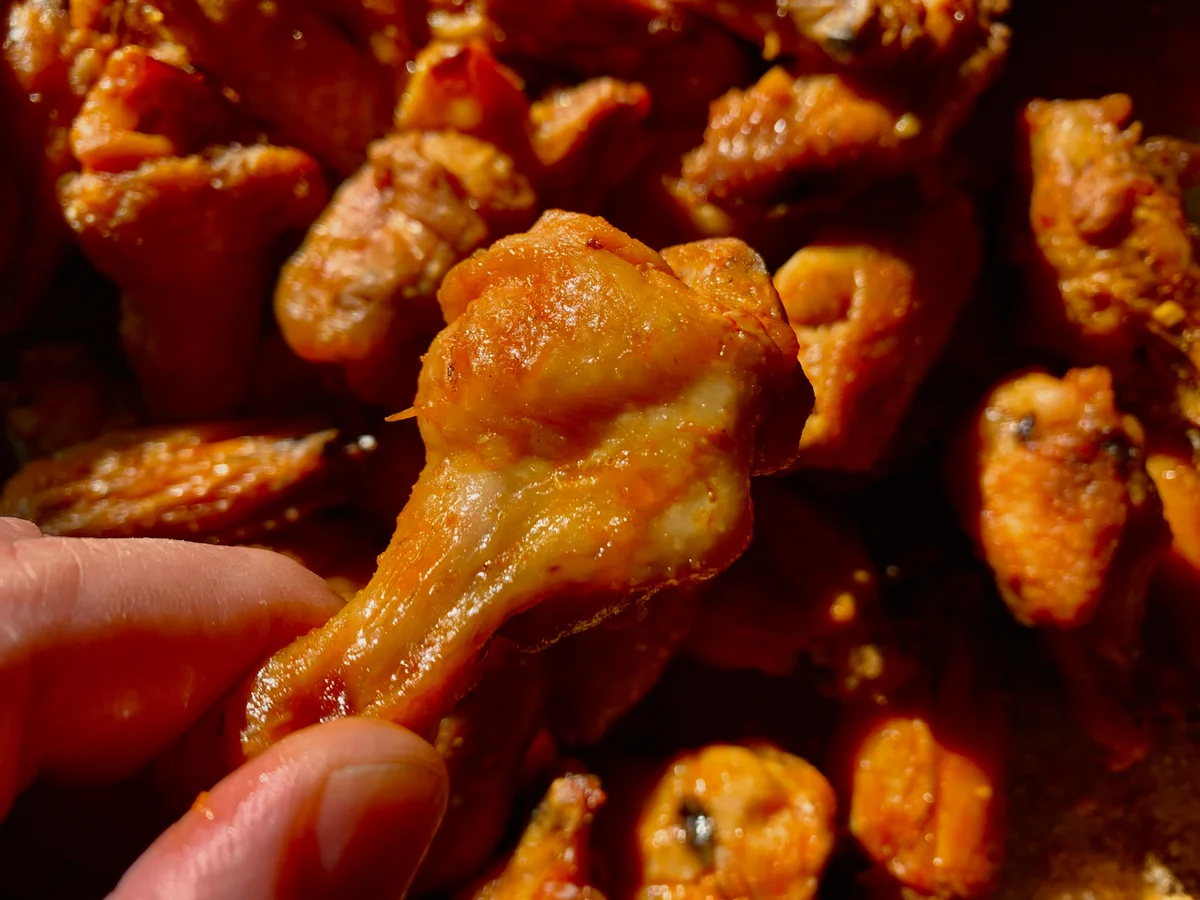
These game-day wings are steamed, chilled and then roasted until the skin is golden before being tossed in a buttery hot-sauce coating. The two-stage cooking gives you crisp-edged wings without deep-frying.
Ingredients
- 12whole chicken wings
- 85 g (6 tablespoons)unsalted butter
- 1clove garlic
- 60 ml (1/4 cup)hot sauce
- 2.5 ml (1/2 teaspoon)kosher salt
Instructions
- 1
Set up the steamer
Put a steamer basket in a 5.7-litre (6-quart) saucepan with 2.5 cm (1 inch) of water in the bottom. Cover, set over high heat and bring the water to a boil.
- 2
Steam and chill
Remove the wing tips, discarding them or saving them for stock, then cut the wings apart at the joints with kitchen shears or a knife. Put the pieces in the steamer basket, cover and steam over medium heat for 10 minutes. Take them out and pat them dry carefully. Arrange the wings on a metal or oven-safe cooling rack set over a half-sheet pan lined with paper towels, then refrigerate for 1 hour.
- 3
Heat the oven
Preheat the oven to 220°C (425°F).
- 4
Roast the wings
Replace the paper towels with parchment paper or foil so chicken juices do not bake onto the pan. Roast the wings on the middle oven rack for 20 minutes, then turn them over and roast for about another 20 minutes, until cooked through and the skin is golden brown.
- 5
Make the sauce
While the wings roast, melt the butter in a large metal mixing bowl or pot over low heat. Add the garlic and cook for 1 minute, whisking occasionally. Add the hot sauce and salt, then whisk to combine. Take the sauce off the heat, add the wings and toss to coat. Serve warm.
What are game-day wings?
Chicken wings are a popular party food in the United States, often served with a spicy sauce. This version uses a straightforward hot-sauce-and-butter coating, with the wings steamed first and roasted rather than fried.
Steaming starts the cooking, while chilling the dried wings gives their surface time to lose moisture before roasting. The result is a simple, hands-off route to browned skin and a glossy coating.
Nutrition and macros by portion
The nutrition label shows one serving as written: 670 calories, 44g protein, 1g carbs, 53g fat.
| Portion | Adjustment | kcal | Protein | Carbs | Fat |
|---|---|---|---|---|---|
| Lighter | Use less butter | 469 kcal | 31g | 1g | 37g |
| This serving | As written | 670 kcal | 44g | 1g | 53g |
| Hungry | Add extra wings | 1005 kcal | 66g | 2g | 80g |
The wings provide most of the protein, while the butter contributes much of the fat and saturated fat. The hot sauce and salt add most of the sodium, and the dish contains very little carbohydrate. Serve with vegetables or salad for a fresher, more balanced plate.
Why steam the wings first?
Gentle steam cooks the wings before they go into the oven, helping the meat cook through as the skin browns. Keep the basket above the water rather than letting the wings sit in it.
Drying matters: pat the wings thoroughly after steaming, then leave them uncovered on the rack in the fridge for the full hour. A dry surface is more likely to brown than a damp one.
Cutting and preparing the wings
Wing tips: remove them before steaming, and save them for stock if you like.
Joints: separate each wing into its sections with a knife or kitchen shears. This makes the pieces easier to arrange in the steamer and to turn during roasting.
How to tell when they are done
Roast the wings for 20 minutes, turn them, and allow about 20 minutes more. Look for golden-brown skin and meat cooked through; the exact time can vary with wing size and oven performance.
Give the pieces room on the rack so hot air can circulate around them. If the tray is crowded, browning may be uneven.
Getting the sauce right
Butter: melt it gently over low heat so it does not brown. Cook the garlic for just 1 minute, whisking now and then, before adding the hot sauce and salt.
Toss the wings in the sauce off the heat, once they are roasted. This coats them evenly while keeping the sauce from cooking down in the pan.
What to serve with the wings
Serve the wings warm, straight after tossing. Crisp vegetable sticks and a cool dip make a fresh contrast to the rich, spicy coating.
For a more substantial spread, pair them with potatoes or a simple salad. Keep napkins nearby: the buttery sauce is best enjoyed hands-on.
Recipe notes & tips
- Use kitchen shears if they make cutting through the wing joints easier.
- Set the rack securely over the pan so the wings can drain and dry evenly.
- Pat the wings thoroughly dry before chilling them.
- Replace the paper towels with parchment or foil before roasting.
- Turn the wings carefully so the skin can brown on both sides.
- Toss the wings in the sauce just before serving.
Variations
- Milder sauce: reduce the hot sauce and use a little more melted butter.
- Extra heat: choose a hotter sauce or add a little more to the butter mixture.
- Garlic-forward: finely grate the clove for a stronger garlic flavour.
- Tangy finish: add a small squeeze of lemon to the sauce before tossing.
- Serve with dip: offer a cool dip on the side to contrast with the spicy coating.
Common mistakes to avoid
- Leaving the wings damp: pat them dry and chill them on the rack so the skin can brown.
- Overfilling the steamer: steam in batches if the pieces cannot sit in a single layer.
- Skipping the turn: turn the wings after 20 minutes for more even browning.
- Baking onto the tray: replace the paper towels with parchment or foil before roasting.
- Cooking the garlic too long: keep the heat low and stop after 1 minute.
- Saucing too early: toss the wings after roasting so the coating stays fresh.
How to store
Refrigerate leftover wings in an airtight container for up to 3 days. Reheat on a tray in a 200°C oven until hot, rather than microwaving, to help the skin regain some crispness.
Frequently asked questions
Can I prepare the wings ahead?
Yes. Steam, dry and chill them on the rack for the specified hour before roasting. For best texture, roast and sauce them shortly before serving.
Can I use frozen wings?
Thaw them completely in the fridge first, then follow the recipe. Pat them especially well after steaming.
Do I need a steamer basket?
The method calls for one so the wings sit above the water. Use a basket that fits securely inside the saucepan.
How can I tell if the wings are cooked through?
The recipe cues are golden-brown skin and meat cooked through after roasting. If you use a food thermometer, check the thickest part without touching bone.
Can I make the wings less spicy?
Use less hot sauce and increase the butter slightly to soften the heat. You can also serve a cool dip alongside.
Why replace the paper towels before roasting?
Paper towels are used under the rack during chilling, but they should not go into the oven. Parchment or foil helps prevent chicken juices from baking onto the pan.
Cook it from the original
This recipe comes from altonbrown.com. Their page has the author’s own photos, notes and tips — the best place to cook it from.
Open the recipe on altonbrown.com