
Chicken Tikka Masala
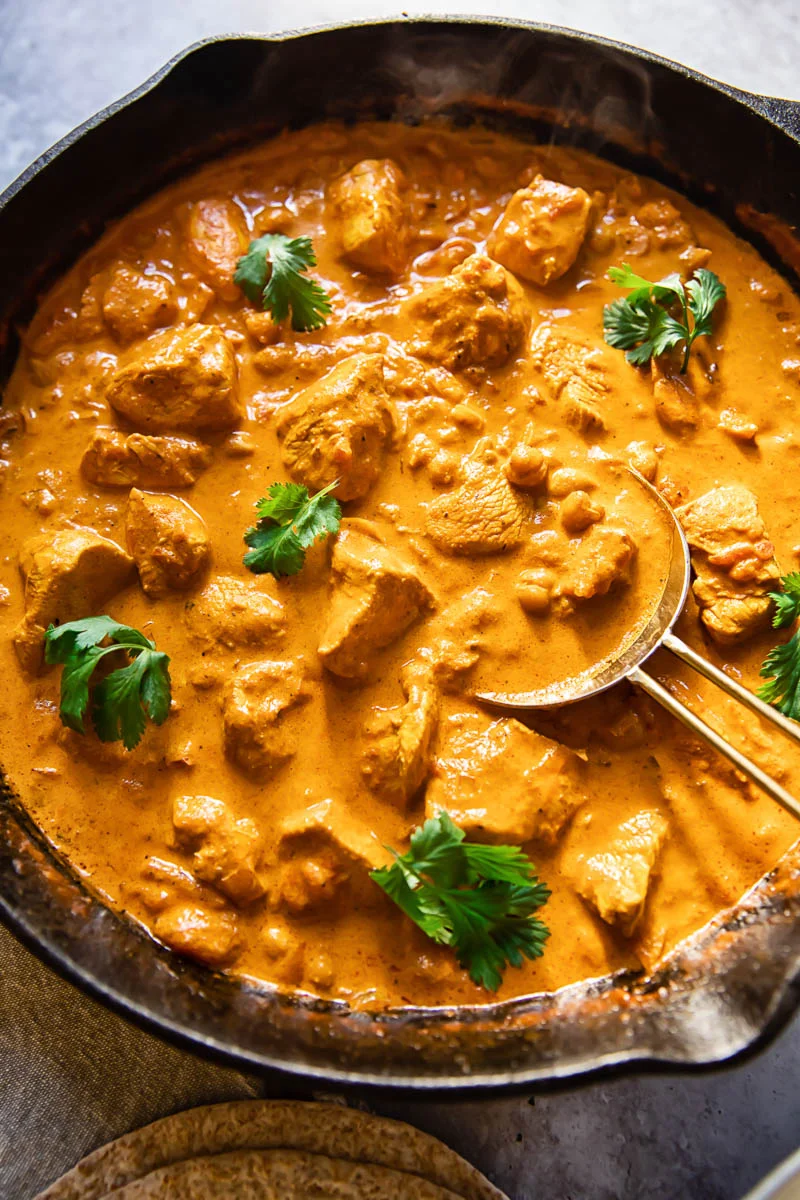
This British Indian-style chicken tikka masala combines marinated chicken, chickpeas and tomatoes in a mild, creamy curry. It is a useful one-pan meal when you want a gently spiced sauce with enough substance to serve with rice or flatbreads.
Ingredients
- 2skinless, boneless chicken breasts, cubed
- 2 tbspplain yoghurt (not Greek yoghurt)
- 1 tsptikka masala curry paste (not jarred sauce)
- 1 tbspghee or vegetable oil
- 1onion, chopped
- 1 tbspfresh ginger, grated
- 2 clovesgarlic, minced
- 125 g (½ cup)tikka masala curry paste
- 400 ml (14 oz)canned chopped tomatoes
- 250 g (1½ cups), drainedcanned chickpeas
- 125 ml (½ cup)double cream
- 1 tbspbrown sugar
Instructions
- 1
Marinate the chicken
In a medium bowl, mix 2 tbsp plain yoghurt with 1 tsp tikka masala paste. Add the cubed chicken and coat it well, then leave to marinate for at least 30 minutes.
- 2
Cook the aromatics
Heat the ghee or oil in a deep pan. Add the chopped onion, garlic and ginger and cook over a low heat for 10 minutes. Stir in the curry paste and cook for 1 minute, or until fragrant.
- 3
Simmer the curry
Add the chicken and its marinade to the pan. Cook until the outside of each piece is sealed but the chicken is not cooked through. Add the chopped tomatoes and drained chickpeas, stir to combine, then cover and simmer over a low heat for 20 minutes.
- 4
Finish the sauce
Stir in the double cream and brown sugar. Cook uncovered for a further 5–7 minutes, until the sauce reaches your preferred thickness. Taste and add salt only if needed, as the curry paste already contains salt.
What is chicken tikka masala?
Chicken tikka masala is a British Indian curry of chicken in a spiced, creamy tomato sauce. Its exact origins are debated, but it is strongly associated with British curry-house cooking.
This version builds flavour from yoghurt-marinated chicken, curry paste, ginger, garlic and onion, then adds chickpeas for extra substance. Cream softens the tomato and spice as the sauce finishes cooking.
Nutrition and macros by portion
The nutrition label shows one serving as written: 225 calories, 12g protein, 15g carbs, 13g fat.
| Portion | Adjustment | kcal | Protein | Carbs | Fat |
|---|---|---|---|---|---|
| Lighter | Less cream, more vegetables | 158 kcal | 8g | 11g | 9g |
| This serving | As written | 225 kcal | 12g | 15g | 13g |
| Hungry | Larger portion with rice | 338 kcal | 18g | 23g | 20g |
The chickpeas, tomatoes and brown sugar contribute most of the carbohydrates, while the ghee or oil and double cream provide much of the fat. Chicken supplies protein, with a smaller contribution from the chickpeas and yoghurt. Serve with a modest portion of rice and add vegetables to round out the plate.
The marinade and curry paste
Yoghurt marinade: plain yoghurt coats the chicken with the small amount of paste used at this stage. Give it at least 30 minutes to marinate; the recipe does not specify a longer maximum.
Main paste: the larger quantity of tikka masala paste is cooked briefly with the aromatics before the tomatoes go in. Use curry paste rather than a jarred curry sauce, as directed.
Cook the aromatics gently
Onion, garlic and ginger: cook them together over a low heat for the full 10 minutes, stirring occasionally so they soften without catching. This gives them time to flavour the ghee or oil.
Bloom the paste: stir it through and cook for 1 minute, stopping when its aroma becomes noticeable. Keep the heat controlled so it does not scorch.
Check the chicken as it cooks
Sealing: the chicken only needs to lose its raw-looking exterior in the pan before the tomatoes and chickpeas are added. It will continue cooking during the covered simmer.
Doneness: make sure the chicken is cooked through before serving. Cut into the largest piece to check that the centre is no longer raw.
Adjust the sauce at the end
Covered simmer: keep the heat low and the lid on for the 20-minute simmer, which lets the chicken and chickpeas cook in the tomato sauce.
Creamy finish: add the cream and sugar only after the simmer, then cook uncovered for 5–7 minutes. The sauce should thicken to a consistency you like; taste before adding any salt.
What to serve with it
Rice: plain basmati rice is a straightforward partner for the creamy sauce. Spoon the curry over it or serve it alongside.
Bread: naan or chapati can be used to scoop up the sauce. A simple salad or cooked green vegetables can add a fresh contrast to the rich curry.
Recipe notes & tips
- Cut the chicken into evenly sized pieces so they cook at a similar rate.
- Drain the chickpeas well before adding them to the pan.
- Keep the onion mixture over a low heat while it cooks for 10 minutes.
- Stir the curry paste for the full minute to release its aroma without letting it catch.
- Taste the sauce before adding salt because the paste is already salty.
- Cook uncovered after adding the cream so you can judge and adjust the sauce thickness.
Variations
- Add spinach: stir in a handful near the end and cook until wilted.
- Use chicken thighs: cut boneless thighs into pieces of a similar size to the chicken breasts.
- Make it hotter: add chilli to the aromatics to bring more heat to the curry.
- Use coconut milk: replace the double cream for a different creamy finish.
- Add extra vegetables: include diced pepper with the onion and cook until softened.
Common mistakes to avoid
- Rushing the marinade: give the chicken at least 30 minutes in the yoghurt and paste mixture.
- Cooking the onion too quickly: keep the heat low for the full 10 minutes so the aromatics do not burn.
- Scorching the curry paste: stir it continuously and cook it for about 1 minute.
- Adding salt too soon: taste the finished sauce first, since the paste contains salt.
- Leaving the sauce too thin: simmer uncovered for the full 5–7 minutes after adding the cream.
- Serving undercooked chicken: check the largest piece is cooked through before serving.
How to store
Cool leftovers promptly and refrigerate them in a covered container for up to 2 days. Reheat thoroughly in a pan over a gentle heat, stirring occasionally; add a splash of water if the sauce has thickened too much.
Frequently asked questions
Can I marinate the chicken for longer than 30 minutes?
The recipe specifies at least 30 minutes but does not set a maximum. Keep the marinating chicken covered in the fridge if preparing it ahead.
Can I use Greek yoghurt?
The recipe calls for plain yoghurt, not Greek yoghurt. Use the specified plain yoghurt for the marinade.
Is curry paste the same as jarred curry sauce?
No. This recipe specifically calls for tikka masala curry paste, both for the marinade and the sauce base.
How can I tell when the sauce is thick enough?
After 5–7 minutes of cooking uncovered, it should have thickened to your preferred consistency. Continue to judge it by appearance as it cooks.
Can I make the curry ahead?
Yes. Refrigerate it in a covered container once cooled, then reheat it thoroughly before serving. Stir as it warms and loosen the sauce with a little water if needed.
Cook it from the original
This recipe comes from vikalinka.com. Their page has the author’s own photos, notes and tips — the best place to cook it from.
Open the recipe on vikalinka.com