
Homemade Almond Flour Recipe
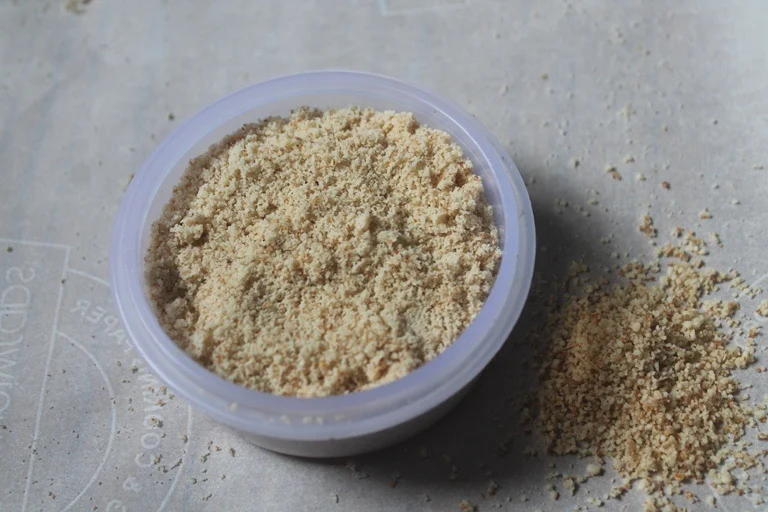
This homemade almond flour is made by finely blending almonds and sieving them for a more even texture. Make a small batch for cakes, other bakes or smoothies, then keep it chilled until needed.
Ingredients
- 140 g (1 cup)almonds
Instructions
- 1
Blend the almonds
Put the almonds in a blender and grind them to a fine powder.
- 2
Sieve the flour
Pass the ground almonds through a sieve.
- 3
Store the flour
Transfer the flour to an airtight container or a resealable freezer bag and store it in the fridge or freezer.
What is almond flour?
Almond flour is finely ground almonds, used in some baking as a gluten-free alternative to wheat flour. This simple Indian home-kitchen version needs just a blender and a sieve.
Sieving separates out larger pieces, giving the flour a more consistent texture for mixing into cakes, baked goods or smoothies.
Nutrition and macros by portion
The nutrition label shows one serving as written: 829 calories, 30g protein, 31g carbs, 72g fat.
| Portion | Adjustment | kcal | Protein | Carbs | Fat |
|---|---|---|---|---|---|
| Lighter | Use a smaller amount | 580 kcal | 21g | 22g | 50g |
| This serving | As written | 829 kcal | 30g | 31g | 72g |
| Hungry | Make a larger batch | 1244 kcal | 45g | 47g | 107g |
The almonds provide nearly all the energy and fat, along with protein, fibre and carbohydrates; there are no other ingredients in this batch. Use the flour in a planned recipe portion and pair the finished bake or smoothie with fruit or yoghurt for a more balanced plate.
Choosing the almonds
Whole almonds: use plain almonds without added salt, sugar or flavourings. Their natural oils give the finished flour its richness.
Getting a fine texture
Blend briefly: grind until the almonds are powdered, then stop. Blending for too long can release their oils and turn the mixture towards almond butter.
Sieve carefully: work the powder through the sieve to catch larger pieces. If needed, the coarse bits can be ground again.
Using it in baking
Recipe fit: almond flour does not behave exactly like wheat flour, so it is usually best to use it in a recipe written for almond flour rather than swapping it one-for-one.
Smoothies: stir or blend in a little for a nutty flavour and thicker texture.
Keeping the batch fresh
Airtight storage: seal the flour well and keep it in the fridge or freezer, as directed in the method. This helps protect the almonds from air and moisture.
Dry handling: use a clean, dry spoon and return the container promptly after measuring.
What to serve it with
For a balanced plate, use almond-flour baking as one part of a snack or meal and serve it alongside fruit or yoghurt. In a smoothie, pair it with fruit and your preferred milk or yoghurt.
Recipe notes & tips
- Start with a dry blender jar to help the almond powder stay loose.
- Blend only until the almonds look finely powdered.
- Pause and check the texture rather than letting the blender run continuously.
- Sieve the flour over a bowl to catch any coarse pieces.
- Label the container with the date before storing it.
Variations
- Keep it plain: use the flour as made for a neutral almond flavour.
- Toast the almonds: cool them completely before blending for a deeper, nuttier taste.
- Use blanched almonds: choose these for a paler flour with less almond skin.
- Make a coarser grind: sieve less thoroughly when a recipe suits a little extra texture.
- Add to smoothies: blend a small amount with the other ingredients for a nutty note.
Common mistakes to avoid
- Over-blending: the almonds can release their oils and clump; stop as soon as they are finely ground.
- Skipping the sieve: larger pieces can make the flour uneven; pass the powder through before storing.
- Using a damp jar: moisture can affect the stored flour; make sure the blender and container are dry.
- Filling the blender too much: the almonds may grind unevenly; work in a smaller quantity if needed.
- Leaving it uncovered: exposure to air can reduce freshness; seal the container or bag tightly.
How to store
Store in an airtight container or resealable freezer bag in the fridge or freezer, as the method specifies. Use a clean, dry utensil each time and check the flour for any change in smell or appearance before using.
Frequently asked questions
Can I use almond flour instead of plain flour?
Not as a direct one-for-one swap in every recipe, because almond flour behaves differently from wheat flour. Use it in a recipe designed for almond flour for the most reliable result.
How do I stop the almonds turning into almond butter?
Blend only until they become a fine powder, checking frequently. Stop as soon as the texture is right.
Why should I sieve the flour?
Sieving catches larger almond pieces and makes the flour more even. Coarse pieces can be ground again if you want a finer result.
Can I use this in smoothies?
Yes. Add some to a smoothie for a nutty flavour and thicker texture.
Should I store it in the fridge or freezer?
The method allows either. Keep it sealed in an airtight container or resealable bag and use a dry utensil when measuring.
Cook it from the original
This recipe comes from yummytummyaarthi.com. Their page has the author’s own photos, notes and tips — the best place to cook it from.
Open the recipe on yummytummyaarthi.com