
Gluten-Free Tabbouleh (vegan)
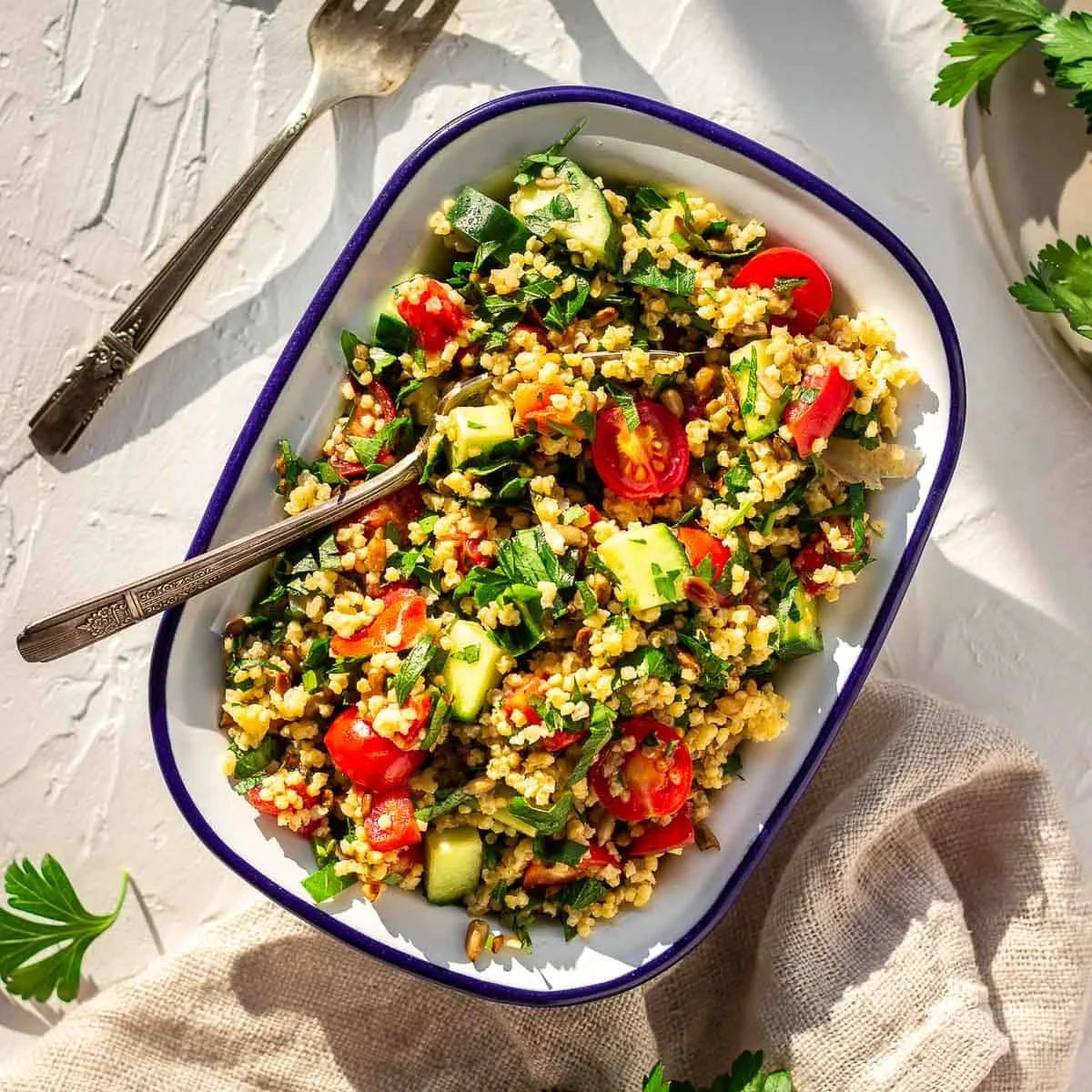
This fresh, herby tabbouleh swaps the traditional bulgur wheat for millet, making it gluten-free while keeping the bright, lemony character of the salad. Serve it as a side or enjoy a bowl on its own.
Ingredients
- 90 g (½ cup)dry millet, cooked according to the packet instructions
- 1 clovegarlic, crushed
- 15 g (¾ cup)parsley, finely chopped
- 180 g (1 cup)tomato, diced
- 50 g (½ cup)cucumber, diced
- 15 ml (1 tbsp)olive oil
- 15 ml (1 tbsp)lemon juice
- 7.5 ml (1½ tsp)apple cider vinegar
- 45 g (⅓ cup)toasted pine nuts, or sunflower seeds if preferred
- To tastesalt and pepper
Instructions
- 1
Mix the salad
In a large bowl, combine the cooked millet with the garlic, parsley, tomato, cucumber, olive oil, lemon juice, vinegar and pine nuts.
- 2
Season and stir
Add salt and pepper to taste, then mix the salad briefly again.
- 3
Serve the tabbouleh
Divide between two bowls and serve as a side dish, or enjoy the whole amount as a meal.
What is tabbouleh?
Tabbouleh is a Levantine salad known for its fresh herbs, tomato and lively lemon dressing. Bulgur wheat is common in the traditional version, while this variation uses millet for a gluten-free take.
Millet gives the salad a tender, lightly grainy base, and parsley, cucumber and tomato keep each mouthful fresh. Toasted pine nuts add a crisp, savoury contrast.
Nutrition and macros by portion
The nutrition label shows one serving as written: 410 calories, 10g protein, 47g carbs, 25g fat.
| Portion | Adjustment | kcal | Protein | Carbs | Fat |
|---|---|---|---|---|---|
| Lighter | Less oil and pine nuts | 287 kcal | 7g | 33g | 18g |
| This serving | As written | 410 kcal | 10g | 47g | 25g |
| Hungry | Larger portion | 615 kcal | 15g | 71g | 38g |
Millet provides most of the carbohydrates, while olive oil and pine nuts contribute much of the fat; millet and pine nuts also supply some protein. Pair a serving with beans or tofu and extra vegetables for a more rounded plate.
Why millet works here
Cooked millet stands in for bulgur without taking over the flavour of the vegetables and herbs. Use millet cooked according to its packet instructions, then let it cool before mixing so it does not wilt the parsley.
Keep the herbs fresh
Parsley: chop it finely so it spreads evenly through the salad, rather than gathering in large leafy clumps.
Garlic: crushed garlic distributes more consistently than larger pieces, giving the dressing a gentle savoury edge.
Balance the dressing
Citrus and vinegar: lemon juice brings brightness, while apple cider vinegar adds a sharper note. Olive oil rounds the flavours out, so mix thoroughly to coat the grains and vegetables.
Seasoning: taste after mixing and adjust the salt and pepper to suit your preference.
Get the texture right
Cool grains: warm millet can soften the herbs and vegetables, so allow it to cool before combining everything. The finished salad should be moist but not pooled with liquid.
Crunch: add the toasted pine nuts when mixing, as in the method, for a crisp contrast to the soft grains and juicy vegetables.
Serve it your way
This salad can be served as a side or eaten as a meal on its own. For a more substantial plate, pair it with a protein-rich dish such as grilled tofu or beans.
Recipe notes & tips
- Cook the millet ahead and cool it before assembling the salad.
- Dice the tomato and cucumber to a similar size for an even mix.
- Chop the parsley finely so it distributes through the grains.
- Taste the salad after mixing before adding more salt or pepper.
- If using sunflower seeds instead of pine nuts, toast them before adding for extra crunch.
Variations
- Use sunflower seeds: swap them for the pine nuts if preferred.
- Add mint: finely chop a little mint to bring another fresh herbal note.
- Make it more lemony: add extra lemon juice a little at a time and taste as you go.
- Add chickpeas: fold in drained chickpeas for a heartier salad.
- Include spring onion: finely slice it for a mild savoury bite.
Common mistakes to avoid
- Mixing in hot millet: it can soften the herbs and vegetables, so cool it first.
- Large parsley pieces: they can overwhelm individual bites; chop the leaves finely.
- Over-seasoning early: taste after combining, then adjust salt and pepper.
- Skipping the final mix: the oil, lemon and vinegar can sit unevenly, so stir until the ingredients are coated.
How to store
Refrigerate leftovers in a covered container and eat within 2 days. Serve chilled or let it stand briefly at room temperature; reheating is not necessary.
Frequently asked questions
Is this tabbouleh gluten-free?
It uses millet instead of bulgur wheat. Check the millet packet if you need to ensure it is suitable for your requirements.
Is this recipe vegan?
Yes. The listed ingredients are plant-based, including the option to use sunflower seeds instead of pine nuts.
Can I cook the millet ahead?
Yes. Cook it according to the packet instructions and cool it before assembling the salad.
Can I use sunflower seeds instead of pine nuts?
Yes, the recipe gives sunflower seeds as an alternative. Toasting them first adds a crisp texture.
Can I serve this as a main meal?
Yes, the recipe can be eaten as a meal on its own. For a more filling plate, serve it with beans or tofu.
Cook it from the original
This recipe comes from vancouverwithlove.com. Their page has the author’s own photos, notes and tips — the best place to cook it from.
Open the recipe on vancouverwithlove.com