
Nasi Kunyit (Turmeric Rice) - 黄姜饭
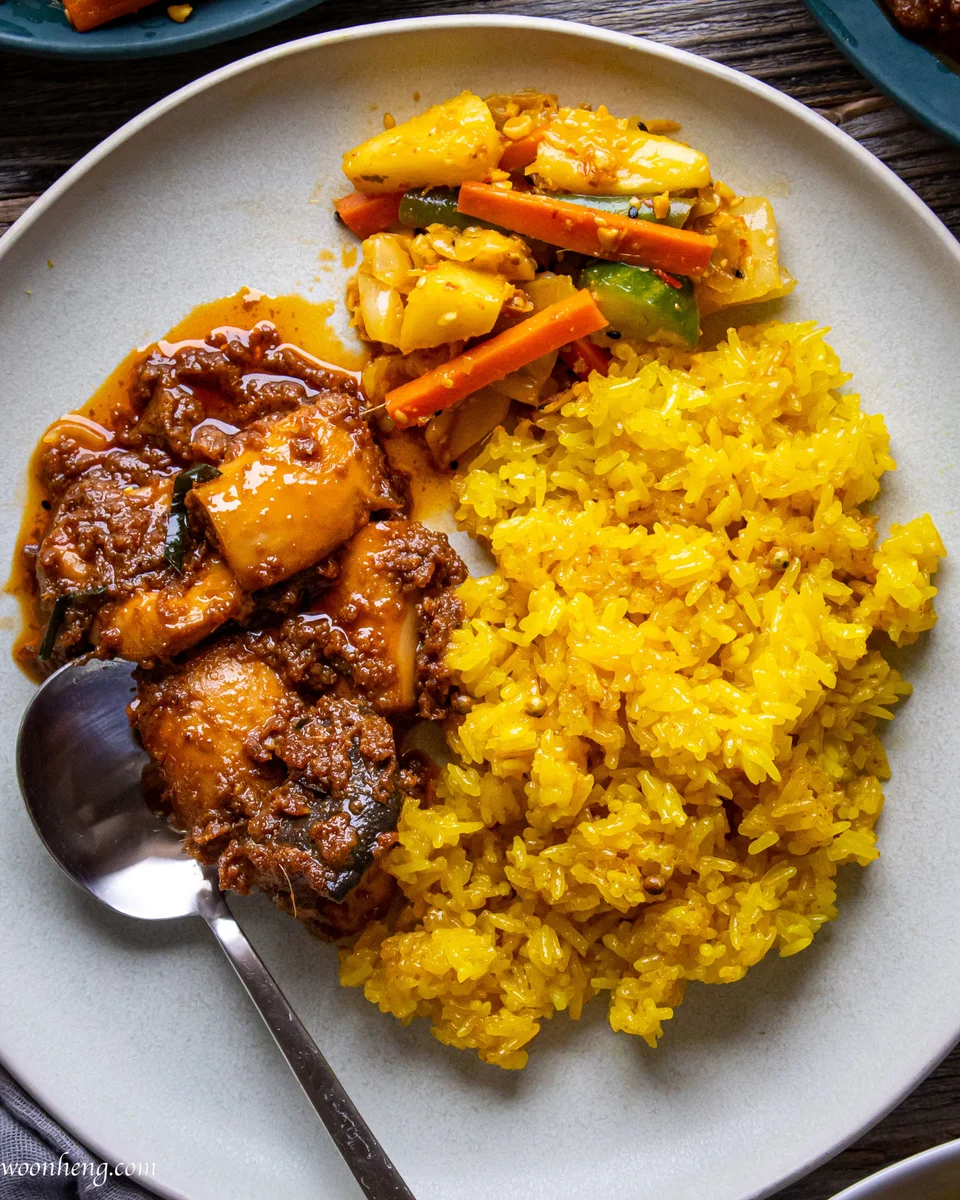
Nasi kunyit is fragrant Malay turmeric rice made with glutinous rice, coconut milk and pandan. Its sunny colour and gently creamy finish make it a flavourful side for dishes such as acar or mushroom rendang.
Ingredients
- 400 g (2 cups)glutinous rice
- 1½ tablespoonsturmeric powder, or freshly grated turmeric
- 1 tablespoonlime juice
- as neededlime slices
- a pinchsalt
- a fewpandan leaves, knotted
- ¼ teaspoonpeppercorns
- about 110 ml (½ cup)canned coconut milk
- enough to cover the ricewater
Instructions
- 1
Rinse the rice
Rinse the glutinous rice under cold water until the water runs clear. Put it in a large bowl and add enough water to cover it.
- 2
Soak with turmeric
Stir in the turmeric powder, lime juice, lime slices and a pinch of salt. Leave the rice to soak for at least 4 hours or overnight.
- 3
Drain the rice
When ready to cook, remove and discard the lime slices, then drain the rice.
- 4
Steam the rice
Transfer the yellow rice to a large, shallow plate or bowl. Add the knotted pandan leaves and peppercorns, then steam for about 25 minutes.
- 5
Add coconut milk
After 25 minutes, drizzle the coconut milk over the rice and steam for a further 5 minutes.
- 6
Serve warm
Remove and discard the pandan leaves before serving the rice warm. It can be served with acar and mushroom rendang.
What is nasi kunyit?
Nasi kunyit, or turmeric rice, is a Malay dish whose name means turmeric rice. Glutinous rice gives it a stickier, more cohesive texture than ordinary steamed rice.
This version gets its vivid colour from turmeric and its richness from coconut milk. Lime adds a bright note, while pandan and peppercorns lend fragrance as the rice steams.
Nutrition and macros by portion
The nutrition label shows one serving as written: 330 calories, 5g protein, 69g carbs, 7g fat.
| Portion | Adjustment | kcal | Protein | Carbs | Fat |
|---|---|---|---|---|---|
| Lighter | Smaller rice portion | 231 kcal | 4g | 48g | 5g |
| This serving | As written | 330 kcal | 5g | 69g | 7g |
| Hungry | Larger rice portion | 495 kcal | 8g | 104g | 11g |
Most of the carbohydrates come from the glutinous rice, while coconut milk supplies most of the fat; the rice contributes a little protein. Serve a moderate portion alongside vegetables and a protein-rich dish to balance the plate.
The rice and its soak
Glutinous rice: rinsing until the water runs clear removes loose surface starch. Soaking for at least 4 hours, or overnight, lets the grains take up the turmeric-seasoned liquid before steaming.
Turmeric: powder is convenient and colours the rice evenly. Freshly grated turmeric is an alternative, as the recipe notes; either way, mix it through the soak so the colour is distributed.
Building the flavour
Lime: juice and slices bring a citrus lift to the turmeric. Remove the slices before steaming so they do not remain in the finished rice.
Pandan and peppercorns: the knotted leaves perfume the rice as it cooks, and the peppercorns add a gentle aromatic note. Take out the leaves before serving.
Steaming in two stages
First steam: spread the drained rice in a large, shallow plate or bowl and steam it with the pandan and peppercorns for about 25 minutes. A shallow vessel helps the rice cook in a fairly even layer.
Coconut milk: drizzle it over the rice after the first 25 minutes, then steam for another 5 minutes. Adding it at this stage gives the rice a creamy finish without putting it into the long soak.
Texture and doneness
The grains should be tender and stick together, as glutinous rice naturally does. If the centre still feels firm after the stated steaming time, continue steaming until the rice is tender.
Keep the rice spread in a shallow layer rather than heaping it into a deep mound. This makes it easier for the steam to reach the grains evenly.
Serving ideas
Serve nasi kunyit warm alongside acar for a tangy, crisp contrast. Mushroom rendang is another suggested accompaniment, bringing a savoury partner to the fragrant rice.
Because the rice is rich and filling, pair it with a portion of vegetables and a protein-rich main to make a more balanced plate.
Recipe notes & tips
- Rinse the rice until the water is clear before soaking.
- Soak for at least 4 hours, or leave the rice overnight.
- Drain the rice well after removing the lime slices.
- Use a large, shallow plate or bowl so the rice sits in a relatively even layer.
- Add the coconut milk after the first 25 minutes of steaming.
- Remove the pandan leaves before serving.
Variations
- Fresh turmeric: Use freshly grated turmeric instead of the powder, as suggested in the recipe.
- Coconut richness: Stir the canned coconut milk before measuring so its thicker and thinner parts are combined.
- Pandan aroma: Keep the pandan leaves knotted so they are easy to lift out after steaming.
- Citrus note: Use the listed lime juice and slices during the soak, then discard the slices before steaming.
- Side dishes: Serve with acar and mushroom rendang, the accompaniments suggested with the recipe.
Common mistakes to avoid
- Rushing the soak: The rice needs at least 4 hours or an overnight soak before steaming.
- Skipping the rinse: Rinse until the water runs clear to remove loose surface starch.
- Leaving in the lime slices: Remove and discard them when draining the rice.
- Adding coconut milk too early: Drizzle it over the rice after the first 25 minutes of steaming.
- Forgetting the pandan: Add the knotted leaves for steaming, then remove them before serving.
How to store
Refrigerate leftovers in a covered container and use within 3 days. Reheat until hot throughout, adding a small splash of water if the rice has become dry.
Frequently asked questions
Can I soak the rice overnight?
Yes. The recipe allows an overnight soak; cover the rice with the turmeric mixture and refrigerate it while soaking.
Can I use fresh turmeric?
Yes, freshly grated turmeric is offered as an alternative to turmeric powder. Mix it into the soaking liquid so it colours the rice.
Why is glutinous rice used?
It gives nasi kunyit its characteristic cohesive, sticky texture. Ordinary rice will have a looser result.
When does the coconut milk go in?
Drizzle it over the rice after the first 25 minutes of steaming, then steam for 5 minutes more.
How can I tell when the rice is done?
The grains should be tender when tasted and should cling together. If they are still firm, continue steaming until tender.
What should I serve with nasi kunyit?
The recipe suggests acar and mushroom rendang. A vegetable side and a protein-rich main also make suitable companions.
Cook it from the original
This recipe comes from woonheng.com. Their page has the author’s own photos, notes and tips — the best place to cook it from.
Open the recipe on woonheng.com