
Vegan Pineapple Tart - 凤梨酥
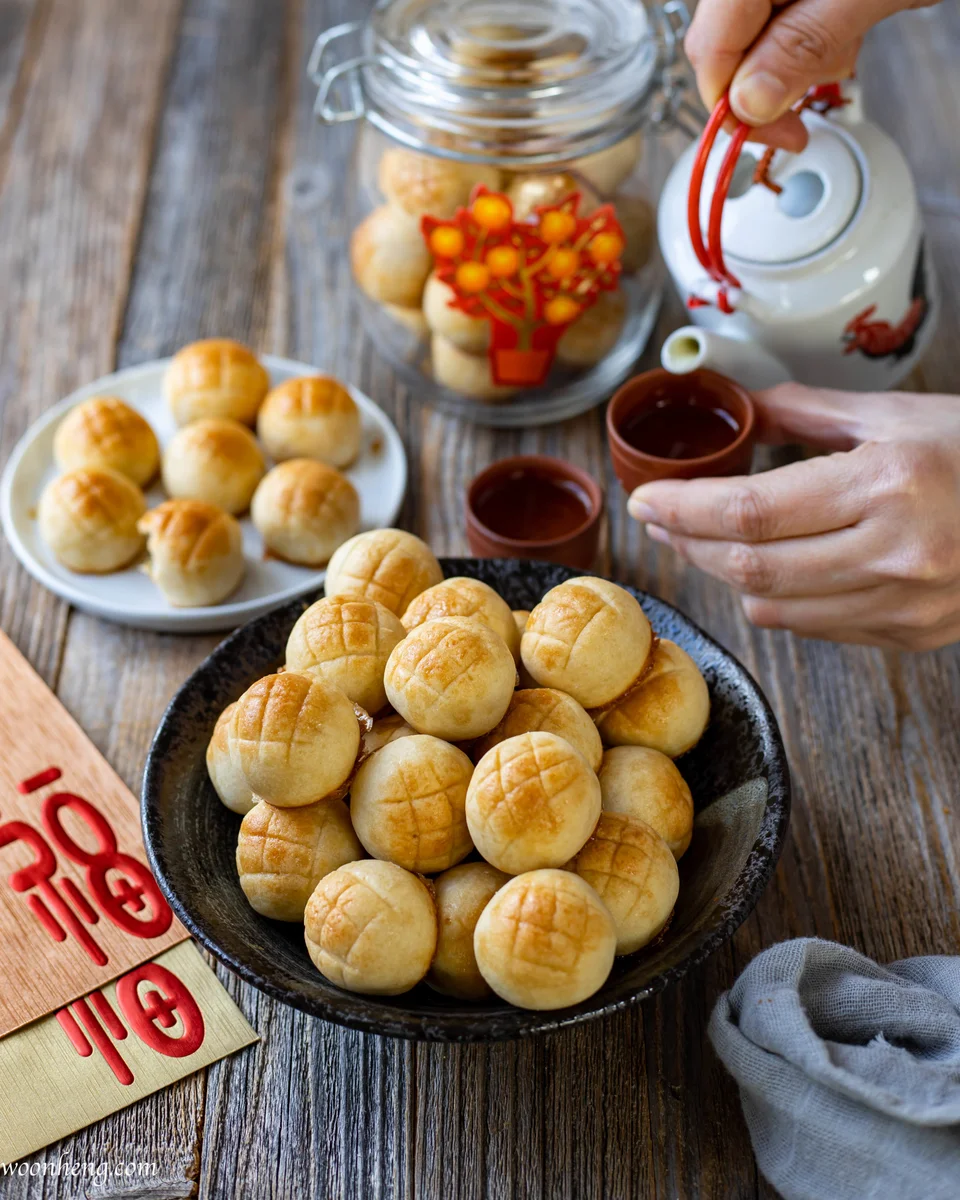
These vegan pineapple tarts pair a tender, buttery-style pastry with a sweet-tart filling made from fresh pineapple cooked down into a paste. They take time to prepare, but their small size and decorative finish make them lovely to share or give as homemade gifts.
Ingredients
- 2 fresh ripe pineapples (about 2 kg after peeling)fresh ripe pineapples
- ½ cup (about 100 g), or more if neededsugar of choice
- 225 g, at room temperaturevegan butter
- 1–2 tablespoons, optionalplant milk
- 40 g, siftedicing sugar
- 350 g, siftedplain flour
- To tastemaple syrup
Instructions
- 1
Peel the pineapple
Remove the leafy crowns and peel the pineapples with a knife. Use a paring knife to cut out the eyes, then chop the fruit into large chunks; the cores can be kept.
- 2
Blend the fruit
Blend all the pineapple chunks in a high-speed blender until smooth.
- 3
Drain the pineapple
Pour the blended fruit into a fine-mesh sieve and drain it. Keep the juice for smoothies, then transfer the pineapple pulp to a large non-stick pan.
- 4
Cook the paste
Cook the pineapple over medium heat, stirring continuously, for about 30–45 minutes, until it thickens into a paste. Add the sugar and keep cooking until the paste is a deeper yellow and no longer too wet.
- 5
Shape the filling
Leave the paste to cool, then divide it into balls weighing 8–9 g each.
- 6
Cream butter and sugar
Fit a mixer with a paddle attachment. Beat the vegan butter and icing sugar until pale yellow.
- 7
Make the dough
Gradually add the flour and mix into a soft dough, stopping when the bowl is clean and the dough is no longer sticky. The amount of flour needed can vary with the butter; add the plant milk if needed.
- 8
Portion the dough
Transfer the dough to a clean surface and divide it into balls weighing 10–11 g each.
- 9
Wrap the filling
Flatten a dough ball with your palm, then use your fingers to widen it into a circle about 2.5–3 inches (6–8 cm) across. Put a filling ball in the middle, bring the edges together to seal, and roll it into a ball.
- 10
Mark the tarts
Use a pastry cutter to make a few crossed marks on each ball to suggest a pineapple pattern. Place the tarts slightly apart on a lined baking tray and repeat with the remaining dough and filling.
- 11
Heat the oven
Preheat the oven to 175°C (350°F).
- 12
Brush with syrup
Brush each tart with a thin layer of maple syrup.
- 13
Bake the tarts
Bake for 30–35 minutes, keeping an eye on them as oven temperatures vary. The filling is already cooked, so this bake is to cook the pastry through.
- 14
Cool completely
Let the tarts cool completely before storing.
What are pineapple tarts?
Pineapple tarts, or feng li su, are a popular East and Southeast Asian pastry, especially associated with festive gifting. They bring together a crumbly pastry shell and a concentrated pineapple filling.
This version uses fresh fruit cooked down at home, so the filling starts with a bright, tangy flavour. Small portions of dough and filling help create neat, bite-sized tarts.
Nutrition and macros by portion
The nutrition label shows one serving as written: 745 calories, 7g protein, 120g carbs, 27g fat.
| Portion | Adjustment | kcal | Protein | Carbs | Fat |
|---|---|---|---|---|---|
| Lighter | Smaller tarts | 522 kcal | 5g | 84g | 19g |
| This serving | As written | 745 kcal | 7g | 120g | 27g |
| Hungry | Larger portion | 1118 kcal | 11g | 180g | 41g |
The pastry's flour provides most of the carbohydrates, while vegan butter contributes much of the fat. Pineapple and added sugar also contribute carbohydrates, and the recipe contains relatively little protein. Pair a tart with fresh fruit and an unsweetened drink, or include a protein-rich food elsewhere in the meal.
Making the pineapple paste
Drain well: Removing excess juice before cooking helps the pineapple thicken without an unnecessarily long time on the hob. Save the drained juice for another use.
Stir patiently: Keep the mixture moving over medium heat, particularly as it thickens, to prevent it catching on the pan. It is ready when darker yellow and no longer very wet.
Getting a tender pastry
Room-temperature butter: Softened vegan butter creams more evenly with the icing sugar. Beat until pale, then add the flour gradually.
Watch the dough: Different vegan butters can affect how much flour the mixture takes. Stop when the dough is soft and no longer sticky; use the optional plant milk if the mixture needs help coming together.
Wrapping and shaping
Thin, even rounds: Flatten each dough ball and widen it gently so there is enough pastry to enclose the filling. Keep the dough from tearing as you bring the edges together.
Seal the join: Pinch the edges closed before rolling the tart into a smooth ball. Light crossed marks from a pastry cutter give the tops their pineapple-like pattern.
Knowing when they are baked
The filling is cooked before the tarts go into the oven, so baking is mainly about setting and cooking the pastry. Bake at 175°C (350°F) for 30–35 minutes, watching closely because ovens vary.
Cool the tarts completely before moving them into storage. The pastry is delicate while warm and firms as it cools.
Serving and sharing
Serve the tarts once cooled, with tea or coffee as a small sweet bite. Their individual size also makes them easy to arrange in a gift box.
For a more balanced snack, enjoy one or two alongside fresh fruit or an unsweetened drink rather than adding another sweet.
Recipe notes & tips
- Use a large non-stick pan and keep stirring as the pineapple reduces.
- Cool the pineapple paste before portioning it so the filling is easier to handle.
- Weigh the filling and dough balls for more even tarts.
- If the dough feels sticky, add flour gradually rather than all at once.
- Leave a little space between tarts on the lined baking tray.
- Watch the final bake closely, as ovens can brown pastry at different rates.
Variations
- Citrus note: Add a little finely grated lime zest to the pineapple paste for a brighter finish.
- Spiced filling: Stir a pinch of cinnamon into the paste as it cooks.
- Less sweet: Start with less sugar and add more only if the pineapple needs it.
- Different plant milk: Use your preferred unsweetened plant milk if the dough needs a little moisture.
- Decorative tops: Make additional shallow crossed lines for a more pronounced pineapple pattern.
Common mistakes to avoid
- Wet filling: Keep cooking and stirring until the pineapple paste is darker and no longer too wet.
- Sticking paste: Stir continuously over medium heat, especially as the mixture thickens.
- Cracked pastry: Make sure the dough is soft and widen each round gently before wrapping.
- Open seams: Pinch the dough firmly around the filling before rolling it smooth.
- Crowded tray: Arrange the tarts slightly apart so they have room as they bake.
- Moving them warm: Let the tarts cool completely before handling for storage.
How to store
Once completely cool, store the tarts in an airtight container at room temperature for up to 3 days. Reheat briefly in a low oven if you would like to refresh the pastry, then cool before serving.
Frequently asked questions
Can I make the pineapple filling ahead?
Yes. Cook the paste, let it cool, and keep it covered in the fridge until you are ready to shape the tarts.
Why is my pineapple paste still wet?
It needs more time to reduce. Keep stirring over medium heat until it has thickened and is no longer very wet.
Can I use tinned pineapple?
The recipe specifies fresh ripe pineapple. Tinned fruit may have a different moisture level, so the cooking time and amount of added sugar could vary.
Do I need to add plant milk?
It is optional. Add a little only if the dough needs help coming together; the recipe notes that flour absorption can vary with the vegan butter.
How can I tell when the tarts are done?
Bake for 30–35 minutes at 175°C (350°F), keeping an eye on them because oven temperatures vary. The pastry should be cooked through; the filling is already cooked.
Can I freeze the tarts?
The recipe does not specify freezing. For best results, store the cooled tarts in an airtight container and use them within 3 days.
Cook it from the original
This recipe comes from woonheng.com. Their page has the author’s own photos, notes and tips — the best place to cook it from.
Open the recipe on woonheng.com