
4 Ingredient Flatbread
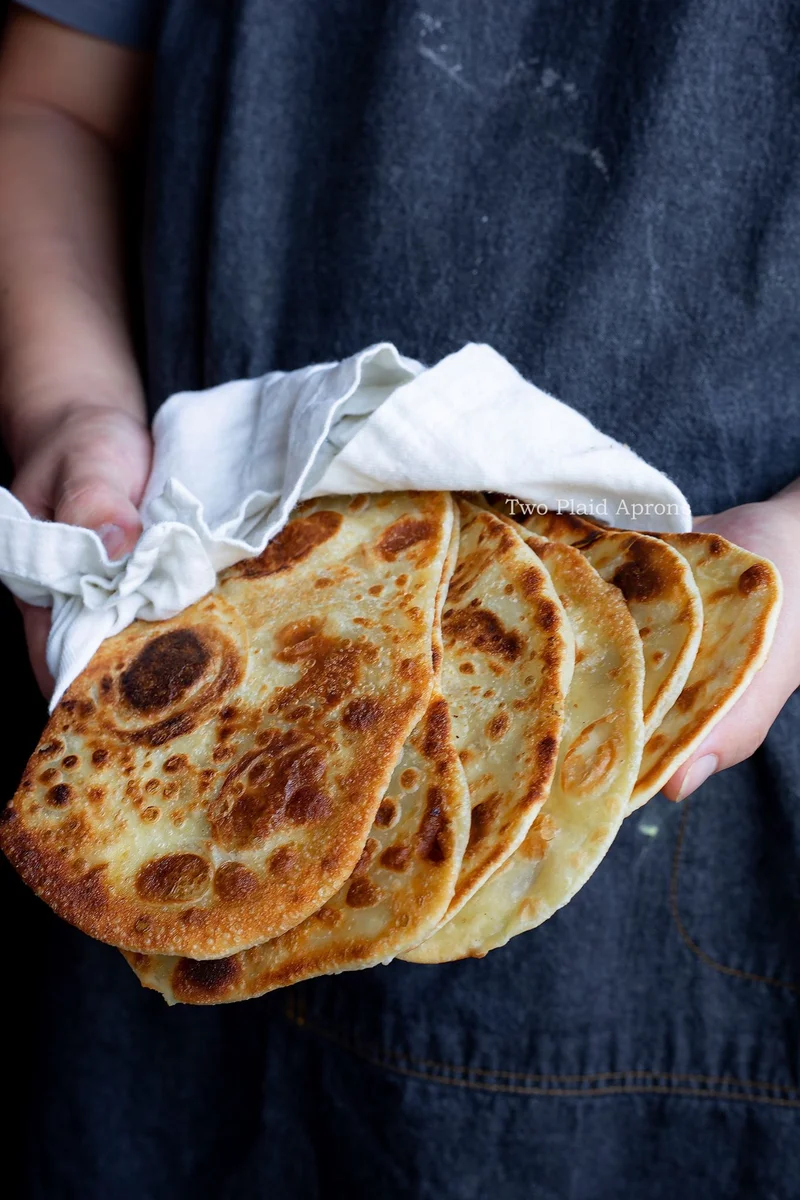
These quick, yeast-free flatbreads come together with four basic ingredients and need no time to rise. Cook them soft and chewy or leave them in the pan a little longer for a crispier finish.
Ingredients
- 240 g (2 cups)plain flour (spooned and levelled)
- 180 ml (¾ cup)milk or water
- 30 ml (2 tablespoons), plus extra for cookingolive oil
- 2.5 ml (½ teaspoon)kosher salt
Instructions
- 1
Mix and knead
Combine the flour, milk or water, olive oil and salt in a mixing bowl, stirring until the dough looks shaggy and starts to come together. Turn it onto a clean work surface and knead for 3–5 minutes, until smooth and supple. Alternatively, mix in a stand mixer on low until combined and shaggy, then knead at medium-high or high speed until smooth and supple.
- 2
Heat the pan
Heat a pan with olive oil over medium heat for softer flatbreads or medium-high heat for crispier ones. A well-seasoned cast-iron pan, griddle or non-stick pan works well.
- 3
Shape the dough
While the pan heats, divide the dough into 6 equal pieces. Roll them out one at a time into thin, even sheets about 1–2 mm thick, in any shape you like.
- 4
Cook the flatbreads
Place a rolled piece of dough in the hot pan and brush the uncooked top with olive oil. Cook until the underside is golden brown, then flip and cook the other side for about 1–2 minutes. Repeat with the remaining dough.
- 5
Serve warm
Enjoy the flatbreads while warm, with hummus or other spreads, or use them as bases for flatbread pizzas.
What is flatbread?
Flatbread is a broad family of thin breads found in food traditions around the world, including across Europe. This version is an easy, yeast-free dough that is rolled thin and cooked in a pan rather than baked after rising.
The four ingredients keep the method simple, while the pan gives the bread its browned spots and lets you choose between a softer or crisper result.
Nutrition and macros by portion
The nutrition label shows one serving as written: 212 calories, 5g protein, 33g carbs, 6g fat.
| Portion | Adjustment | kcal | Protein | Carbs | Fat |
|---|---|---|---|---|---|
| Lighter | Use less cooking oil | 148 kcal | 4g | 23g | 4g |
| This serving | As written | 212 kcal | 5g | 33g | 6g |
| Hungry | Make a larger portion | 318 kcal | 8g | 50g | 9g |
Most of the carbohydrates come from the flour, while the olive oil supplies most of the fat; the milk contributes some protein, alongside the flour. Pair a flatbread with hummus and vegetables or salad to make the plate more varied.
Choose your liquid
Milk: Use milk for a dough with a slightly richer character. Measure it as stated and add it with the other ingredients.
Water: Water is the listed alternative and makes a straightforward dough. Either choice works with the same mixing and kneading method.
Knead until supple
The dough may look rough and shaggy at first; that is expected. Knead it for 3–5 minutes until it becomes smooth and supple, which makes it easier to roll out.
A stand mixer can do this job too: start on low to combine the ingredients, then increase the speed to medium-high or high to knead.
Roll evenly
Thin, even sheets about 1–2 mm thick help the flatbreads cook at a similar rate. Roll each piece separately, and use an oval or another shape that suits your pan.
Try to keep the dough from becoming thick in the centre or at the edges, so each bread browns evenly.
Set the texture in the pan
Medium heat is the choice for softer flatbreads, while medium-high heat encourages a crisper finish. Use a well-seasoned cast-iron pan, griddle or non-stick pan, and brush oil over the uncooked side before flipping.
Look for a golden-brown underside before turning each flatbread. The recipe gives about 1–2 minutes per side; repeat the same process with the remaining pieces.
Serve straight away
These flatbreads are at their most appealing warm, alongside hummus or other spreads. They can also be used as a base for flatbread pizzas.
For a meal, serve them with a dip and a salad or vegetables; for pizza-style toppings, add a protein-rich side if you want a more filling plate.
Recipe notes & tips
- Spoon the flour into the measuring cup and level it off rather than packing it down.
- Knead until the dough is smooth and supple before dividing it.
- Roll the pieces to a similar thickness so they cook at the same pace.
- Brush the uncooked side with olive oil before turning each flatbread.
- Choose medium heat for a softer finish or medium-high for a crisper one.
- Serve the flatbreads warm with hummus or another spread.
Variations
- Use water: Swap the milk for water for the recipe's alternative dough.
- Make them crispier: Cook over medium-high heat for the firmer texture described in the method.
- Keep them soft: Use medium heat for a softer result.
- Try oval shapes: Roll each piece into an oblong instead of a round.
- Make flatbread pizzas: Use the cooked flatbreads as pizza bases.
Common mistakes to avoid
- Packing the flour: Spoon it into the measuring cup and level it for the stated quantity.
- Stopping too early: Knead for 3–5 minutes, until the dough is smooth and supple.
- Uneven rolling: Aim for an even thickness of about 1–2 mm so the bread cooks consistently.
- Flipping too soon: Wait until the underside is golden brown before turning the flatbread.
- Skipping the oil on top: Brush the uncooked side with olive oil before it goes into the pan.
- Choosing the wrong heat: Use medium for softer bread or medium-high for a crispier finish.
How to store
These flatbreads are best enjoyed warm. Refrigerate leftovers in an airtight container and reheat them in a pan until warmed through; avoid leaving them at room temperature for extended periods.
Frequently asked questions
Do I need yeast for these flatbreads?
No. This recipe uses flour, milk or water, olive oil and salt, and does not require yeast or proofing.
Can I use water instead of milk?
Yes. Water is given as an alternative to milk, and the method stays the same.
How thick should I roll the dough?
Roll each piece into a thin, even sheet about 1–2 mm thick.
How do I make them softer or crispier?
Cook over medium heat for a softer flatbread, or medium-high heat for a crispier one.
Can I use a stand mixer?
Yes. Mix on low until the ingredients are combined and shaggy, then knead at medium-high or high speed until smooth and supple.
What can I serve with flatbread?
Serve it warm with hummus or other spreads, or use it as a base for flatbread pizzas.
Cook it from the original
This recipe comes from twoplaidaprons.com. Their page has the author’s own photos, notes and tips — the best place to cook it from.
Open the recipe on twoplaidaprons.com