
Okonomiyaki - Savory Japanese Cabbage Pancakes
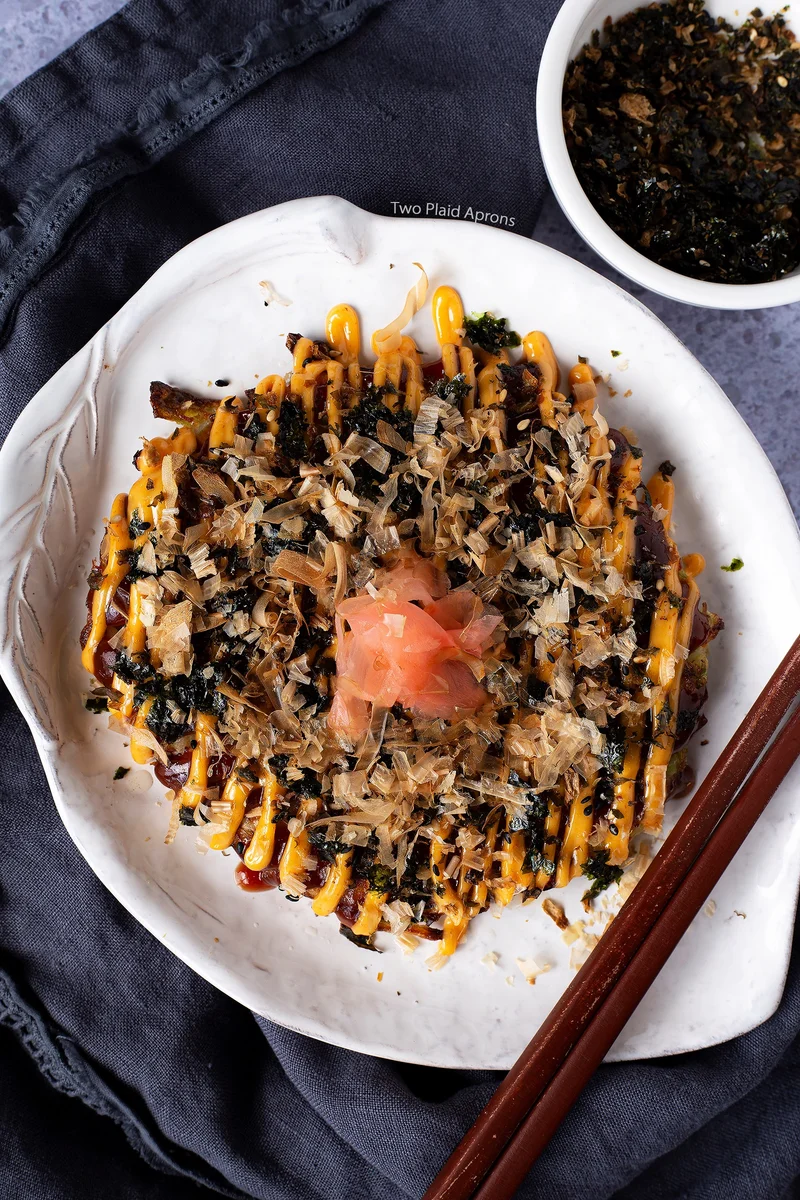
Okonomiyaki is a savoury Japanese cabbage pancake, cooked until golden and finished with sauces and toppings. This Osaka-style adaptation adds Chinese sausage and crispy bacon for a filling lunch or a substantial snack.
Ingredients
- 60 ml (¼ cup)ketchup
- 37.5 ml (2½ tablespoons)Worcestershire sauce
- 30 ml (2 tablespoons)oyster sauce
- 30 ml (2 tablespoons)granulated sugar
- 120 ml (½ cup)mayonnaise
- 30 ml (2 tablespoons)Sriracha
- 60 g (½ cup)plain flour
- 1 largeegg
- 160 ml (⅔ cup)hondashi powder (or water)
- 30 ml (2 tablespoons), plus more for cookingoil
- ½ teaspoonsalt
- ¼ head (about 170–227 g / 6–8 oz)cabbage, finely shredded
- 1 stalkspring onion, sliced
- 45 ml (3 tablespoons)tempura bits or panko (optional)
- 1 stickChinese sausage (optional)
- 3 thin-cut slices, each cut into thirdsbacon (optional)
- To tastebonito flakes
- To tastefurikake
- To tastepickled red ginger or sushi ginger
- 180 ml (¾ cup)water
- 1 piece, 7.5 cm (3 inches) longkombu, or 3–4 pieces of dried kelp
- 3 mediumdried anchovies, or 4–5 small ones
- 2–3 piecesdried shiitake mushrooms
- 2.5 g, or a very generous pinchbonito flakes
- To tastestrained kombu and bonito flakes from the dashi
- A few dropssoy sauce
- A pinch of eachsalt and sugar
- 2 sheetsseaweed snacks
- To tastetoasted sesame seeds, black, white or both
Instructions
- 1
Mix the sauces
For the okonomiyaki sauce, mix the ketchup, Worcestershire sauce, oyster sauce and granulated sugar in a bowl. In a separate bowl, combine the mayonnaise and Sriracha. Transfer each sauce to a piping bag or squeeze bottle if desired.
- 2
Make the dashi
For the optional homemade dashi, put the water, kombu or kelp, dried anchovies and dried shiitake mushrooms in a small saucepan. Bring to the boil over high heat, then turn off the heat immediately and remove the kombu, anchovies and mushrooms. Stir in the bonito flakes, steep for 5–10 minutes, then strain and set the stock aside.
- 3
Prepare furikake
Thinly slice the kombu used for the dashi. Put it in a medium non-stick pan with the used bonito flakes, a few drops of soy sauce and a pinch of salt and sugar. Toast over medium-low heat, stirring occasionally, until the kombu is dry, crisp and crackly. Cool on a paper-towel-lined plate, then break up the kombu and bonito with your fingers. Break the seaweed snacks into small pieces, add them with the toasted sesame seeds and use straight away or store in an airtight container in a cool, dry place.
- 4
Mix the batter
Whisk the flour, egg, dashi, oil and salt in a large bowl until just smooth; do not overmix. Add the cabbage, spring onion and tempura bits or panko. Remove the Chinese sausage from its casing, break it into small pieces, then fold it through until everything is coated.
- 5
Cook the pancakes
Lightly oil a non-stick pan or griddle and heat over medium heat. Scoop a third of the batter into the pan and gently flatten it into a roughly circular pancake about 2–2.5 cm (¾–1 inch) thick. Arrange three pieces of bacon on top and cook until the underside is golden, about 3–4 minutes. Carefully flip and cook the bacon side until golden and crisp, about 4–5 minutes, then transfer to a plate. Repeat with the remaining batter.
- 6
Add the toppings
Top the pancakes with both sauces, furikake, pickled red ginger or sushi ginger, and bonito flakes.
- 7
Serve while hot
Enjoy the pancakes hot.
What is okonomiyaki?
Okonomiyaki is a Japanese savoury pancake, most closely associated with Osaka and Hiroshima. Its name is often understood as referring to cooking something the way you like, and cabbage is a common base.
This version follows an Osaka-style approach: shredded cabbage is folded into a simple batter and cooked as a thick pancake. Chinese sausage, bacon and a pair of sauces give this adaptation its own savoury, rich finish.
Nutrition and macros by portion
The nutrition label shows one serving as written: 493 calories, 10g protein, 49g carbs, 29g fat.
| Portion | Adjustment | kcal | Protein | Carbs | Fat |
|---|---|---|---|---|---|
| Lighter | Use less mayonnaise | 345 kcal | 7g | 34g | 20g |
| This serving | As written | 493 kcal | 10g | 49g | 29g |
| Hungry | Add another pancake | 740 kcal | 15g | 74g | 44g |
Cabbage and flour provide most of the carbohydrates, while the oil, mayonnaise and bacon contribute much of the fat. The egg and Chinese sausage add some protein. Pair a pancake with a generous serving of salad or vegetables to balance the plate.
The batter and cabbage
Just-smooth batter: whisk the flour, egg, dashi, oil and salt only until combined. Overmixing can make the pancake heavier, so stop once no dry flour remains.
Fine cabbage: shred it thinly so it folds into the batter and cooks through in the pancake’s short cooking time. Spring onion and optional tempura bits or panko add more flavour and texture.
Choosing the stock
Hondashi: the ingredient list gives hondashi powder or water for the batter, while the method also describes making dashi from scratch. Use the prepared dashi if making the optional stock; otherwise follow the listed hondashi-or-water choice.
Homemade dashi: remove the kombu, anchovies and mushrooms as soon as the water reaches a boil, then steep the bonito flakes off the heat for 5–10 minutes. Straining keeps the stock clear of flakes before it goes into the batter.
Getting the flip right
Shape: divide the batter into three portions and flatten each gently into a circle about 2–2.5 cm thick. The mound will settle as it cooks, so avoid pressing it too thin at the start.
Turn: wait for the first side to turn golden after about 3–4 minutes, then flip carefully. Cook the bacon side for a further 4–5 minutes, until the bacon is crisp and the pancake is golden.
Sauces and toppings
Two sauces: the ketchup, Worcestershire, oyster sauce and sugar make the savoury-sweet okonomiyaki sauce. Mayonnaise mixed with Sriracha supplies a creamy, spicy counterpoint.
Furikake: the optional homemade version toasts used kombu and bonito with soy sauce, salt and sugar, then combines them with seaweed and sesame. Pickled ginger and bonito flakes finish the pancakes with sharpness and savoury flavour.
Serving and timing
Pan space: cook the pancakes one at a time if needed, keeping the heat at medium so the outside can brown while the centre cooks. Allow roughly 7–9 minutes of pan time for each pancake, following the method’s two-sided cooking times.
To serve: bring the pancakes to the table hot, with the sauces and toppings ready to add. A simple green salad or lightly dressed vegetables make a fresh contrast to the rich toppings.
Recipe notes & tips
- Shred the cabbage finely so it is easier to coat evenly in the batter.
- Prepare the sauces before you start cooking so the pancakes can be served hot.
- Keep the pan at medium heat to give the thick pancakes time to cook through.
- Use a broad spatula and turn each pancake carefully to keep it intact.
- Add the bonito flakes just before serving for their light, delicate texture.
- If making the homemade furikake, let the toasted mixture cool before breaking it up.
Variations
- Skip the sausage: leave it out for a cabbage-forward pancake.
- Omit the bacon: cook the pancakes without bacon for a simpler topping.
- Adjust the heat: use more or less Sriracha in the mayonnaise to suit your taste.
- Use panko: swap the tempura bits for panko for a different crisp texture.
- Choose sushi ginger: use sushi ginger in place of pickled red ginger.
- Use ready-made furikake: sprinkle it over the finished pancakes instead of making the optional homemade version.
Common mistakes to avoid
- Overmixing the batter: stop whisking once it is just smooth to avoid a heavy texture.
- Making the pancakes too thin: keep them about 2–2.5 cm thick so they hold their shape.
- Turning too soon: wait for the underside to become golden before flipping.
- Cooking over high heat: use medium heat so the centre has time to cook before the outside gets too dark.
- Leaving the kombu in to boil: remove it as soon as the dashi reaches a boil.
- Adding toppings too early: garnish after cooking so the sauces and flakes stay distinct.
How to store
Refrigerate leftover cooked pancakes in an airtight container for up to 3 days. Reheat in a lightly oiled pan over medium-low heat until hot throughout; add the sauces and toppings afterwards.
Frequently asked questions
Can I use water instead of hondashi?
The ingredient list specifies hondashi powder or water. The method also describes optional homemade dashi, which you can use in the batter if you prepare it.
Do I have to make the dashi and furikake?
No. Both are marked optional in the method. They add extra savoury flavour, but the pancakes can be made without the homemade versions.
How do I know when a pancake is ready to flip?
The method gives about 3–4 minutes for the first side, until it is golden brown. Flip carefully, then cook the bacon side for about 4–5 minutes until golden and crisp.
Can I leave out the Chinese sausage or bacon?
Yes. Both are marked optional, so you can omit either or both and cook the remaining batter as directed.
What can I use instead of tempura bits?
Panko is listed as an alternative. The ingredient is optional, so you can also leave it out.
Can I prepare the sauces ahead?
Yes. Mix each sauce and store it covered in the fridge until needed. Add them to the pancakes just before serving.
Cook it from the original
This recipe comes from twoplaidaprons.com. Their page has the author’s own photos, notes and tips — the best place to cook it from.
Open the recipe on twoplaidaprons.com