
Taiwanese Run Bing (Popiah) - 潤餅
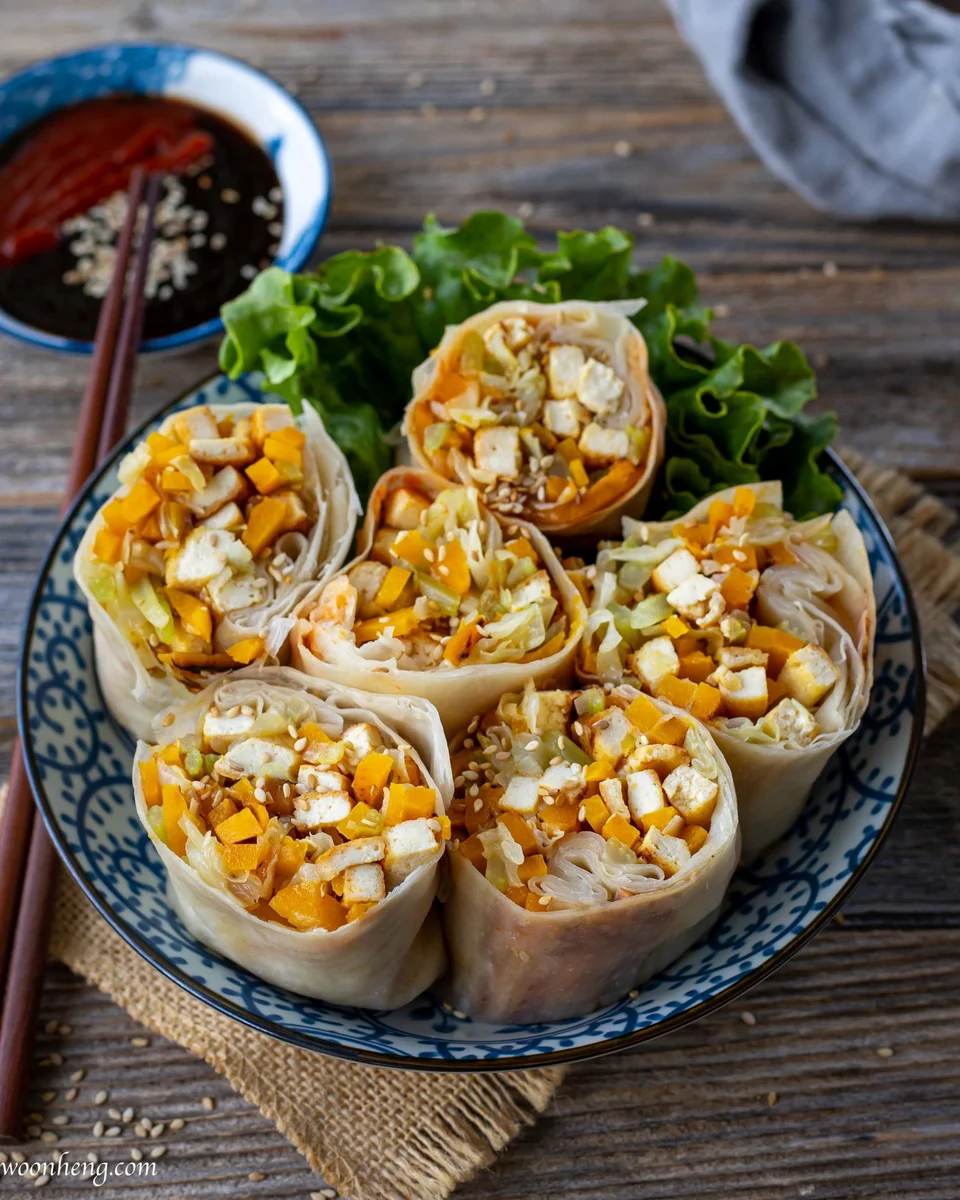
Taiwanese run bing, also known as popiah, wraps stir-fried vegetables and tofu in a soft, slightly chewy homemade wrapper. This swipe-method version makes the wrappers without kneading or rolling, for a generous snack or light meal.
Ingredients
- 300 gbread flour
- 450 gwater
- 4ice cubes
- 1/4 teaspoonsalt
- 200 g (7 oz)firm tofu, drained and sliced
- about 150 g (1 cup)kabocha squash, julienned
- 4 stalkscelery, cut into matchstick-size pieces
- about 450 g (5 cups)chopped cabbage
- 1/4 teaspoonmushroom seasoning
- to tastesalt
- to tastewhite pepper
- to tastetoasted sesame oil
- as neededoil for brushing and cooking
- to tastehoisin sauce
- to tastechilli sauce (Sriracha)
Instructions
- 1
Combine the batter
Put the flour and 1/4 teaspoon salt in the bowl of a stand mixer and stir with a rubber spatula. Add the water and ice cubes.
- 2
Mix until smooth
Fit the mixer with a whisk or paddle attachment and mix the batter until no lumps remain.
- 3
Rest the batter
Cover the bowl tightly and leave the batter to rest for 15 minutes. Alternatively, refrigerate it until needed, then bring it back to room temperature before continuing.
- 4
Prepare the filling
While the batter rests, prepare the filling ingredients.
- 5
Fry the tofu
Heat a little oil in a non-stick pan and pan-fry the tofu until golden brown. Season it with salt.
- 6
Cook the squash
Move the tofu to one side of the pan. Sauté the kabocha for 1 minute, adding more oil if needed, then season with salt and toss.
- 7
Add the vegetables
Add the celery and cabbage. Season with white pepper, salt and toasted sesame oil, then stir-fry until combined.
- 8
Wilt the cabbage
Cover the pan and cook over medium-low heat for 1–2 minutes, until the cabbage starts to wilt.
- 9
Cool the filling
Remove the lid and toss the mixture again. Taste and adjust the seasoning, then turn off the heat and leave the filling to cool.
- 10
Warm the pan
To cook the wrappers, warm a 30 cm (12-inch) non-stick pan, then take it off the heat.
- 11
Oil the pan
Drizzle a little oil onto a clean paper towel and rub it over the pan, including the sides.
- 12
Stir the batter
Stir the batter with a spatula. Dip a basting brush into it.
- 13
Brush on batter
Brush a thin layer of batter over the base of the pan and up the sides. Add another layer if you prefer a thicker wrapper.
- 14
Cook the wrapper
Return the pan to the hob and cook the wrapper over medium-low heat.
- 15
Check for doneness
When the wrapper changes from white to slightly translucent and its edge starts to detach from the pan, turn off the heat.
- 16
Lift and cool
Lift the wrapper from the pan. Use it straight away, or let it cool and keep it in an airtight container.
- 17
Lay out a wrapper
To assemble, place a wrapper on a chopping board.
- 18
Add sauces and filling
Spoon a little sauce onto the wrapper, add a heaped spoonful of filling, and sprinkle sesame seeds over the top.
- 19
Fold and roll
Bring both sides of the wrapper towards the middle. Lift the bottom edge over the filling, tuck it in tightly, and roll into a large spring roll.
- 20
Cut and serve
Cut the roll in half and serve as it is.
What is Taiwanese run bing?
Run bing, also called popiah, is a Taiwanese fresh spring roll: a thin, pliable wrapper encloses a savoury filling rather than being deep-fried. It is associated with Fujianese and Taiwanese food traditions, where fillings and serving styles vary.
This version combines tofu, squash, celery and cabbage, with hoisin and chilli sauces for serving. The swipe method makes the wrapper by brushing batter directly onto a warm pan, avoiding the need to roll out individual dough rounds.
Nutrition and macros by portion
The nutrition label shows one serving as written: 390 calories, 14g protein, 65g carbs, 9g fat.
| Portion | Adjustment | kcal | Protein | Carbs | Fat |
|---|---|---|---|---|---|
| Lighter | Use less oil and sauce | 273 kcal | 10g | 46g | 6g |
| This serving | As written | 390 kcal | 14g | 65g | 9g |
| Hungry | Make a larger roll | 585 kcal | 21g | 98g | 14g |
The flour and vegetables provide most of the carbohydrates, while tofu contributes protein. Fat comes mainly from the tofu and the oil used for frying and brushing; the amount depends on how much oil and sauce you use. For a more balanced plate, serve a roll with extra vegetables or a simple vegetable soup.
Why the batter rests
Resting time: the 15-minute pause gives the flour time to hydrate, helping the batter brush onto the pan more evenly. Stir it again before making each wrapper, as the flour can settle.
Build a balanced filling
Tofu: frying the slices until golden adds savoury flavour and gives the filling a firmer bite. Keep it to one side while cooking the squash so the ingredients can be handled separately.
Vegetables: cut the squash and celery into thin, similar-sized pieces so they cook quickly. The cabbage is added last and only needs to soften slightly.
Get the wrapper right
Thin coating: brush the batter in a light, continuous layer over the pan base and sides. A second layer makes a thicker wrapper, but the first should cover the surface without leaving large gaps.
Doneness cue: look for a change from white to slightly translucent and an edge that begins to lift. Take the pan off the heat at that point; the wrapper should remain soft and flexible.
Keep the vegetables tender
Covered cooking: a brief spell under the lid helps the cabbage wilt without needing a long stir-fry. Check after 1 minute and continue for up to 2 minutes if it still looks very crisp.
Cooling: let the cooked filling cool before rolling. Hot filling can make the wrapper harder to handle and may cause it to tear.
Roll and serve
Tucking: bring in the sides, fold the bottom edge over the filling and tuck it snugly before rolling. This helps keep the vegetables contained when the roll is cut.
Serving: offer hoisin and Sriracha to suit different tastes. The rolls can be served on their own or alongside a light soup or extra stir-fried vegetables.
Recipe notes & tips
- Stir the batter before brushing each wrapper so the flour stays evenly mixed.
- Use a clean paper towel to spread only a thin film of oil over the pan.
- Keep the pan off the heat while you brush on the batter for more control.
- Make sure the filling has cooled before assembling the rolls.
- Set the sauces out separately so everyone can choose how much to add.
Variations
- Extra mushrooms: add sliced mushrooms to the vegetable filling and cook them until tender.
- More crunch: keep the cabbage slightly crisp by taking the pan off the heat as soon as it begins to wilt.
- Milder sauce: use hoisin on its own instead of adding Sriracha.
- Spicier rolls: add more Sriracha to the wrapper before folding.
- Different greens: replace some of the cabbage with another quick-cooking leafy vegetable.
Common mistakes to avoid
- Lumpy batter: mix until smooth and stir again before brushing each wrapper.
- Thick wrapper: apply a thin, even coating first and add another layer only if you want it thicker.
- Wrapper sticking: lightly oil the pan with a paper towel before cooking each wrapper.
- Overcooked cabbage: keep the covered cooking time to 1–2 minutes and check for early wilting.
- Torn roll: let the filling cool and tuck the bottom edge firmly without pulling the wrapper too tightly.
How to store
Keep cooled wrappers and filling separately in airtight containers in the fridge for up to 3 days. Reheat the filling in a pan until hot, then assemble with the wrappers; assembled rolls are best eaten freshly made.
Frequently asked questions
Can I make the batter ahead?
Yes. Refrigerate it until you are ready to use it, then bring it to room temperature and stir it well before brushing.
How can I tell when a wrapper is cooked?
It should look slightly translucent rather than white, and its edge should start to loosen from the pan. Remove the pan from the heat at that point.
Can I make the wrappers thicker?
Yes. Brush on a second layer of batter if you prefer a thicker wrapper.
Why is my wrapper difficult to lift?
It may need a little longer to cook, or the pan may not have been lightly oiled. Wait for the edge to start detaching before lifting it.
Can I assemble the rolls in advance?
They are best assembled just before serving, since the filling can soften the wrapper as it sits. You can prepare and chill the components separately in advance.
Cook it from the original
This recipe comes from woonheng.com. Their page has the author’s own photos, notes and tips — the best place to cook it from.
Open the recipe on woonheng.com