
Bevu Bella | Ugadi Pachadi
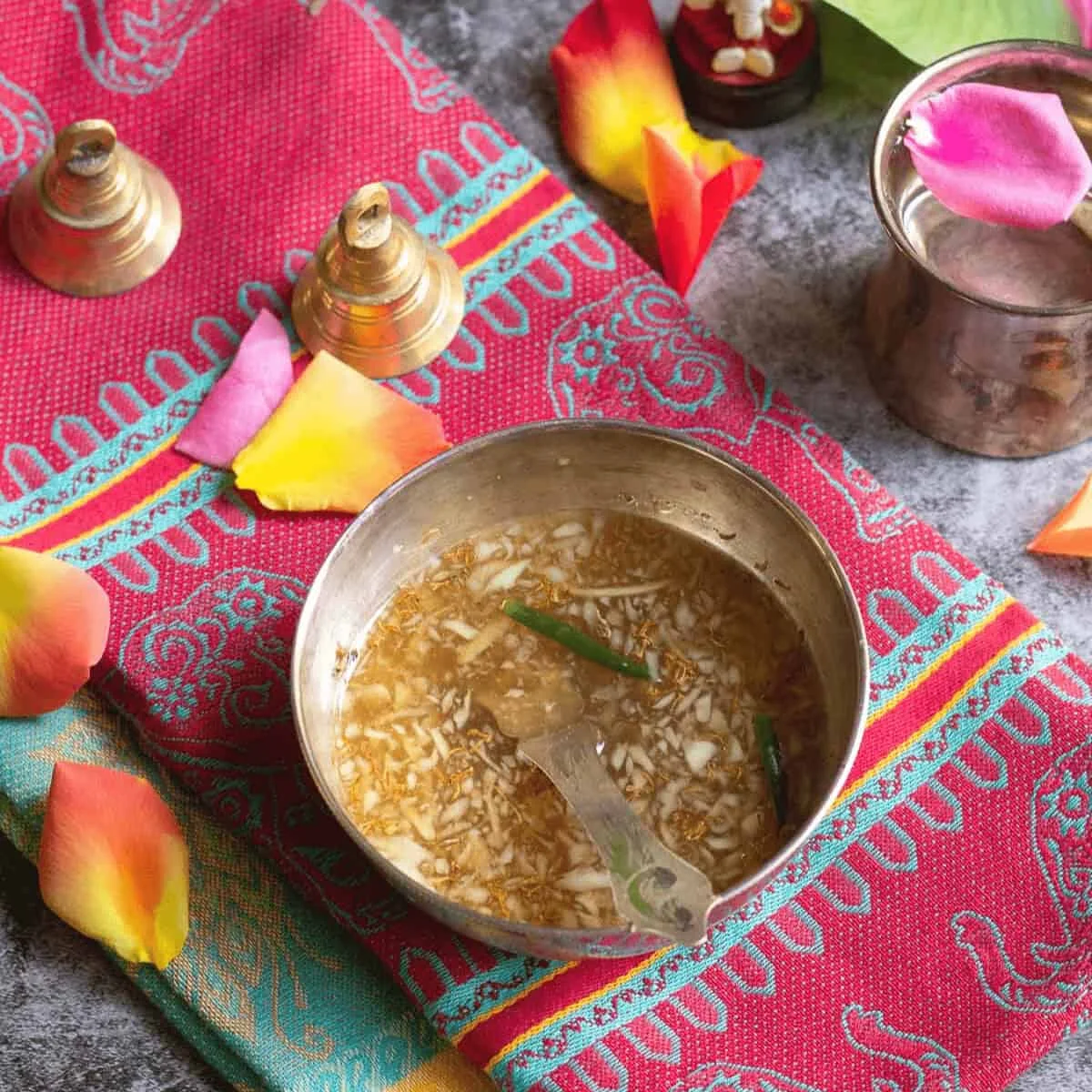
Bevu bella is a quick Ugadi pachadi, a thin, drink-like preparation that brings together neem, jaggery, tamarind, mango, chilli and salt. It takes just a few minutes to make and offers a mix of bitter, sweet, sour, hot and savoury flavours.
Ingredients
- 1.25 ml (¼ tsp)dried neem flowers; fresh ones can also be used
- 1green chilli, slit in two
- 1.25 ml (¼ tsp)jaggery
- 1.25 ml (¼ tsp)salt
- 1.25 ml (¼ tsp)tamarind paste
- 30 ml (2 tbsp)raw mango, grated or crushed
- 80–120 ml (⅓–½ cup)water
Instructions
- 1
Roast the neem
Warm a small pan or tempering kadai. Add the 1.25 ml (¼ tsp) neem flowers and dry-roast for 45–60 seconds.
- 2
Mix the pachadi
Put all the ingredients in a bowl with 60 ml (¼ cup) water and mix well, until the salt and jaggery are combined. The pachadi is ready to serve.
What is bevu bella?
Bevu bella is a Ugadi preparation from South India, made to mark the New Year. Its name pairs bevu, or neem, with bella, or jaggery, and the finished mixture is often thin enough to drink.
This version combines neem’s bitterness with jaggery’s sweetness, tamarind and raw mango for sourness, chilli for heat and salt for savouriness. A brief dry roast brings out the neem’s aroma before everything is mixed together.
Nutrition and macros by portion
The nutrition label shows one serving as written: 10 calories, 1g protein, 2g carbs, 1g fat.
| Portion | Adjustment | kcal | Protein | Carbs | Fat |
|---|---|---|---|---|---|
| Lighter | Use less jaggery | 7 kcal | 1g | 1g | 1g |
| This serving | As written | 10 kcal | 1g | 2g | 1g |
| Hungry | Serve with a meal | 15 kcal | 2g | 3g | 2g |
The listed nutrition per serving is low in calories, with the small amount of jaggery and mango contributing most of the carbohydrates; the recipe provides little protein, and its fat mainly comes from the neem flowers. To make a meal more filling, serve a portion alongside a protein-rich dish and vegetables.
The ingredients that shape the flavour
Neem flowers: The recipe uses a small amount, so measure carefully. Dried flowers are convenient; fresh ones can be used as an alternative.
Sour and sweet: Raw mango and tamarind bring tang, while jaggery rounds it out. Mix thoroughly so the jaggery and salt do not settle at the bottom.
Chilli and salt: Slitting the chilli lets its flavour mingle with the liquid. Keep it whole in the bowl if you want to remove it before serving.
Roast the neem gently
Use a dry pan and keep the neem flowers moving or watch them closely as they roast for 45–60 seconds. They should become fragrant, not dark or scorched.
The recipe calls for dry-roasting rather than adding oil. Let the flowers go straight from the pan into the bowl with the other ingredients.
Mix to a drinkable texture
The method adds 60 ml (¼ cup) water, while the ingredient list gives a range of 80–120 ml. Start with the method’s amount and add a little more if you prefer a thinner pachadi.
Grated or crushed mango both work. Stir until the jaggery and salt are dispersed, then check that the mixture has the consistency you want.
Timing and serving
The full preparation takes about 6 minutes, with just 45–60 seconds of that spent roasting the neem. There is no long cooking or resting stage in the method.
Serve it soon after mixing, as a small part of a Ugadi meal or alongside other South Indian dishes. Its sweet-sour, bitter and spicy notes can provide contrast to a more substantial plate.
Adjust the balance
For a milder drink, remove the slit chilli before serving or use less chilli. For a sharper, more tangy result, retain the full amount of raw mango and tamarind.
The water level is easy to adjust: use less for a more concentrated mixture or add more gradually to make it lighter and easier to sip.
Recipe notes & tips
- Measure the neem flowers carefully because their bitterness is distinctive.
- Keep a close eye on the flowers as they dry-roast; the short roasting time can pass quickly.
- Break up any jaggery lumps before mixing so they dissolve more easily.
- Add extra water a little at a time if you want a thinner drink.
- Taste the mixture after stirring and adjust the water to suit your preferred strength.
Variations
- Fresh neem: Use fresh neem flowers in place of dried ones, as the recipe allows.
- Milder chilli: Remove the chilli before serving for less lingering heat.
- Thinner texture: Add water gradually until the pachadi is easy to sip.
- Coarser mango: Crush the raw mango instead of grating it for a more textured mixture.
Common mistakes to avoid
- Scorching the neem: Roast it briefly and watch closely so it turns fragrant rather than dark.
- Uneven sweetness: Stir thoroughly until the jaggery is combined throughout the liquid.
- Salt at the bottom: Mix well before serving so the salt is dispersed.
- Adding all the water at once: Begin with 60 ml, then add more gradually if you want a thinner texture.
- Overdoing the chilli: Keep the slit chilli whole and remove it if you want to limit its heat.
How to store
For the best flavour, serve the pachadi soon after mixing. If needed, cover and refrigerate leftovers for up to 1 day, then stir well before serving; the recipe does not specify reheating.
Frequently asked questions
Can I use fresh neem flowers?
Yes. The recipe allows fresh flowers as well as dried ones; roast them briefly in the same way and watch closely.
How much water should I use?
The ingredient list gives 80–120 ml, while the method specifies 60 ml. Start with the method’s amount and add more to reach your preferred drinkable consistency.
Can I make it less spicy?
Yes. Remove the slit chilli before serving, or use less of it if you prefer a milder flavour.
Should I serve bevu bella hot or cold?
The method does not call for heating the mixture, only dry-roasting the neem flowers. Serve it after mixing, at room temperature or chilled if you prefer.
Can I prepare it ahead?
It is quick to mix, so making it shortly before serving is simple. If you do prepare it ahead, cover and refrigerate it, then stir before serving.
Cook it from the original
This recipe comes from vidhyashomecooking.com. Their page has the author’s own photos, notes and tips — the best place to cook it from.
Open the recipe on vidhyashomecooking.com