
Salmon Teriyaki Recipe
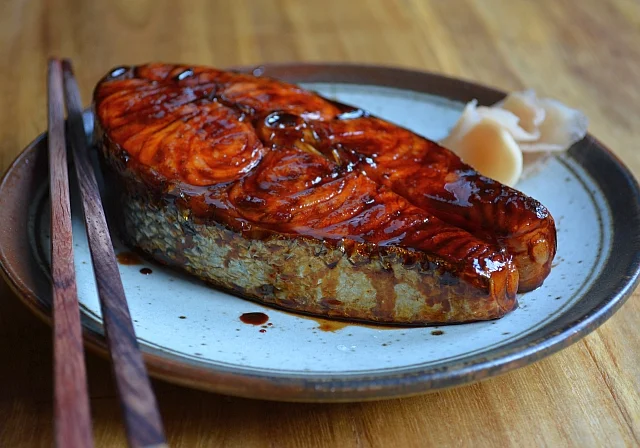
These salmon steaks are seared, briefly rinsed with hot water, then glazed in teriyaki sauce until shiny and just cooked through. Serve them with Japanese pickled ginger and rice for a simple, savoury meal.
Ingredients
- 2 steaks, each about 300 g and 2 cm thicksalmon
- ¼–½ teaspoonfine sea salt
- 2 tablespoonsteriyaki sauce
- to tasteJapanese pickled ginger, homemade or shop-bought
Instructions
- 1
Salt the salmon
Rinse the salmon steaks and pat them dry. Set them on a plate and sprinkle sea salt over all sides, including the skin. Leave for at least 30 minutes, or cover and refrigerate for up to 1½ hours; if chilled, bring the fish back to room temperature before cooking.
- 2
Prepare hot water
Place a rack inside a rimmed baking tray near the hob. Bring water to the boil in a kettle, then turn the heat down to keep it hot.
- 3
Sear the steaks
Heat a heavy non-stick frying pan over a medium-high heat. Add the salmon and sear without moving it for 1½ minutes, then turn and sear the other side. Transfer the fish to the rack.
- 4
Rinse the fish
Bring the kettle water back to the boil, take it off the heat and wait for the bubbling to subside. Pour some water over one side of the fish, then turn it and pour water over the other side.
- 5
Add the glaze
Return the salmon to the frying pan. Add the teriyaki sauce and 2 tablespoons of water.
- 6
Cook and serve
Set the pan over a medium-low heat and cook for about 5 minutes, turning the fish to coat it in the bubbling sauce. When little liquid remains, the salmon is done. If cooking the steaks one at a time, repeat with the second steak. Transfer to a plate and serve with pickled ginger; rice is a fitting accompaniment.
What is salmon teriyaki?
Teriyaki is a Japanese-style way of cooking food with a glossy, savoury-sweet sauce. This version uses salmon steaks, which are seared first and then coated in teriyaki sauce as it reduces.
The quick hot-water rinse is an unusual part of the method: it follows the sear and comes before the fish returns to the pan for glazing. Pickled ginger and rice complete the meal.
Nutrition and macros by portion
The nutrition label shows one serving as written: 320 calories, 30g protein, 3g carbs, 21g fat.
| Portion | Adjustment | kcal | Protein | Carbs | Fat |
|---|---|---|---|---|---|
| Lighter | Serve with less rice | 224 kcal | 21g | 2g | 15g |
| This serving | As written | 320 kcal | 30g | 3g | 21g |
| Hungry | Add a larger rice portion | 480 kcal | 45g | 5g | 32g |
Salmon supplies most of the protein and fat, while the teriyaki sauce contributes most of the carbohydrates and sugars; the salt also adds sodium. Rice is not included in the ingredient list or estimates, so balance the plate with a modest serving of rice and vegetables if desired.
The salmon and salt
Dry fish: pat the steaks thoroughly before they go into the pan so their surfaces can sear. The recipe calls for steaks about 2 cm thick.
Salt time: season every side, including the skin, and leave the fish for at least 30 minutes. If you refrigerate it for longer, bring it back to room temperature before cooking.
Getting a good sear
Hot pan: let a heavy non-stick frying pan heat over a medium-high setting before adding the salmon. Leave the steaks undisturbed for 1½ minutes so the surface has time to brown.
Turn gently: flip the fish to sear the other side, then transfer it to the rack for the rinsing step. Avoid repeatedly moving it around in the pan.
The hot-water rinse
Boil, then pause: bring the kettle water back to the boil and take it off the heat. Wait for the vigorous bubbling to subside before pouring it over the fish.
Both sides: pour water over one side, turn the fish, and rinse the other side too. The method does not specify an exact amount of water.
When the glaze is ready
Low heat: return the salmon to the pan with the teriyaki sauce and 2 tablespoons of water, then cook over medium-low heat for about 5 minutes.
Watch the pan: turn the steaks so the sauce coats them as it bubbles. The recipe’s doneness cue is that little liquid remains in the pan; cooking time can vary with the thickness of the fish and the pan.
Serving the salmon
Rice: serve the glazed salmon with rice, as suggested in the recipe. Plain rice provides a mild base for the savoury-sweet sauce.
Ginger: add Japanese pickled ginger to the plate to bring a sharp, tangy contrast to the rich fish and glaze.
Recipe notes & tips
- Pat the salmon dry before seasoning and searing.
- Season the skin as well as the flesh.
- Give the steaks at least 30 minutes to rest after salting.
- Keep the fish still during its first 1½ minutes in the hot pan.
- Let the kettle water stop bubbling vigorously before rinsing the fish.
- Turn the salmon gently while it cooks in the glaze.
Variations
- Add greens: serve with steamed broccoli or pak choi alongside the rice.
- Use fillets: cook salmon fillets instead, adjusting the time to suit their thickness.
- Make it spicier: add a little chilli to the teriyaki sauce.
- Add sesame: finish the plated salmon with sesame seeds.
- Serve with noodles: replace the rice accompaniment with plain noodles.
Common mistakes to avoid
- Wet salmon: pat it dry before it reaches the pan so it can sear.
- Moving it too soon: leave the first side undisturbed for 1½ minutes.
- Pouring vigorously boiling water: remove the kettle from the heat and let the bubbling subside first.
- High heat for the glaze: lower the pan to medium-low so the sauce can bubble without cooking too aggressively.
- Waiting for the sauce to vanish completely: take the fish off when little liquid remains, as the recipe directs.
How to store
Refrigerate leftovers in a covered container and eat within 2 days. Reheat gently in a covered pan over a low heat, adding a splash of water if the glaze has thickened; avoid prolonged heating, which can dry out the salmon.
Frequently asked questions
Can I salt the salmon ahead of time?
Yes. Cover and refrigerate it for up to 1½ hours after salting, then bring it back to room temperature before cooking.
Can I use salmon fillets instead of steaks?
Yes, though thinner fillets may cook faster. Use the recipe’s visual cue and check as the glaze reduces.
Why does the recipe rinse the fish with hot water?
It is a specific step in this method, performed after searing and before the salmon is returned to the pan with the sauce. Follow the instruction to let the boiling subside before pouring.
How do I know when the salmon is done?
The recipe says it is done when little liquid remains in the pan. The suggested glazing time is about 5 minutes, but thickness and pan heat affect timing.
What should I serve with salmon teriyaki?
Rice is the suggested accompaniment, with Japanese pickled ginger served alongside. Vegetables can also be added to the plate.
Cook it from the original
This recipe comes from vietworldkitchen.com. Their page has the author’s own photos, notes and tips — the best place to cook it from.
Open the recipe on vietworldkitchen.com