
Red Braised Pulled Pork
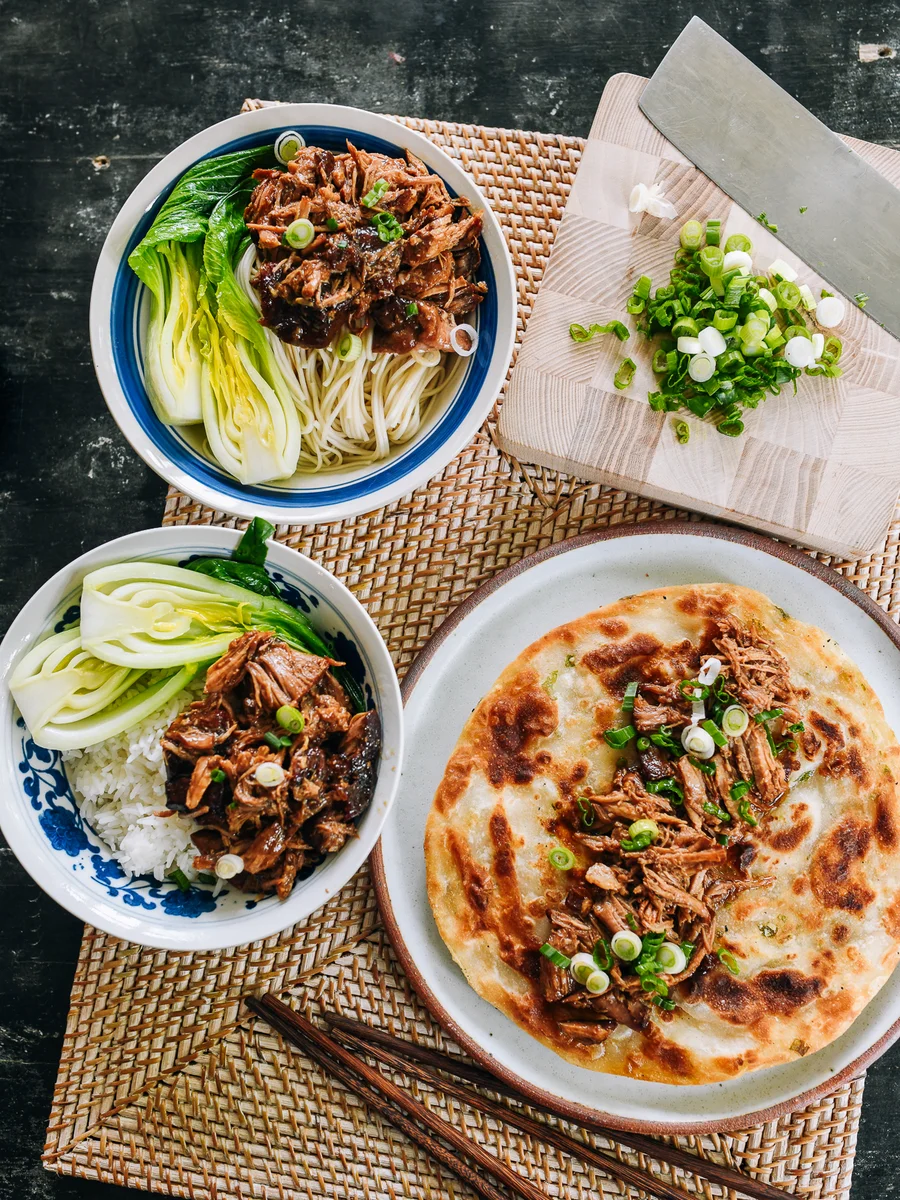
This oven-braised pulled pork takes inspiration from hóngshāo, the Chinese style of red-braising pork belly, and uses more accessible pork shoulder instead. It is gently cooked with Shaoxing wine, soy sauces and warming spices until tender enough to pull apart.
Ingredients
- 2.04 kg (4½ lb)boneless pork shoulder, cut into large 10 cm chunks and trimmed of excess fat; keep the skin if available
- 30 ml (2 tablespoons)neutral oil, such as vegetable, rapeseed or avocado oil
- 180 ml (¾ cup)Shaoxing wine
- 67 g (⅓ cup)sugar
- 80 ml (⅓ cup)light soy sauce
- 15 ml (1 tablespoon)dark soy sauce
- 2bay leaves
- 1star anise
- 710 ml (3 cups)water
Instructions
- 1
Brown the pork
Set a rack in the centre of the oven and preheat it to 190°C (375°F). Heat the oil in a large Dutch oven or other cast-iron pot over a medium-high heat. Working in batches without crowding the pot, brown the pork on all sides.
- 2
Add the braising liquid
Return all the pork to the pot. Add the Shaoxing wine, sugar, light soy sauce, dark soy sauce, bay leaves, star anise and water, then stir.
- 3
Braise until tender
Cover the pot and bring it to the boil on the hob. Once boiling, transfer it to the oven uncovered and cook for 2½ hours. Check the pork about every 45 minutes, stirring and adding more water if the pot starts to dry out. It is ready when tender and falling apart.
What is red-braised pulled pork?
Hóngshāo, or red-braising, is a Chinese cooking style associated with pork belly simmered in a savoury-sweet, soy-based sauce. This version uses pork shoulder and an oven braise, drawing on those familiar flavours while making a generous batch of pull-apart pork.
The combination of light and dark soy sauces gives the cooking liquid its savoury depth and dark colour, while Shaoxing wine and sugar round it out. Bay leaves and star anise lend a gentle aromatic note.
Nutrition and macros by portion
The nutrition label shows one serving as written: 283 calories, 39g protein, 7g carbs, 8g fat.
| Portion | Adjustment | kcal | Protein | Carbs | Fat |
|---|---|---|---|---|---|
| Lighter | Trim excess fat | 198 kcal | 27g | 5g | 6g |
| This serving | As written | 283 kcal | 39g | 7g | 8g |
| Hungry | Serve with extra rice | 425 kcal | 59g | 11g | 12g |
The pork supplies most of the protein and fat, while the sugar and sauces contribute some carbohydrates; rice or buns served alongside would add more. Balance a serving with steamed greens or another vegetable, and choose a moderate amount of rice to suit your appetite.
Choosing the pork
Pork shoulder: cut it into large chunks, about 10 cm across, so it can brown in batches and stay moist during the long braise. Trim away excess fat, but the recipe suggests keeping the skin if you can get it.
Build flavour with browning
Browning: give the pork room in the pot and work in batches. A crowded pot traps steam, so the meat is less likely to develop the browned surfaces that add flavour to the braising liquid.
Fond: after browning, the pot may have browned bits on the bottom. The wine and water added in the next step help loosen them as you stir.
Keep an eye on the braise
Liquid level: the pot goes into the oven uncovered after being brought to the boil. Check it about every 45 minutes and add water if the liquid is running low.
Tenderness: cook until the pork is soft enough to fall apart. The stated 2½ hours is a guide; use the texture cue as well as the timing.
Balance the sauce
Soy sauces: light soy sauce brings the main seasoning, while a smaller amount of dark soy sauce adds colour and deeper flavour. Stir them in with the wine, sugar, aromatics and water before the braise.
Sweetness: sugar balances the salty, savoury ingredients. Keep the listed amount for the recipe's intended balance, and taste the sauce when serving.
How to serve it
Rice: serve the pork and some of its sauce over steamed rice, which makes a simple base for the rich braising liquid.
Vegetables: add a green vegetable or steamed greens alongside for freshness and contrast. The pork can also be served in buns or tucked into a noodle bowl.
Recipe notes & tips
- Pat the pork dry before browning to help its surfaces colour in the hot oil.
- Brown the pork in batches so the pieces are not crowded together.
- Use a pot with a lid that fits for bringing the mixture to the boil, then remove the lid for oven cooking as directed.
- Check the liquid about every 45 minutes and add water if the pot is drying out.
- Keep the pork pieces large so they can withstand the long braise and still become tender.
- Spoon some of the braising liquid over the pork when serving.
Variations
- Add ginger: include slices of fresh ginger with the braising ingredients for a sharper aromatic note.
- Use a different cut: pork belly makes the dish closer to traditional hóngshāo pork belly, though it will be richer.
- Add garlic: put a few peeled cloves in the pot with the aromatics for extra savoury depth.
- Serve in buns: pile the tender pork into soft buns with a little of the cooking sauce.
- Make it spicier: add a dried chilli to the braising liquid for gentle heat.
Common mistakes to avoid
- Crowding the pot: the pork can steam rather than brown, so sear it in batches.
- Cutting the pork too small: small pieces may become overly soft during the long cook; use large chunks as directed.
- Letting the pot dry out: check it about every 45 minutes and add water if needed.
- Covering it in the oven: the method calls for the pot to go into the oven uncovered after it reaches the boil.
- Stopping while the meat is firm: continue cooking until the pork is tender and falling apart.
How to store
Refrigerate leftovers in an airtight container with some braising liquid for up to 3–4 days. Reheat gently in a covered saucepan over a low heat, adding a splash of water if needed, until piping hot.
Frequently asked questions
Can I make this without a Dutch oven?
Use another large, oven-safe cast-iron pot with a lid for bringing the mixture to the boil. It needs to hold the pork and liquid comfortably and be suitable for the oven.
Can I cook this on the hob instead?
The recipe method uses the oven for the braise. If cooking on the hob, keep it at a gentle simmer and check the liquid regularly, though the texture and cooking time may differ.
How do I know when the pork is done?
It should be tender and falling apart when tested. Check the texture as well as the stated 2½-hour cooking time.
What can I use instead of Shaoxing wine?
The recipe specifies Shaoxing wine. If you cannot find it, dry sherry is a commonly used substitute, though it will change the flavour slightly.
What should I serve with red-braised pulled pork?
Steamed rice is a straightforward match for the savoury-sweet sauce. Add greens or another vegetable alongside for contrast.
Can I prepare it ahead?
Yes. Cool and refrigerate the pork with some of its braising liquid, then reheat gently until piping hot. Chilling may make fat easier to remove from the surface.
Cook it from the original
This recipe comes from thewoksoflife.com. Their page has the author’s own photos, notes and tips — the best place to cook it from.
Open the recipe on thewoksoflife.com