
Hamburger Buns
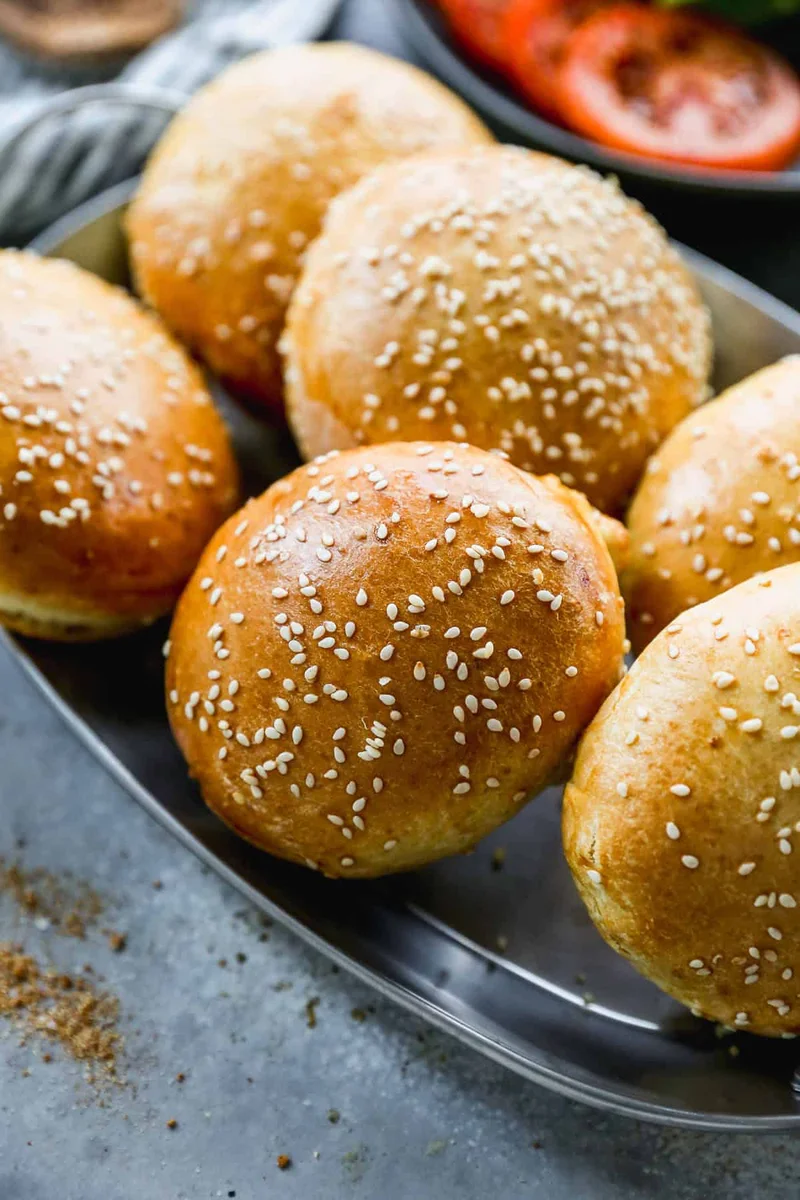
These soft, homemade American hamburger buns are made with an enriched yeast dough and finished with a golden egg wash. Bake a batch for burgers when you want fresh buns with a tender crumb and sesame-seed option.
Ingredients
- 180–240 ml (¾–1 cup)water, warmed to the temperature indicated on the yeast packet
- 2 packets (about 14 g) active dry yeast, or 1½ tablespoons instant yeastactive dry yeast or instant yeast
- 25 g (2 tablespoons)granulated sugar
- 420 g (3½ cups)plain flour
- 28 g (2 tablespoons), at room temperaturebutter
- 1 large, at room temperatureegg
- 1½ teaspoonskosher salt
- 1 large egg, beaten with 15 ml (1 tablespoon) wateregg, for the egg wash
- Optional, to tastesesame seeds
Instructions
- 1
Activate the yeast
In a glass measuring jug with a spout, mix the water, yeast and sugar. Stir and leave for 2 minutes. The mixture should foam; if it does not, the yeast is no longer active, so start again with fresh yeast.
- 2
Knead the dough
Put the flour, 28 g butter, one egg and salt in the bowl of a stand mixer fitted with a dough hook, then pour in the yeast mixture. Mix on low for 2 minutes, then increase to medium-high and continue until the dough is smooth and soft, about 5 minutes. To knead by hand, first combine everything in a large bowl, then turn the dough out onto a lightly floured surface and knead.
- 3
Let dough rise
Put the dough in a bowl if it is not already there, cover it and leave it to rise until doubled in size, about 30 minutes depending on the room.
- 4
Divide the dough
Line two baking sheets with baking parchment. Gently press the centre of the dough with your fist, turn it out onto a clean surface and divide it into eight pieces; a bench scraper is useful for this.
- 5
Shape the buns
Bring the edges of each piece into the centre to form a ball, then turn it seam-side down. Cup your hands around the dough and gently drag it towards you to create tension and a smooth surface. Rotate and repeat until each ball is smooth. Press each one with your palm until about 1.3 cm (½ inch) thick, then release; it will spring back. Arrange four buns on each sheet, seam-side down, leaving room for them to rise.
- 6
Rest the buns
Cover the buns with lightly oiled plastic wrap and leave them until puffy and nearly doubled in size, about 45 minutes.
- 7
Heat and glaze
Towards the end of the rise, position oven racks in the upper and lower thirds and heat the oven to 190°C (375°F). Brush the tops with the egg wash and sprinkle with sesame seeds if using.
- 8
Bake until golden
Bake the buns on the upper and lower racks for 8 minutes. Rotate each tray 180 degrees and swap their rack positions, then bake for another 7–10 minutes, until golden and cooked through. Leave to cool, then slice each bun horizontally.
What are hamburger buns?
Hamburger buns are soft, rounded bread rolls designed to hold a burger and its toppings. This American-style version uses a lightly enriched yeast dough, with butter and egg lending tenderness and a fine crumb.
A short first rise and a second rise after shaping give the buns their lift. The egg wash helps the tops turn glossy and golden in the oven.
Nutrition and macros by portion
The nutrition label shows one serving as written: 254 calories, 7g protein, 45g carbs, 5g fat.
| Portion | Adjustment | kcal | Protein | Carbs | Fat |
|---|---|---|---|---|---|
| Lighter | Use a smaller bun | 178 kcal | 5g | 31g | 4g |
| This serving | As written | 254 kcal | 7g | 45g | 5g |
| Hungry | Serve a larger portion | 381 kcal | 11g | 68g | 8g |
The flour supplies most of the carbohydrates, while the flour, egg and yeast contribute protein. Butter and egg provide much of the fat; serve a bun with a protein-rich burger and vegetables to round out the meal.
Yeast and water
Temperature: Warm the water according to the guidance on your yeast packet; water that is too hot can stop the yeast working. Letting the yeast, water and sugar stand briefly gives you a visible check that the yeast is foaming before you mix the dough.
Yeast choice: The recipe allows either active dry yeast or instant yeast. Use the quantity specified for the type you choose.
Kneading to a soft dough
Mixer: Start on low so the flour and liquid combine, then increase to medium-high and mix for about 5 minutes. The dough should look smooth and feel soft when ready.
By hand: Mix the ingredients in a large bowl first, then knead on a lightly floured surface. Use only enough flour to keep the dough manageable, so the buns do not become dense.
Shaping evenly
Surface tension: Tuck the edges of each piece into the centre, turn it over and draw it gently across the work surface to smooth the top. Keep the seam underneath as you place the shaped bun on the tray.
Spacing: Divide the dough into eight pieces and arrange four on each lined sheet. Leave plenty of room between them because they expand during the second rise and baking.
Rise and readiness
First rise: The dough should roughly double in size; the stated 30 minutes is a guide, since room conditions affect the timing. Cover it while it rises to prevent the surface drying out.
Second rise: After shaping, look for buns that are puffy and nearly doubled, usually after about 45 minutes. The appearance of the dough is a more useful cue than the clock alone.
Baking on two racks
Position: The recipe uses the upper and lower thirds of the oven so both trays can bake at once. After 8 minutes, rotate the trays and swap their positions to help them brown evenly.
Doneness: Bake for a further 7–10 minutes, until the buns are golden and cooked through. Let them cool before slicing so the crumb can settle.
Serving the buns
These buns suit beef, chicken, bean or vegetable burgers, with crisp lettuce, sliced tomato and your preferred sauces. Their soft texture also works well with pulled fillings.
For a balanced plate, pair a bun and burger with a generous serving of salad or cooked vegetables. If the buns are larger than you need, slice and freeze extras for another meal.
Recipe notes & tips
- Check that the yeast mixture foams before adding it to the flour.
- Keep the butter and the dough egg at room temperature so they mix in readily.
- Use a bench scraper to divide the dough into eight portions.
- Oil the plastic wrap lightly so it is less likely to stick to the rising buns.
- Swap and rotate the trays halfway through baking for more even browning.
- Wait until the buns are cool before slicing them horizontally.
Variations
- Add sesame seeds: Sprinkle them over the egg-washed tops before baking.
- Try poppy seeds: Use them in place of sesame seeds for a different finish.
- Use instant yeast: Follow the recipe's stated instant-yeast quantity instead of the active dry yeast.
- Make smaller buns: Divide the dough into more portions, keeping in mind that smaller buns may bake sooner.
- Serve as dinner rolls: Shape the dough into smaller balls and bake them close together on a tray.
Common mistakes to avoid
- Inactive yeast: If the mixture does not foam after 2 minutes, start again with fresh yeast.
- Overheated water: Follow the yeast packet's temperature guidance so the yeast remains active.
- Too much extra flour: Add only what is needed for handling, or the finished buns may turn dense.
- Crowded trays: Leave plenty of space between buns so they have room to rise.
- Skipping the tray swap: Rotate the trays and change their rack positions after 8 minutes for more even baking.
- Slicing while hot: Let the buns cool first so the crumb has time to settle.
How to store
Once completely cool, keep the buns in an airtight container at room temperature for up to 2 days. For longer storage, freeze them in a sealed bag; thaw at room temperature and warm briefly in the oven if desired.
Frequently asked questions
Can I use instant yeast?
Yes. The recipe specifies 1½ tablespoons of instant yeast as an alternative to the two packets of active dry yeast.
How do I know the yeast is active?
After the water, yeast and sugar stand for 2 minutes, the mixture should foam. If it does not, begin again with fresh yeast.
Can I knead the dough by hand?
Yes. Start by combining the ingredients in a large bowl, then knead the dough on a lightly floured surface until smooth and soft.
Why do the buns need two rises?
The first rise lets the dough expand before shaping, while the second gives the shaped buns time to become puffy before baking.
Can I leave off the sesame seeds?
Yes. They are optional; brush the tops with egg wash whether or not you use seeds.
Can I freeze homemade hamburger buns?
Yes. Cool them completely, seal them in a freezer bag and thaw at room temperature before serving.
Cook it from the original
This recipe comes from wellplated.com. Their page has the author’s own photos, notes and tips — the best place to cook it from.
Open the recipe on wellplated.com