
Polpo alla Luciana
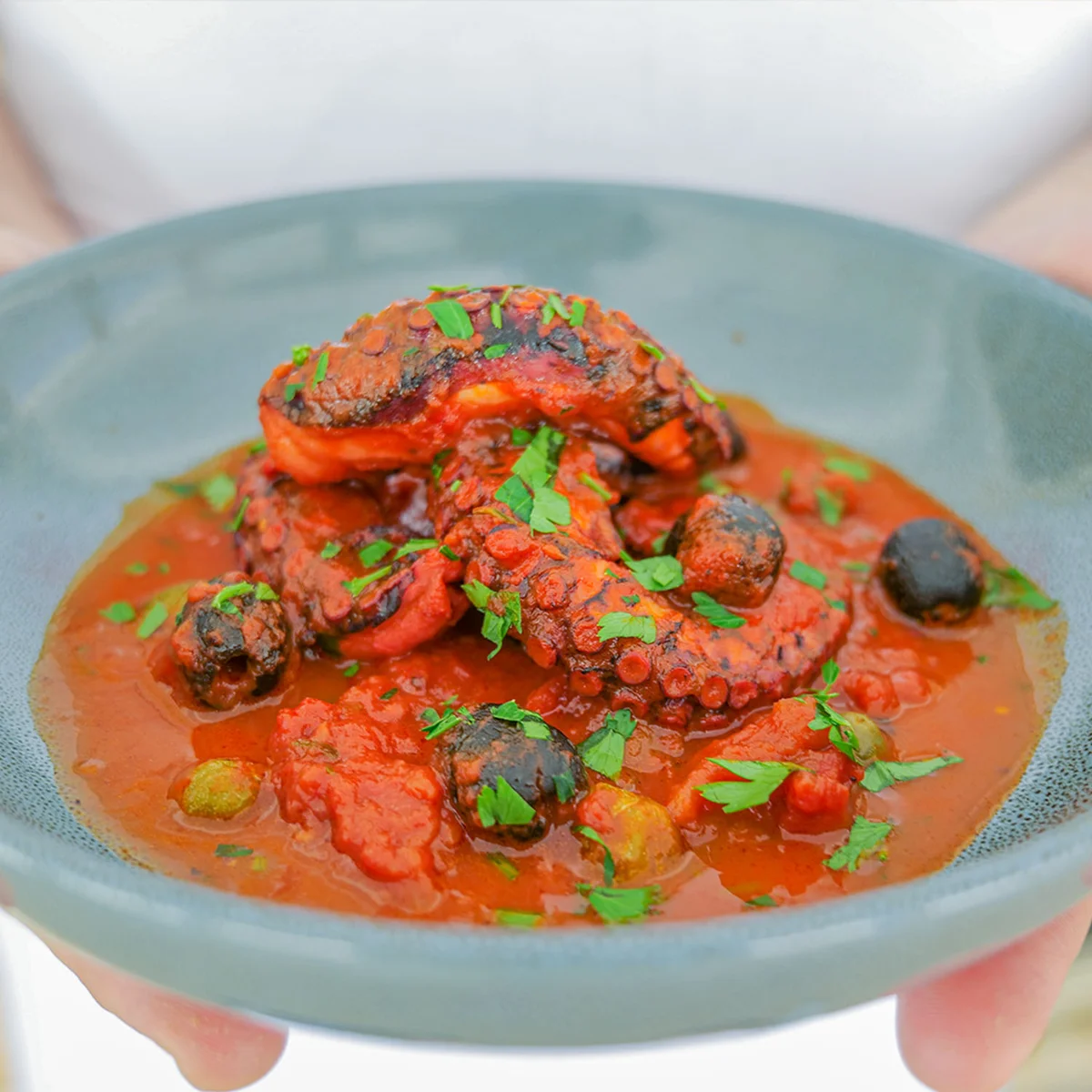
Polpo alla Luciana is a Neapolitan octopus stew simmered with tomatoes, garlic, olives and capers until tender. It makes a comforting centrepiece, with bread to soak up the savoury sauce.
Ingredients
- 800 g (28 oz)San Marzano tomatoes, or regular peeled tomatoes
- 1 largeraw octopus
- 2 clovesgarlic, crushed
- al gustopitted black olives
- 2 tbspcapers
- 1 small bunchfresh parsley, chopped
- as much as requiredextra virgin olive oil
- as much as requiredsalt and pepper
- to serveloaf of bread
Instructions
- 1
Crush the tomatoes
Crush the peeled tomatoes by hand in a large bowl and set them aside.
- 2
Prepare the octopus
Keep or discard the head according to your preference. Starting at the eyes, cut around the head with kitchen scissors.
- 3
Start the octopus
Set a pan over medium heat. Add the crushed garlic, a few tablespoons of extra virgin olive oil and a splash of water.
- 4
Cook the first side
Put the octopus tentacles into the pan first, spreading them out. Cover and cook for a few minutes, then uncover, add some water and cover again for 3–5 minutes.
- 5
Turn and cook
Turn the octopus with tongs and cook the other side for 5 minutes. Check that it has released water and is cooking in its own liquid; frozen octopus may release less, so add enough water to keep it cooking in liquid.
- 6
Cut into pieces
Use kitchen scissors to cut the octopus into pieces a few inches long.
- 7
Simmer the sauce
Add the crushed tomatoes and cook over low heat for 40 minutes. Stir in the pitted olives, capers and chopped parsley.
- 8
Season and serve
After the 40-minute simmer, season with salt and pepper to taste, then cook uncovered for 5 more minutes. Slice the bread and serve it alongside the octopus.
What is Polpo alla Luciana?
Polpo alla Luciana is a traditional Neapolitan preparation associated with Santa Lucia, a historic seaside neighbourhood of Naples. Octopus is gently cooked in a tomato sauce with garlic, olives and capers.
This version relies on the octopus releasing its own cooking liquid before the tomatoes go in. That helps build a deeply flavoured sauce, while the final uncovered simmer lets it reduce.
Nutrition and macros by portion
The nutrition label shows one serving as written: 405 calories, 39g protein, 31g carbs, 12g fat.
| Portion | Adjustment | kcal | Protein | Carbs | Fat |
|---|---|---|---|---|---|
| Lighter | Less bread, more vegetables | 284 kcal | 27g | 22g | 8g |
| This serving | As written | 405 kcal | 39g | 31g | 12g |
| Hungry | Extra bread and octopus | 608 kcal | 59g | 47g | 18g |
The tomatoes and bread provide most of the carbohydrates, while the olive oil contributes much of the fat and the octopus supplies most of the protein. Olives, capers and added salt contribute sodium. Pair a serving with a generous portion of vegetables, and adjust the bread to suit your appetite.
Tomatoes and seasoning
Tomatoes: San Marzano tomatoes are suggested, but regular peeled tomatoes work too. Crushing them by hand gives the sauce a varied, rustic texture.
Salt and pepper: season at the end, after the olives and capers have joined the sauce. Both can bring saltiness, so taste before adding much.
Cooking the octopus
Start gently: medium heat and a little water get the octopus cooking before the tomato sauce is added. Keep the pan covered for the specified stages so the octopus cooks in its liquid.
Frozen octopus: the recipe notes that it may release less water. Add water as needed to ensure there is enough liquid in the pan during cooking.
Getting tender pieces
Cutting: once the octopus has cooked on both sides, snip it into pieces a few inches long with kitchen scissors. This makes it easier to serve and lets the pieces simmer in the sauce.
Doneness: the recipe gives a 40-minute tomato simmer, but octopus size can affect tenderness. Check a piece before serving; continue simmering if it is not tender enough.
Finishing the sauce
Add the olives, capers and parsley after the tomato simmer, then season and cook uncovered for a further 5 minutes. This short final stage allows the flavours to mingle while some moisture evaporates.
Keep an eye on the pan as it reduces. If the sauce looks too thick before the octopus is tender, add a little water.
How to serve it
Serve the octopus hot with slices of bread for dipping into the tomato sauce. A simple green salad or steamed vegetables make a fresh accompaniment.
The bread is more than a side: it catches the garlicky, briny sauce, so bring extra if you know your table enjoys it.
Recipe notes & tips
- Crush the tomatoes in a roomy bowl to keep their juice contained.
- Use a pan large enough for the tentacles to spread out.
- Keep the octopus cooking in liquid; add water if the pan becomes dry.
- Taste the sauce before adding the final salt, as capers and olives are already savoury.
- Serve the bread on the side so it stays ready for dipping.
Variations
- Use regular tomatoes: peeled tomatoes can stand in for San Marzano tomatoes.
- Keep the head: leave it on if you prefer to cook and serve the whole octopus.
- Add chilli: include a little chilli with the garlic for gentle heat.
- Change the herbs: finish with a little extra chopped parsley for a fresher note.
- Serve with pasta: spoon the tomato sauce over pasta alongside the octopus.
Common mistakes to avoid
- Crowding the pan: the tentacles need room to spread, so choose a suitably large pan.
- Letting the pan dry: add water if the octopus is no longer cooking in liquid.
- Adding tomatoes too soon: cook the octopus through the stated initial stages before adding them.
- Over-salting: olives and capers are salty, so taste the sauce before seasoning.
- Skipping the final reduction: cook uncovered for the last 5 minutes as directed.
How to store
Cool leftovers promptly, transfer them to an airtight container and refrigerate for up to 2 days. Reheat gently in a covered pan until piping hot, adding a splash of water if the sauce has thickened; store bread separately.
Frequently asked questions
Do I need to discard the octopus head?
No. The recipe leaves this to your preference: keep the head or cut it away around the eyes with kitchen scissors.
Can I use frozen octopus?
Yes. It may release less water as it cooks, so add enough water to keep it cooking in liquid.
How do I know when the octopus is tender?
Check a piece after the tomato simmer. If it is still firm, continue cooking gently and check again.
Can I use ordinary peeled tomatoes?
Yes. The recipe lists regular peeled tomatoes as an alternative to San Marzano tomatoes.
What should I serve with Polpo alla Luciana?
Serve it with sliced bread to dip into the sauce. A green salad or steamed vegetables also make a good accompaniment.
Can I prepare it ahead?
You can cook it ahead and refrigerate it once cooled. Reheat gently in a pan until piping hot, adding a little water if needed.
Cook it from the original
This recipe comes from vincenzosplate.com. Their page has the author’s own photos, notes and tips — the best place to cook it from.
Open the recipe on vincenzosplate.com