
Kamouneh Spice Blend (Kibbeh Spices)
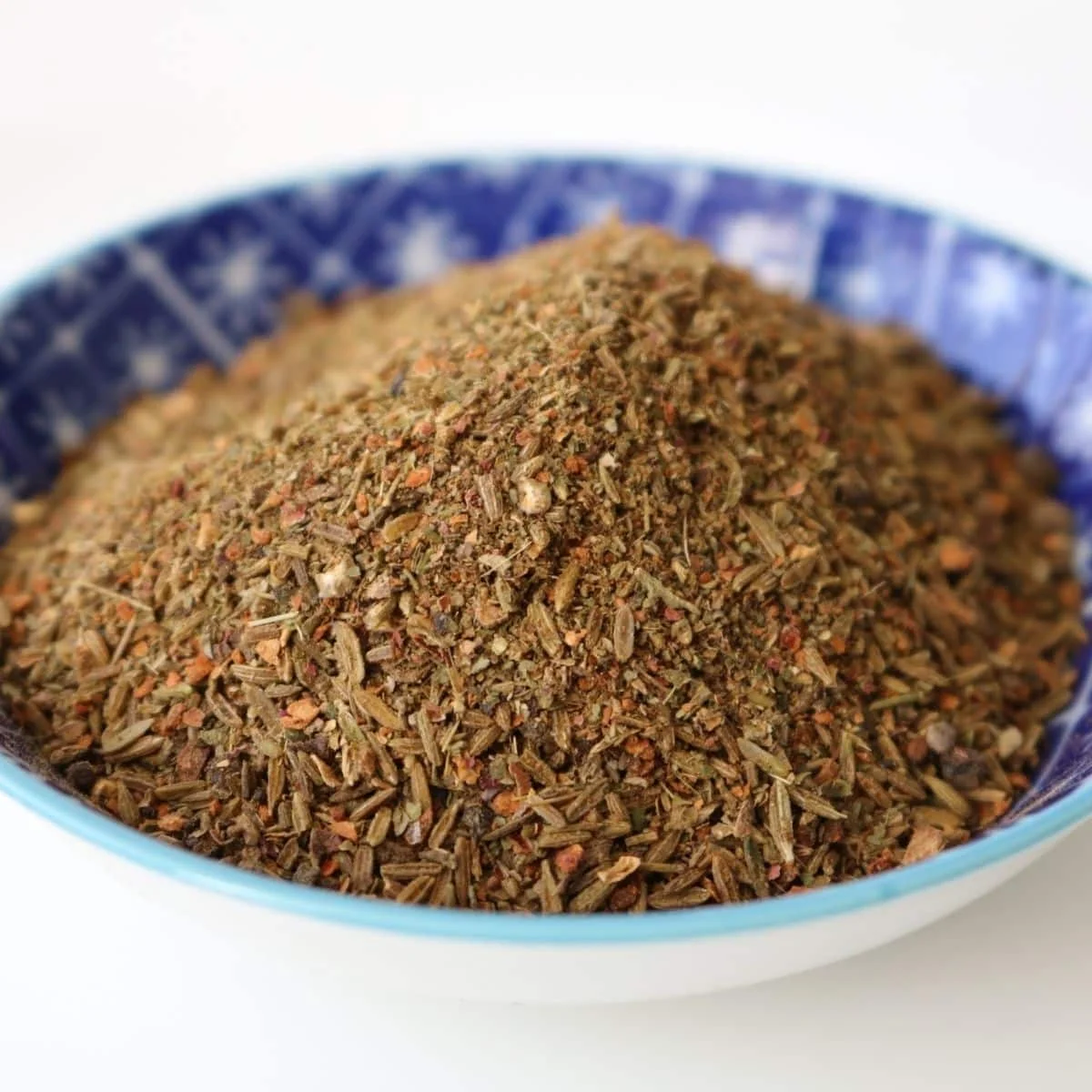
Kamouneh is a fragrant Lebanese spice blend used to season kibbeh and other dishes. This quick homemade version combines warm, peppery and herbal flavours, ready to grind in minutes.
Ingredients
- 2 tbspcumin seeds
- 1 tbspdried rose petals
- 1 tbspblack peppercorns
- 2 tspdried marjoram
- 2 tspdried basil
- 1 tspdried mint
- 1/2 tspcinnamon
- 1 tbsp7 spice
- 1 tspsalt
Instructions
- 1
Grind the spices
Put all the ingredients in a spice blender and pulse until they reach a medium-coarse texture.
- 2
Store the blend
Keep the blend in an airtight container, or refrigerate it.
What is kamouneh?
Kamouneh is a Lebanese seasoning blend associated with kibbeh, the family of dishes made with bulgur and often meat. Recipes vary between households and regions, but cumin and aromatic herbs are common flavour notes.
This version brings together cumin, pepper and 7 spice with rose petals and dried herbs. Grinding the ingredients together gives the blend an even, coarse texture that can season kibbeh or other savoury dishes.
Nutrition and macros by portion
The nutrition label shows one serving as written: 25 calories, 1g protein, 4g carbs, 1g fat.
| Portion | Adjustment | kcal | Protein | Carbs | Fat |
|---|---|---|---|---|---|
| Lighter | Use less salt | 18 kcal | 1g | 3g | 1g |
| This serving | As written | 25 kcal | 1g | 4g | 1g |
| Hungry | Make a double batch | 38 kcal | 2g | 6g | 2g |
Most of the blend’s carbohydrates and fibre come from the cumin, herbs and other ground spices; the small amounts of fat and protein also come chiefly from those ingredients. Salt contributes most of the sodium. Use the blend to season a meal with vegetables and a protein-rich component such as lentils or meat.
Why these ingredients work
Cumin and pepper: these provide the blend’s earthy, warming backbone. The 7 spice adds another layer of familiar Lebanese seasoning.
Herbs and rose: marjoram, basil and mint bring a dry, leafy fragrance, while rose petals add a subtle floral note. Cinnamon rounds out the mixture with gentle warmth.
Getting the grind right
Pulse rather than running the blender continuously. Short bursts help you stop at a medium-coarse texture instead of turning the ingredients into a fine powder.
Check the blend between pulses, especially if your blender is powerful. A little variation in particle size is fine for a seasoning mix.
Choosing the equipment
A spice blender or small grinder is useful for breaking up the cumin seeds and peppercorns. Make sure the container is clean and completely dry before adding the ingredients.
If your blender jar is too large for this small batch, pause to scrape down the sides so the spices grind more evenly.
Using the blend
For kibbeh: mix the kamouneh into the dish as directed by your chosen recipe, tasting and adjusting the seasoning as appropriate. This recipe makes a spice blend rather than a complete kibbeh dish.
Beyond kibbeh: try a small amount in savoury mince, lentil dishes or roasted vegetables. Add it gradually so its cumin, pepper and herb flavours stay balanced.
Keeping it aromatic
Store the blend in an airtight container away from heat, light and moisture. The recipe also suggests refrigeration.
Use a clean, dry spoon whenever you take some out. If the aroma has faded, the blend will bring less fragrance to your cooking.
Recipe notes & tips
- Use fully dried rose petals so they grind cleanly and do not introduce moisture.
- Pulse in short bursts to keep the mixture medium-coarse.
- Taste the finished blend before adding more salt to a dish.
- Label the jar with the blend name and date.
- Keep the grinder dry and free of lingering aromas from other spices.
Variations
- More mint: Add a little extra dried mint for a cooler herbal note.
- Less floral: Reduce the rose petals if you prefer a less pronounced floral aroma.
- Extra warmth: Increase the cinnamon slightly for a warmer blend.
- Milder pepper: Use fewer black peppercorns for a softer peppery finish.
- Salt-free: Leave out the salt and season the dish separately to taste.
Common mistakes to avoid
- Grinding too finely: Pulse briefly and check the texture often.
- Damp ingredients: Use dry herbs and petals so the blend stores well.
- Overfilling the blender: Grind in a smaller batch if the ingredients do not move freely.
- Adding too much at once: Start with a little in the dish and adjust to taste.
- Storing without a seal: Transfer the blend to an airtight container to help preserve its aroma.
How to store
Keep the blend in an airtight container in a cool, dry cupboard, or refrigerate it as the recipe suggests. Use a clean, dry spoon and check its aroma before cooking; discard it if it has taken on moisture or an off smell.
Frequently asked questions
What is kamouneh used for?
It is used to season kibbeh and can also flavour other savoury dishes. Add it gradually to suit the recipe.
How coarse should I grind the blend?
Aim for a medium-coarse texture, with the seeds and pepper broken down but not powdered.
Can I make kamouneh without a spice blender?
A small spice grinder can do the same job. A mortar and pestle is another option, though it takes more effort to break down the seeds and peppercorns.
Can I leave out the salt?
Yes. Omit it from the blend and salt the dish separately to taste.
Should I refrigerate the blend?
The recipe allows for either an airtight container or refrigeration. Keep it sealed and protect it from moisture whichever option you choose.
Cook it from the original
This recipe comes from zaatarandzaytoun.com. Their page has the author’s own photos, notes and tips — the best place to cook it from.
Open the recipe on zaatarandzaytoun.com