
Winter Melon Stir Fry
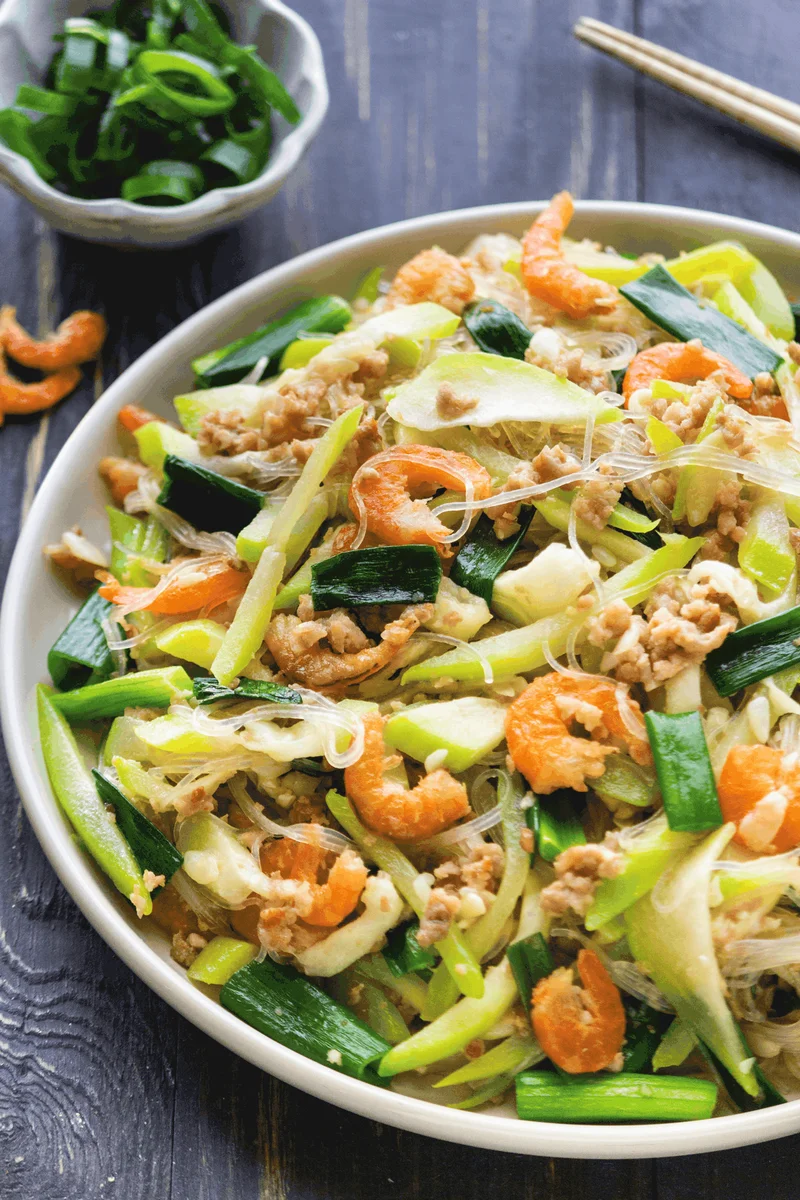
Winter melon stir fry combines tender, lightly translucent strips of melon with pork mince, rehydrated shrimp and soft bean-thread noodles. It is a comforting one-pan meal with savoury juices that the noodles soak up.
Ingredients
- 1 kg (2.2 lb)winter melon
- 40 g (0.09 lb)green bean thread noodles or vermicelli (soaked in cool water for 10 minutes, then drained)
- 250 g (0.55 lb)pork mince
- 50 g (0.11 lb)rehydrated shrimp
- 3 sprigsspring onions (cut into 3 cm pieces)
- 475 ml (2 US cups)water or chicken stock
- 2 clovesgarlic (finely chopped)
- 1¼ tbspoyster sauce
- 1½ tspsalt, or to taste
- 1 tspsugar, or to taste
- 1⅓ tbspchicken bouillon powder (¾ tbsp for the mince marinade and 1 tbsp for the vegetables)
- ¾ tbsppotato starch
- ½ tbspsesame oil
- 4 tbspcooking oil
Instructions
- 1
Marinate the mince
Mix the pork mince with the oyster sauce, salt, sugar, ¾ tbsp of the chicken bouillon powder, sesame oil and potato starch. Set it aside while you prepare the other ingredients.
- 2
Slice the melon
Peel the winter melon and cut it into thin strips about 10 cm long and 0.75 cm wide. Set aside in a bowl. The seeds can stay in: they are edible once cooked.
- 3
Cook the mince
Heat a wok or pan over high heat and add the cooking oil. Once hot, add the garlic and cook for 30 seconds. Add the marinated mince and stir-fry for 2 minutes, or until it is about 80% cooked.
- 4
Add the shrimp
Add the rehydrated shrimp and stir it through for 20 seconds.
- 5
Simmer the melon
Add the winter melon and 1 tbsp of chicken bouillon powder, then stir-fry for 3 minutes. Pour in the water or chicken stock and simmer for a further 5 minutes, or until the melon starts to turn translucent.
- 6
Add the noodles
Add the drained bean-thread noodles and toss them through for 2 minutes.
- 7
Stir in onions
Add the spring onions and stir for 20 seconds.
- 8
Serve immediately
Serve the stir fry straight away.
What is winter melon stir fry?
Winter melon is a mild-tasting gourd used in many Asian home-cooking traditions, often in soups and braises. Here it is cut into strips and stir-fried with pork, shrimp and bean-thread noodles.
The melon softens while keeping its shape, and its gentle flavour takes on the savoury seasoning and cooking juices. The noodles make this version especially satisfying by soaking up the liquid in the pan.
Nutrition and macros by portion
The nutrition label shows one serving as written: 288 calories, 14g protein, 13g carbs, 20g fat.
| Portion | Adjustment | kcal | Protein | Carbs | Fat |
|---|---|---|---|---|---|
| Lighter | Use less cooking oil | 202 kcal | 10g | 9g | 14g |
| This serving | As written | 288 kcal | 14g | 13g | 20g |
| Hungry | Serve with steamed rice | 432 kcal | 21g | 20g | 30g |
The bean-thread noodles and winter melon provide most of the carbohydrates, while pork and shrimp contribute protein. Pork and the cooking and sesame oils account for much of the fat. For a balanced plate, serve a portion with additional vegetables or greens.
Choosing the key ingredients
Winter melon: Look for a firm melon with unblemished skin at an Asian supermarket. Peel it and cut the flesh into strips of similar size so they cook at roughly the same rate.
Bean-thread noodles: Vermicelli works as an alternative. Soaking the noodles in cool water for 10 minutes and draining them first helps them soften quickly in the pan without needing a long boil.
Shrimp: The recipe uses rehydrated shrimp for a concentrated savoury flavour. Drain them before adding so they do not bring excess soaking liquid into the wok.
Get the mince ready
Marinate the pork with the oyster sauce, seasonings, sesame oil and potato starch before heating the pan. The starch helps the seasoning cling to the mince and contributes body to the juices.
Keep the marinade quantities in mind: use ¾ tbsp of the chicken bouillon powder here, reserving 1 tbsp for the melon.
Cook in stages
Hot oil: Add the garlic first and cook it for 30 seconds, just until aromatic. Then add the mince and stir-fry for 2 minutes, stopping when it is about 80% cooked.
Melon and liquid: Give the melon 3 minutes in the pan with the reserved bouillon powder before adding the water or stock. Simmer for 5 minutes, watching for the strips to begin turning translucent.
Noodles and onions: Toss in the drained noodles for 2 minutes, then stir through the spring onions for 20 seconds so they retain some freshness.
Look for these doneness cues
The melon is ready when it begins to look translucent and has softened without completely falling apart. Thin, evenly cut strips help it reach this stage in the recipe’s simmering time.
The noodles should be supple after their time in the pan, with some of the cooking liquid absorbed. The pork is cooked through by the end of the full method; avoid judging it only at the earlier 80% stage.
Serve it while hot
This is designed to be served immediately, while the noodles are soft and the melon is tender. It can be served as a one-pan dish or with plain rice if you would like a more substantial meal.
A simple side of greens or other lightly cooked vegetables offers contrast to the soft melon and noodles.
Recipe notes & tips
- Cut the melon into strips of even thickness so they soften at a similar pace.
- Have the soaked, drained noodles and prepared ingredients ready before heating the wok.
- Let the oil heat before adding the garlic and mince.
- Stir-fry the mince until about 80% cooked before adding the shrimp and melon.
- Add the spring onions near the end to keep their flavour fresh.
- Serve promptly so the noodles do not continue soaking up the pan juices for too long.
Variations
- Use chicken stock: Swap it for the water to give the simmering liquid a deeper savoury flavour.
- Try vermicelli: Use it in place of the green bean-thread noodles, soaking and draining it in the same way.
- Adjust the seasoning: Add salt and sugar to taste while keeping the stated bouillon portions for the mince and vegetables.
- Add leafy greens: Stir in a handful of greens near the end, allowing them to wilt before serving.
- Serve with rice: Offer plain steamed rice alongside for a more filling meal.
Common mistakes to avoid
- Uneven melon strips: Some pieces may turn soft before others; cut them to a consistent thickness.
- Adding dry noodles: They will not soften as intended in the short pan-cooking stage; soak for 10 minutes in cool water and drain first.
- Burning the garlic: It cooks quickly over high heat; add the mince after 30 seconds.
- Cooking the mince too long at first: It continues cooking with the other ingredients; stir-fry it for 2 minutes, to about 80% cooked.
- Overcooking the melon: It can lose its shape; simmer only until it starts to become translucent.
- Adding the spring onions too early: They may lose their freshness; stir them in for the final 20 seconds.
How to store
Refrigerate leftovers in a covered container and eat within 3 days. Reheat in a pan over medium heat until piping hot, adding a small splash of water if the noodles have absorbed most of the liquid.
Frequently asked questions
Do I need to remove the winter melon seeds?
No. The recipe notes that the seeds are edible when cooked, so you can leave them in.
Can I use vermicelli instead of bean-thread noodles?
Yes. The recipe allows vermicelli as an alternative; soak it in cool water for 10 minutes and drain it before adding.
How do I know when the winter melon is ready?
It should begin to look translucent after simmering for about 5 minutes. The strips should be tender but still hold their shape.
Can I use chicken stock instead of water?
Yes, the recipe lists chicken stock as an alternative to water.
Can I prepare any of the ingredients ahead?
You can soak and drain the noodles and cut the melon and spring onions ahead of cooking. Marinate the mince while you prepare the other ingredients, as directed.
Cook it from the original
This recipe comes from wokandkin.com. Their page has the author’s own photos, notes and tips — the best place to cook it from.
Open the recipe on wokandkin.com