
Tender Braised Pork Shanks
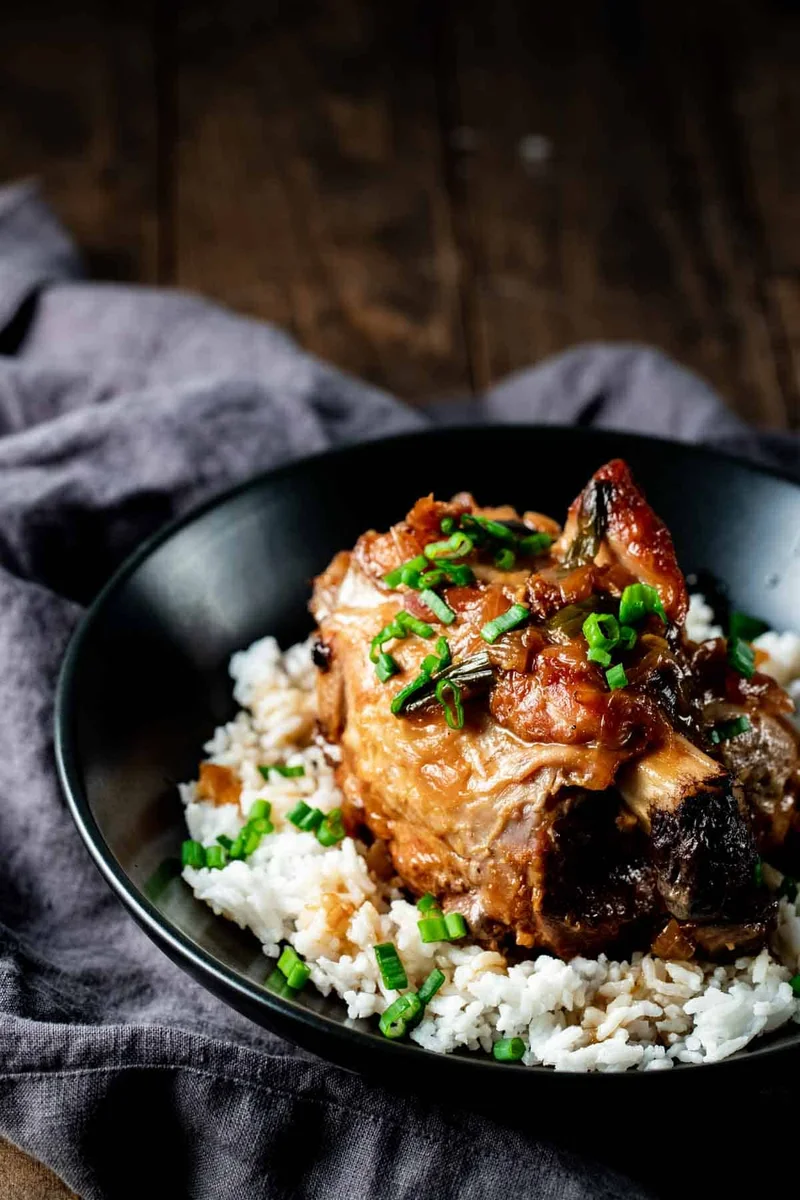
Pork shanks are browned, then slowly braised in a savoury sauce of miso, sake, soy, ginger and brown sugar. The long oven cook makes this a comforting meal for serving over rice, with plenty of flavourful cooking liquid to spoon on top.
Ingredients
- 907 g–1.36 kg (2–3 pounds)pork shanks
- ½onion, diced
- 2 clovesgarlic, minced
- 15 ml (1 tablespoon)grated ginger or ginger paste
- 30 ml (2 tablespoons)red miso paste
- 120 ml (½ cup)sake
- 120 ml (½ cup)pork or chicken stock
- 60 ml (¼ cup)soy sauce
- 50 g (¼ cup)brown sugar
- 2spring onions, chopped
Instructions
- 1
Preheat the oven
Heat the oven to 163°C (325°F).
- 2
Heat the pot
Set a Dutch oven over medium-high heat and add the pork shanks.
- 3
Brown the shanks
Brown the shanks on all sides for about 2–3 minutes per side, until a crust forms. Remove them from the pot and set aside.
- 4
Soften the aromatics
Lower the heat to medium. Add the onion, garlic and ginger, then sauté for 3–5 minutes, until softened and fragrant.
- 5
Mix the sauce
Add all the remaining ingredients and stir to make a sauce.
- 6
Braise until tender
Return the pork to the pot and spoon sauce over it. Cover and cook in the oven for 2–3 hours, until the meat is tender and starting to fall off the bone.
- 7
Serve the pork
Serve the pork over rice and drizzle it with the braising liquid.
What are braised pork shanks?
Pork shanks come from the lower leg and contain connective tissue that softens during slow, moist cooking. Braising combines an initial browning with a covered cook in liquid, giving the meat time to become tender.
This version draws on Japanese-inspired flavours, pairing red miso and sake with soy, ginger and a touch of sugar. The result is a savoury-sweet cooking liquid that works well over rice.
Nutrition and macros by portion
The nutrition label shows one serving as written: 273 calories, 35g protein, 14g carbs, 5g fat.
| Portion | Adjustment | kcal | Protein | Carbs | Fat |
|---|---|---|---|---|---|
| Lighter | More greens, less rice | 191 kcal | 25g | 10g | 4g |
| This serving | As written | 273 kcal | 35g | 14g | 5g |
| Hungry | Add extra rice | 410 kcal | 53g | 21g | 8g |
The pork provides most of the protein, while the brown sugar and rice served alongside contribute carbohydrates. Miso, soy sauce and the cooking fat contribute to the dish’s fat and sodium; serve it with a generous portion of greens to balance the plate.
Building the flavour
Miso and soy: both bring savoury depth, so stir them thoroughly into the liquid to distribute their flavour around the shanks.
Ginger and garlic: sauté them with the onion until fragrant before adding the liquids. This brief step softens their sharpness and gives the sauce a rounded aromatic base.
Why brown the shanks first?
The initial browning creates a crust on the meat and leaves browned bits in the pot. Those bits become part of the sauce when the sake and stock are added.
Work around the shanks patiently, turning them so each side has a chance to colour. If they do not fit comfortably in one layer, brown them in batches.
The slow braise
Keep the Dutch oven covered while it cooks so the shanks braise gently in the sauce rather than drying out. The stated cooking time is 2–3 hours, but the meat’s tenderness is the best guide.
Check near the end of the cooking window. The pork is ready when it is very tender and beginning to pull away from the bone.
Choosing the cooking liquid
Sake: it contributes flavour and loosens the browned residue in the pot. Use the listed 120 ml alongside the stock.
Stock: pork or chicken stock both suit this recipe. Together with the soy and miso, it forms the liquid that surrounds the meat as it cooks.
Serving the shanks
Serve the pork over rice as directed, spooning the braising liquid over both. Chopped spring onions add a fresh, savoury finish.
A simple green vegetable alongside can balance the rich, soft meat and make the meal feel more complete.
Recipe notes & tips
- Pat the shanks dry before browning to help them colour in the pot.
- Turn the shanks with tongs so you can brown all sides evenly.
- Scrape the browned bits into the sauce when adding the liquids.
- Keep the pot covered throughout the oven braise.
- Check the pork for tenderness near the end of the 2–3 hour cooking time.
- Spoon the braising liquid over the rice just before serving.
Variations
- Use ginger paste: swap it for the grated ginger in the same listed amount.
- Choose chicken stock: use it in place of pork stock without changing the quantity.
- Add chilli: stir a little chilli into the sauce for gentle heat.
- Finish with spring onions: scatter them over the pork at the table for a fresh garnish.
- Serve with noodles: use noodles instead of rice to catch the braising liquid.
Common mistakes to avoid
- Crowding the pot: brown the shanks in batches if they do not fit in one layer.
- Skipping the browning: take time to form a crust before setting the pork aside.
- Sautéing too briefly: cook the onion, garlic and ginger for 3–5 minutes until softened and fragrant.
- Cooking uncovered: keep the Dutch oven covered so the pork braises in the liquid.
- Relying only on the clock: check that the meat is tender and starting to fall from the bone.
How to store
Refrigerate leftover pork and braising liquid in a covered container for up to 3 days. Reheat gently in a covered saucepan with some of the liquid, or in the microwave until hot throughout.
Frequently asked questions
How do I know when the pork shanks are done?
They should be very tender and starting to fall off the bone. Begin checking towards the end of the 2–3 hour braising time.
Can I use ginger paste instead of fresh ginger?
Yes. The recipe lists ginger paste as a substitute for the 15 ml of grated ginger.
Can I use chicken stock?
Yes. Use the same 120 ml quantity of pork or chicken stock.
What should I serve with braised pork shanks?
Serve them over rice with the braising liquid spooned on top. A green vegetable is a useful side.
Can I make the pork ahead?
Yes. Cook it, cool it and refrigerate it with the braising liquid. Reheat gently until hot throughout.
Can I cook the shanks for longer than 3 hours?
The recipe gives a 2–3 hour range. If the pork is not yet tender at the end of that time, continue cooking it covered and check again periodically.
Cook it from the original
This recipe comes from wenthere8this.com. Their page has the author’s own photos, notes and tips — the best place to cook it from.
Open the recipe on wenthere8this.com