
Lemon Garlic Shrimp Pasta
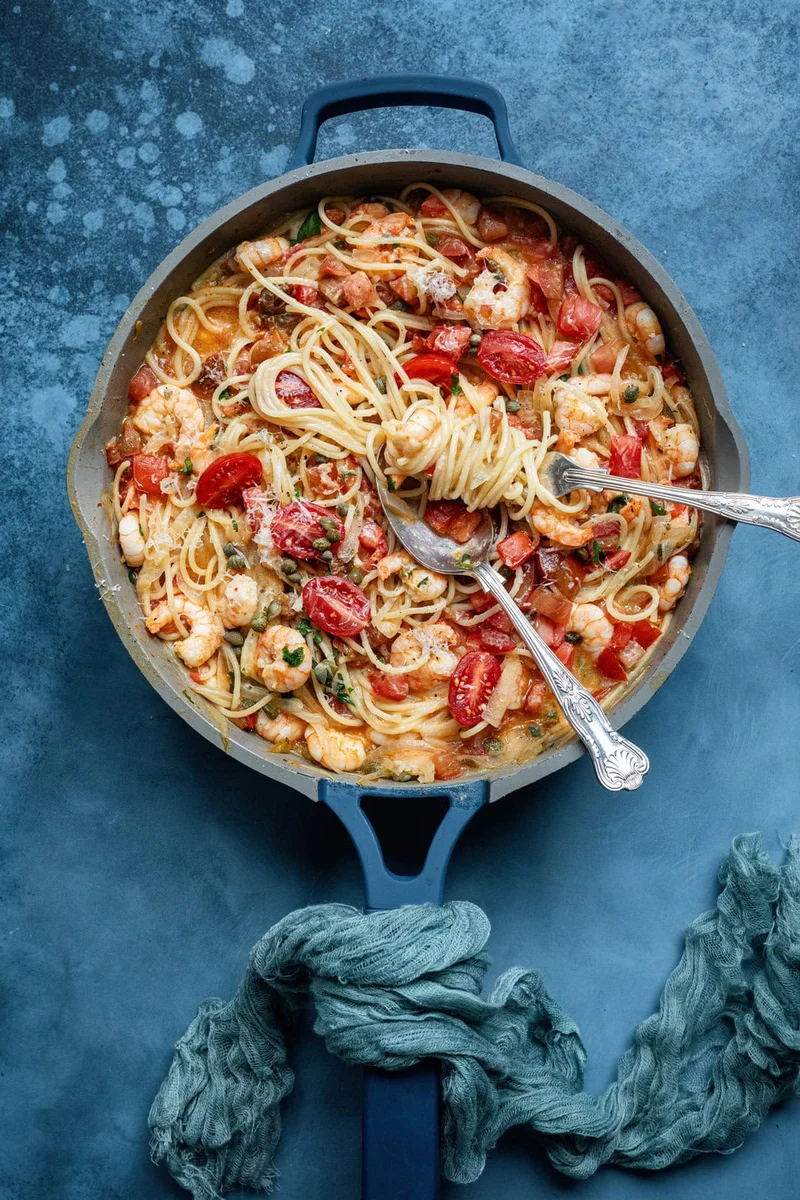
This one-pot lemon garlic shrimp pasta pairs spaghetti with tender shrimp in a bright sauce of white wine, lemon and garlic. It is a handy weeknight dinner, with fresh tomatoes, herbs and Parmesan to finish.
Ingredients
- 1 tbspolive oil
- 1 tbspunsalted butter
- 1yellow onion, finely sliced
- 1 1/2 tspsalt
- 1/2 tspsweet red pepper flakes
- 1/2 tspfreshly ground black pepper
- 1 pinchsugar
- 5 clovesgarlic, minced
- 2 tbsp, or more to tastecapers
- 450 g (1 lb)raw shrimp, peeled and deveined; thawed if frozen
- 80 ml (1/3 cup)dry white wine
- 2 tbsplemon juice
- 960 ml (4 cups)chicken broth or vegetable broth
- 300 g (10 1/2 oz)spaghetti
- 2 largevine-ripened tomatoes, diced
- 2 tbsp, plus extra to servegrated Parmesan cheese
- to seasonsalt and pepper
- 1 tbspfresh basil, chopped
- 1 tbspfresh parsley, chopped
- 1 handfulcherry tomatoes, halved
Instructions
- 1
Soften the onion
Heat the butter and olive oil in a pan. Add the sliced onion, salt, pepper, sugar and red pepper flakes, then cook over a low heat, stirring, until the onion softens.
- 2
Add garlic and capers
Stir in the minced garlic and capers. Cook for a couple of minutes, until fragrant.
- 3
Cook the shrimp
Add the shrimp and stir for a couple of minutes, until they begin to turn pink. Pour in the white wine and lemon juice and bring to a simmer. Transfer the mixture to a bowl and set aside.
- 4
Simmer the spaghetti
Pour the broth into the same pan; there is no need to clean it first. Bring the broth to a simmer, add the spaghetti and, as it softens, make sure it is submerged. Cook for six minutes, stirring frequently.
- 5
Add the tomatoes
Stir in three-quarters of the diced tomatoes. Cook for a few more minutes, until the pasta is nearly done but still al dente.
- 6
Return the shrimp
Add the cooked shrimp, onions and their cooking juices to the pan, then stir to combine. Taste the pasta and, if needed, adjust the seasoning.
- 7
Finish and serve
Toss in the chopped herbs and grated Parmesan. Serve with some of the reserved diced tomatoes and a few halved cherry tomatoes.
What is lemon garlic shrimp pasta?
This Mediterranean-inspired pasta brings together spaghetti, shrimp, citrus, garlic and tomatoes in one pan. Its flavours draw on familiar coastal pairings, with wine and lemon adding brightness to the seafood.
The recipe works by cooking the shrimp first, then using the same pan for the pasta so it picks up the savoury cooking juices. Fresh herbs and Parmesan go in at the end for a fragrant, savoury finish.
Nutrition and macros by portion
The nutrition label shows one serving as written: 426 calories, 16g protein, 67g carbs, 9g fat.
| Portion | Adjustment | kcal | Protein | Carbs | Fat |
|---|---|---|---|---|---|
| Lighter | Less Parmesan, more vegetables | 298 kcal | 11g | 47g | 6g |
| This serving | As written | 426 kcal | 16g | 67g | 9g |
| Hungry | Larger pasta portion | 639 kcal | 24g | 101g | 14g |
The spaghetti and tomatoes provide most of the carbohydrates, while the shrimp contributes protein. Olive oil, butter and Parmesan supply much of the fat, with broth and capers contributing salt. Pair a serving with a generous side of vegetables or salad for a more balanced plate.
Build the flavour base
Onion: cook it gently with the butter, oil and seasonings until soft. Keeping the heat low helps it mellow without rushing the garlic that follows.
Garlic and capers: give these a couple of minutes in the pan to release their aroma. Capers bring a salty, tangy note, so taste before adding extra salt later.
Cook the shrimp gently
Shrimp: cook them only until they start to turn pink before setting them aside. They return to the pan near the end, which helps avoid overcooking them while the spaghetti simmers.
Wine and lemon: bring the mixture just to a simmer after adding both. Keep the shrimp and their cooking juices together in the bowl so all of that flavour can go back into the pan.
Get the pasta texture right
Submerge: spaghetti softens gradually in the broth, so nudge it beneath the liquid as it becomes flexible. Stir frequently during the six-minute simmer to help it cook evenly.
Doneness: the pasta should be nearly cooked but still al dente before you add the shrimp mixture. Taste it at the end and continue cooking only as needed to reach your preferred texture.
Use the tomatoes in stages
Diced tomatoes: add three-quarters while the spaghetti finishes cooking. They mingle with the broth and bring freshness to the sauce.
Cherry tomatoes: keep these for serving, along with the reserved diced tomatoes. Adding them at the end preserves their fresh, juicy character.
Finish with herbs and Parmesan
Basil and parsley: stir in the chopped herbs just before serving for a fresh finish. Their flavour is most noticeable when they are not simmered for long.
Parmesan: add the grated cheese at the end, then serve with extra at the table if you like. A crisp green salad or steamed vegetables make simple accompaniments.
Recipe notes & tips
- Thaw frozen shrimp fully before cooking, then drain them well.
- Keep the onion over a low heat so it softens without browning quickly.
- Stir the spaghetti frequently as it cooks in the broth.
- Reserve a little diced tomato for the final garnish.
- Taste before adding more salt, as the capers, broth and Parmesan are already savoury.
Variations
- Use vegetable broth: choose it instead of chicken broth for a different savoury base.
- Adjust the heat: add more or fewer red pepper flakes to suit your preference.
- Add extra capers: increase them to taste for a sharper, saltier note.
- Change the herbs: use more basil or parsley while keeping the same fresh finish.
- Serve with extra Parmesan: grate more over each bowl at the table.
Common mistakes to avoid
- Overcooking the shrimp: set them aside as soon as they start turning pink and return them near the end.
- Leaving spaghetti above the broth: push it under the liquid as it softens so it cooks evenly.
- Skipping frequent stirring: stir during the six-minute simmer to keep the pasta moving through the broth.
- Adding all the tomatoes at once: reserve some diced tomato for serving as directed.
- Seasoning too early at the end: taste first, since capers, broth and cheese all add savouriness.
How to store
Refrigerate leftovers in a covered container and eat within 2 days. Reheat gently in a pan with a splash of water or broth, stirring until hot; avoid prolonged heating so the shrimp do not become tough.
Frequently asked questions
Can I use frozen shrimp?
Yes. Thaw the shrimp before cooking, as specified in the recipe, and drain them well.
Can I use vegetable broth instead of chicken broth?
Yes, the recipe lists either chicken or vegetable broth. Use the same amount.
How do I know when the pasta is done?
It should be nearly cooked but still al dente when the shrimp mixture goes back into the pan. Taste it at the end and adjust the cooking time to your liking.
Can I make this without white wine?
The listed method uses dry white wine, and no substitute is specified. You can omit it, but the flavour will differ.
How should I reheat leftovers?
Warm them gently in a pan with a splash of water or broth, stirring until hot. This helps loosen the pasta without needing a long reheat.
Cook it from the original
This recipe comes from supergoldenbakes.com. Their page has the author’s own photos, notes and tips — the best place to cook it from.
Open the recipe on supergoldenbakes.com