
Philadelphia Cheesecake
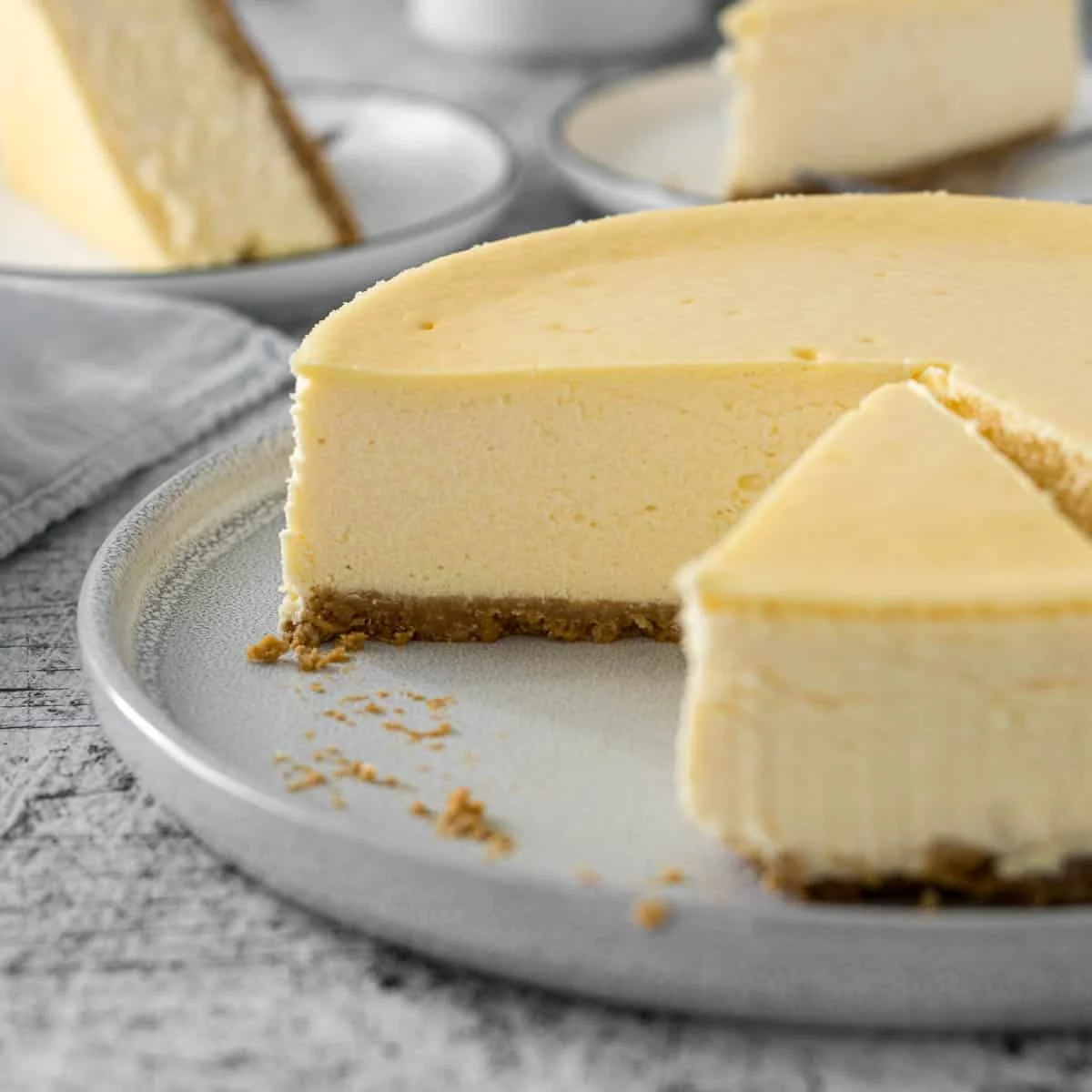
This American-style baked cheesecake has a buttery biscuit crumb base and a smooth vanilla cream cheese filling. It is a good make-ahead dessert for sharing, with fresh fruit or another favourite topping alongside.
Ingredients
- 100 g (1 cup)Graham cracker crumbs or biscuit crumbs
- 38 g (3 tablespoons)white granulated sugar
- 57 g (1/4 cup)butter
- 907 g (32 ounces)cream cheese
- 200 g (1 cup)white granulated sugar
- 15 ml (1 tablespoon)vanilla extract
- 15 ml (1 tablespoon)lemon juice
- 4eggs
Instructions
- 1
Bring to room temperature
Let all the ingredients come to room temperature before starting; this helps the filling mix smoothly.
- 2
Prepare the oven
Position a rack in the lower third of the oven and heat it to 180°C. Lightly grease the cake pan, and line it with baking paper if desired.
- 3
Melt the butter
Melt the butter, then leave it to cool.
- 4
Mix the crumbs
Crush or process the Graham crackers or biscuits until mostly fine, like sand. Stir the crumbs and 38 g sugar together with the melted butter until evenly coated.
- 5
Press the base
Press the crumb mixture firmly over the base of a 23 cm springform or loose-bottomed cake pan. An 20 cm pan can also be used if it has high sides.
- 6
Bake the base
Bake the base for 10 minutes, then remove it and leave it to cool while you prepare the filling. Reduce the oven temperature to 150°C.
- 7
Beat half the cheese
Put half the room-temperature cream cheese in a large bowl or stand mixer bowl. Add the sugar and vanilla, then beat at medium speed, using the paddle attachment if applicable, for about 3–5 minutes until smooth and the sugar has dissolved. Scrape down the bowl regularly.
- 8
Finish the filling
Add the remaining cream cheese and mix at medium speed for 3 minutes, scraping down the bowl as needed. Add the lemon juice and mix for a further 30 seconds.
- 9
Add the eggs
With the mixer on low, add the eggs one at a time. Scrape down the sides between additions and avoid overmixing.
- 10
Fill the pan
Pour the filling over the baked base and smooth the top with the back of a spoon or an offset spatula. Tap the pan on the worktop a few times to bring air bubbles to the surface.
- 11
Set up the water bath
Wrap the bottom and sides of the springform pan in two layers of foil, taking care to make it watertight. Set it in a large roasting tin and place the tin in the oven. Pour water into the roasting tin to a depth of about 2.5 cm.
- 12
Bake the cheesecake
Bake for 50–75 minutes. It is ready when the edges are set and the centre still wobbles slightly; the original recipe notes a baking time of 70 minutes.
- 13
Cool and chill
Turn off the oven, open the door slightly with a wooden spoon and leave the cheesecake inside for at least 1 hour. Take it out and cool completely at room temperature, about 3 hours. Remove the foil, then refrigerate for 3–4 hours until fully chilled.
- 14
Slice and serve
Release the cheesecake from the pan, slice it and serve with a topping of your choice.
What is Philadelphia cheesecake?
Philadelphia cheesecake is an American baked cheesecake made with cream cheese, set over a crumb crust. This version uses vanilla for a familiar flavour, with a little lemon juice to brighten the rich filling.
A pre-baked base and a gentle water bath help the biscuit layer stay distinct while the filling cooks evenly. Give it time to cool and chill before slicing.
Nutrition and macros by portion
The nutrition label shows one serving as written: 428 calories, 7g protein, 29g carbs, 32g fat.
| Portion | Adjustment | kcal | Protein | Carbs | Fat |
|---|---|---|---|---|---|
| Lighter | Smaller cheesecake slice | 300 kcal | 5g | 20g | 22g |
| This serving | As written | 428 kcal | 7g | 29g | 32g |
| Hungry | Larger cheesecake slice | 642 kcal | 11g | 44g | 48g |
The crumb base and sugar provide most of the carbohydrates, while the cream cheese and butter account for much of the fat. Cream cheese and eggs contribute protein. Balance a slice with fresh fruit, or serve it after a lighter main meal.
The crumb base
Fine crumbs: Process the Graham crackers or biscuits until they resemble sand so the butter can coat them evenly.
Firm layer: Press the mixture into an even layer at the bottom of the pan. Baking it for 10 minutes helps it hold together beneath the filling.
Room-temperature ingredients
Softened cheese: Let the cream cheese and other ingredients lose their chill before mixing. This makes it easier to combine them into a smooth filling without working the mixture excessively.
Gradual mixing: Beat half the cheese with the sugar and vanilla first, then add the rest. Scrape the bowl as you go so there are no unmixed patches.
Mixing without excess air
Gentle eggs: Add the eggs one by one on low speed, stopping as soon as each is incorporated. Too much beating can add extra air to the filling.
Smooth top: Level the filling and tap the pan a few times before baking to release visible air bubbles.
Why use a water bath?
Foil barrier: Wrap the pan carefully in two layers of foil to keep water from seeping through its base. Check that the foil reaches up the sides of the pan.
Steady heat: The shallow water bath surrounds the cake pan with gentle heat as the cheesecake bakes. Keep the centre slightly wobbly when you take it out of the oven; it will continue to set as it cools.
Cooling and chilling
Slow cool: Leave the cheesecake in the switched-off oven with the door slightly open for at least 1 hour, then cool it at room temperature for about 3 hours.
Full chill: Refrigerate it for 3–4 hours before slicing. This make-ahead time helps the filling firm up and makes neater portions.
Serving ideas
Fresh fruit: Serve slices with fresh berries or other fruit for a bright contrast to the creamy filling.
Other toppings: Whipped cream or another topping of your choice also works well. Add toppings just before serving if you want to keep the surface tidy.
Recipe notes & tips
- Weigh the crumb ingredients for a consistent base.
- Use room-temperature cream cheese to make mixing easier.
- Scrape down the bowl regularly so the filling stays even.
- Check the water-bath foil for gaps before adding water.
- Start checking the cheesecake at 50 minutes; the centre should still wobble slightly.
- Chill the cheesecake fully before cutting for cleaner slices.
Variations
- Biscuit choice: Use biscuit crumbs in place of Graham cracker crumbs for the base.
- Berry topping: Add fresh berries just before serving for a fruity finish.
- Fruit topping: Serve with sliced fresh fruit alongside each portion.
- Whipped cream: Add a spoonful of whipped cream when serving.
- Plain finish: Serve the chilled cheesecake without a topping to let the vanilla filling stand out.
Common mistakes to avoid
- Cold cream cheese: It can leave lumps in the filling; bring it to room temperature before mixing.
- Overbeating the eggs: This can add too much air; mix on low and stop once each egg is incorporated.
- Loose foil: Water can leak into the pan; wrap the base and sides in two careful layers.
- Overbaking: A fully firm centre can become dry; remove the cheesecake when the edges are set but the centre still wobbles slightly.
- Rushing the chill: Warm cheesecake is difficult to slice neatly; allow the full cooling and chilling time.
How to store
Cover and refrigerate leftover cheesecake for up to 4 days. For serving, let a slice sit briefly at room temperature, or warm it gently in the microwave in short bursts if you prefer it less chilled.
Frequently asked questions
How do I know when the cheesecake is baked?
The edges should look set while the centre still has a slight wobble. It will firm up further as it cools and chills.
Can I use ordinary biscuits instead of Graham crackers?
Yes. The recipe allows biscuit crumbs as an alternative; crush them finely and combine them with the butter and sugar as directed.
Why does the cream cheese need to be at room temperature?
Softer cream cheese blends more readily into a smooth filling. It also helps avoid lumps without prolonged mixing.
Can I make this cheesecake ahead?
Yes. It needs time to cool and chill, so it is well suited to making ahead. Keep it covered in the refrigerator until serving.
Do I have to use a water bath?
The method uses one to surround the cake pan with gentle heat. Wrap the pan securely in foil to help keep water out.
What should I serve with it?
Fresh berries, other fresh fruit or whipped cream all make suitable accompaniments. You can also use a topping of your choice.
Cook it from the original
This recipe comes from saltyginger.com. Their page has the author’s own photos, notes and tips — the best place to cook it from.
Open the recipe on saltyginger.com