
Halva Havij
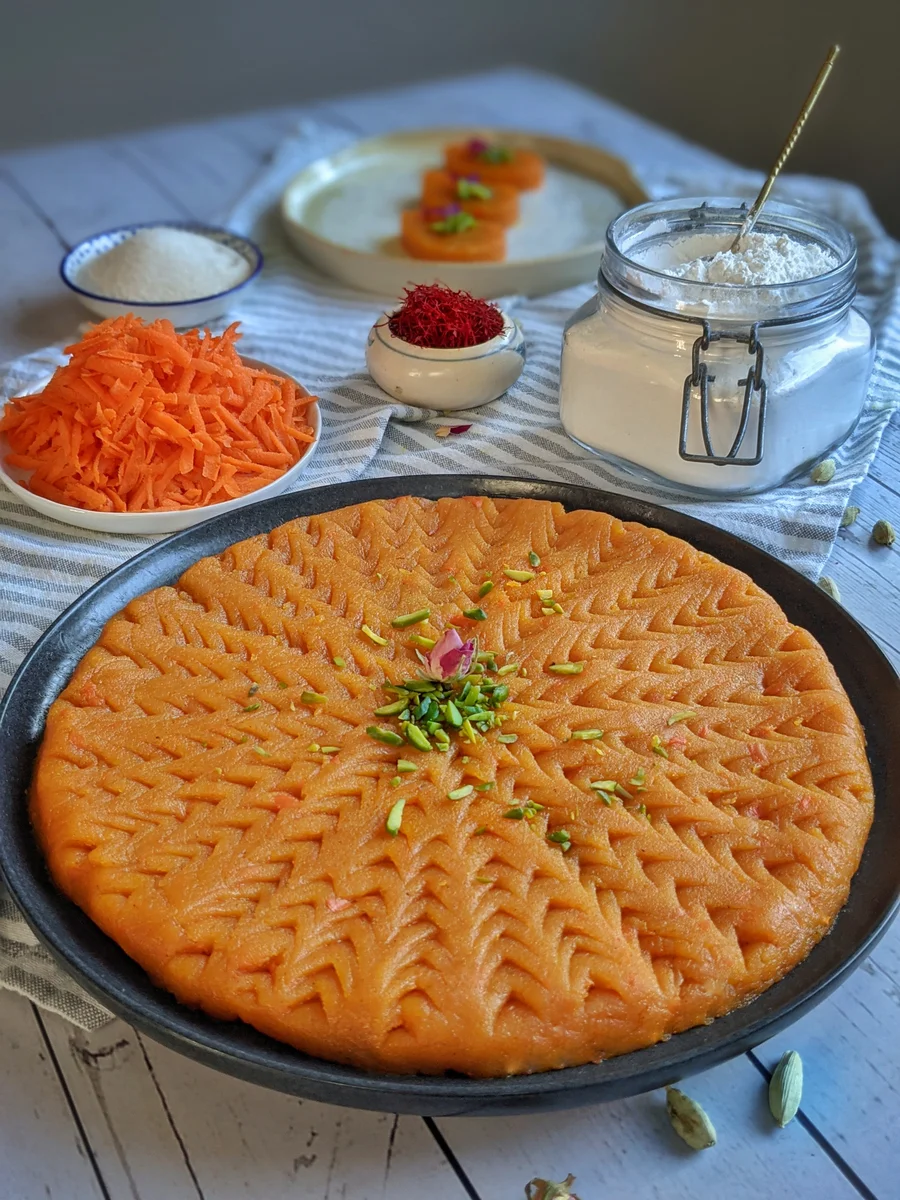
Halva Havij is an Iranian carrot halva flavoured with rosewater, saffron and cardamom. Carrots are cooked until soft, then combined with toasted rice flour to make a smooth, sliceable sweet for sharing.
Ingredients
- 500 gcarrots, cut into thin rings
- 200 g (1 cup)sugar, adjusted to taste
- 360 ml (1½ cups)water
- ¼ teaspoonsalt
- 113 g (½ cup)unsalted butter
- 125 g (1 cup)rice flour
- 120 ml (½ cup)rosewater
- ½ teaspoon, dissolved in 15 ml (1 tablespoon) waterground saffron
- 2 teaspoonsground cardamom
- 16 g (2 tablespoons)pistachios, slivered
- 1 teaspoondried rose petals, crushed
Instructions
- 1
Cook the carrots
Put the carrots, sugar, water and salt in a saucepan. Bring to the boil, stirring until the sugar dissolves, then cover and simmer over low heat for 15–20 minutes.
- 2
Purée until smooth
Transfer the cooked carrots to a food processor and blend until smooth and creamy. Set aside.
- 3
Toast the flour
In a large frying pan, toast the rice flour over low heat for about 5–8 minutes, until aromatic. Take care not to let it burn.
- 4
Combine the ingredients
Add the remaining ingredients and the carrot purée to the pan. Stir continuously over low heat for 10–15 minutes.
- 5
Check the texture
At this point, the mixture should have become a thick, smooth paste.
- 6
Shape and garnish
Spoon the halva into a plate, pie dish or tart pan with a removable ring, and press it firmly into place with the spoon. Let it cool, then garnish with ground pistachios and rose petals.
- 7
Serve the halva
Serve chilled or at room temperature.
- 8
Store leftovers
Cover any remaining halva with a lid or plastic wrap and store it in the refrigerator.
What is Halva Havij?
Halva Havij is a carrot-based Iranian sweet in the halva family, whose many versions are made with different grains, nuts or vegetables. This version pairs the carrots with rice flour and fragrant rosewater, saffron and cardamom.
Cooking and puréeing the carrots gives the mixture a smooth base, while toasted rice flour helps it thicken into a paste that can be pressed into a dish and served in portions.
Nutrition and macros by portion
The nutrition label shows one serving as written: 282 calories, 3g protein, 45g carbs, 12g fat.
| Portion | Adjustment | kcal | Protein | Carbs | Fat |
|---|---|---|---|---|---|
| Lighter | Use less sugar | 197 kcal | 2g | 31g | 8g |
| This serving | As written | 282 kcal | 3g | 45g | 12g |
| Hungry | Serve a larger piece | 423 kcal | 4g | 68g | 18g |
The carrots, sugar and rice flour provide most of the carbohydrates, while butter supplies most of the fat. The recipe has little protein, with a small contribution from the rice flour and pistachios. Serve a piece with plain yoghurt or fruit for a more balanced plate.
Why use rice flour?
Rice flour gives the halva its body without adding a strong flavour. Toasting it gently first brings out an aroma that complements the spices.
Keep the heat low and stir the flour as it toasts so it warms evenly. Stop when it smells aromatic; it should not burn.
Get the carrots ready
Thin carrot rings cook through in the recipe’s 15–20-minute simmer. Stir as the mixture comes to the boil so the sugar dissolves in the cooking water.
Purée the carrots once they are cooked, aiming for a creamy, lump-free result. A smooth purée is easier to combine with the toasted flour.
Build the flavour
Rosewater, saffron and cardamom bring the characteristic floral and aromatic notes. Dissolving the saffron in water before adding it distributes its colour and flavour through the mixture.
The sugar is adjustable to taste. If changing it, bear in mind that it contributes sweetness as well as bulk to the carrot mixture.
Watch the texture
Once the carrot purée and remaining ingredients are in the pan, stir continuously over low heat for 10–15 minutes. The mixture should become thick and smooth rather than remain loose.
When shaping, press the halva firmly into the serving dish with the back of a spoon. Let it cool before garnishing so the surface can settle.
Serving and garnishing
The halva can be served chilled or at room temperature, so it works as a make-ahead sweet. A plate, pie dish or tart pan with a removable ring can all be used to shape it.
Slivered pistachios and crushed rose petals add colour and a little contrast to the smooth halva. The method calls for ground pistachios as a garnish; grind the listed pistachios if you prefer that finish.
What to serve alongside it
Serve small pieces as a sweet course after a meal or alongside tea. Its floral, spiced flavour is concentrated, so a modest piece can be a satisfying serving.
For a more balanced plate, pair it with plain unsweetened yoghurt or fresh fruit rather than another rich sweet.
Recipe notes & tips
- Cut the carrots into thin, similarly sized rings so they cook evenly.
- Keep the rice flour over low heat and stir it often while toasting.
- Blend the cooked carrots until creamy before adding them to the pan.
- Stir continuously while the halva thickens to help keep the mixture smooth.
- Press the halva firmly into the dish for an even shape.
- Let it cool before adding the pistachios and rose petals.
Variations
- Adjust the sweetness: Use less or more sugar to suit your taste.
- Use a ring mould: Press the halva into a tart pan with a removable ring for a shaped presentation.
- Change the garnish: Use the listed slivered pistachios whole or grind them for a finer finish.
- Serve it chilled: Refrigerate the shaped halva before serving for a cool, firm texture.
- Serve it at room temperature: Let the halva lose its chill before bringing it to the table.
Common mistakes to avoid
- Burning the flour: Toast it over low heat and stop once it smells aromatic.
- Leaving carrot pieces: Blend the cooked carrots until the purée is smooth and creamy.
- Skipping the stirring: Stir continuously during the 10–15-minute thickening stage.
- Serving it before it settles: Allow the shaped halva to cool before garnishing.
- Forgetting to cover leftovers: Seal the dish with a lid or plastic wrap before refrigerating.
How to store
Cover leftover halva with a lid or plastic wrap and keep it in the refrigerator. It is best used within 3–4 days; serve chilled or let it come to room temperature. The recipe does not specify a reheating method.
Frequently asked questions
Can I make Halva Havij ahead?
Yes. Shape the halva, let it cool and cover it before storing it in the refrigerator. Garnish before serving.
How do I know when the carrots are cooked?
After simmering for 15–20 minutes, they should be soft enough to blend into a smooth purée.
How do I know when the halva is ready?
After 10–15 minutes of continuous stirring over low heat, it should form a thick, smooth paste.
Can I serve it warm?
The recipe recommends serving it chilled or at room temperature. Let it cool after shaping before serving.
What can I use to shape the halva?
Use a plate, pie dish or tart pan with a removable ring, then press the mixture firmly into it with a spoon.
Can I adjust the sugar?
Yes. The sugar can be adjusted to your taste, as noted in the ingredient list.
Cook it from the original
This recipe comes from thecaspianchef.com. Their page has the author’s own photos, notes and tips — the best place to cook it from.
Open the recipe on thecaspianchef.com