
Duck Fat Fries (Pommes Frites)
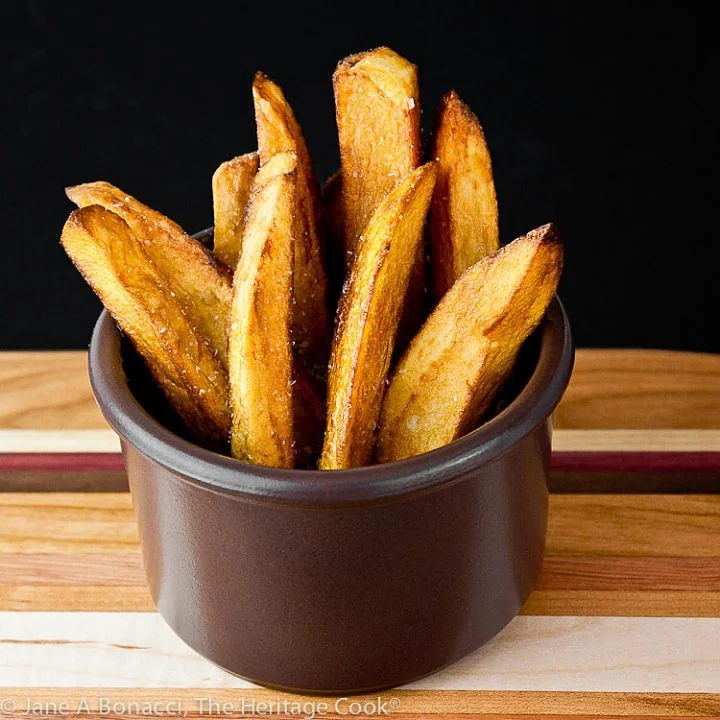
These American-style steak fries are crisp on the outside and tender within, with rich flavour from duck fat. Cutting the potatoes evenly and frying them in small batches helps them brown consistently.
Ingredients
- 4 largeRusset potatoes, scrubbed and peeled if desired
- From 3 to 4 duck breastsDuck fat
- To tasteKosher salt
Instructions
- 1
Set up to drain
Put a Dutch oven or deep saucepan on the hob. Beside it, place a baking sheet topped with a cooling rack for draining the cooked potatoes.
- 2
Render the fat
Add duck fat, trimmed from the top of 2 to 3 duck breasts, to the pan. Set the heat to medium and render it slowly until the skin is crisp and the fat has melted completely. Lift out the pieces of skin with a slotted spoon. Aim for a depth of 5–7.5 cm; add vegetable oil if there is not enough fat.
- 3
Cut the potatoes
Halve each potato lengthways, then cut each half lengthways into thirds. Cut each resulting piece in half lengthways again, adjusting the number of cuts if needed to make fries of a similar thickness.
- 4
Check the cuts
The described cutting sequence starts with a potato half, then slices from that half, and ends with the uncooked fries. Use this sequence to guide the steak-fry shape.
- 5
Part-cook and dry
Arrange the potatoes in a single layer on a paper-towel-lined, microwave-safe plate and pat them dry. Microwave for about 1 minute, until they are roughly halfway cooked, then pat dry again. Leave them to air-dry fully while the fat heats.
- 6
Fry in batches
Raise the heat to medium-high and heat the duck fat to about 175°C, checking with an instant-read thermometer. Fry the potatoes in small batches, arranging each batch in a single layer with room for the fat to bubble up and nearly cover the pieces. Turn them with tongs as they brown so all sides colour evenly.
- 7
Salt and serve
Move the browned fries to the rack-covered baking sheet and sprinkle generously with kosher salt straight away. Keep each batch warm in a low oven while you fry the rest, then serve hot.
- 8
Store the fat
When cooking is finished, turn off the heat and let the duck fat cool for about 20 minutes. Strain it through a fine-mesh sieve into a container, then refrigerate until fully cooled and solid. Use it again within a day or two, or freeze it for longer storage.
What are duck fat fries?
Pommes frites is French for chips or fries, while this version is presented as an American-style side made with Russet potatoes. The defining choice is duck fat, which lends the fries a savoury richness.
The method combines a brief microwave pre-cook with frying. Drying the potatoes and cooking them in batches helps the outside brown while the middle turns tender.
Nutrition and macros by portion
The nutrition label shows one serving as written: 318 calories, 8g protein, 64g carbs, 4g fat.
| Portion | Adjustment | kcal | Protein | Carbs | Fat |
|---|---|---|---|---|---|
| Lighter | Smaller serving with salad | 223 kcal | 6g | 45g | 3g |
| This serving | As written | 318 kcal | 8g | 64g | 4g |
| Hungry | Larger portion | 477 kcal | 12g | 96g | 6g |
The potatoes provide most of the carbohydrates, while duck fat contributes the main share of the fat; the listed ingredients contain no substantial protein source. Pair a serving with a protein-rich main and vegetables or salad to make a more balanced plate.
Choosing the potatoes and fat
Russet potatoes: their size makes them practical to cut into substantial steak fries. Peel them if you prefer, or leave the skins on after scrubbing.
Duck fat: render it slowly over medium heat until the skin pieces are crisp, then remove those pieces before frying. The recipe calls for enough fat to reach a depth of about 5–7.5 cm; vegetable oil can make up the difference.
Cutting evenly
Similar thickness: cut the potatoes into pieces that are as even as you can manage, rather than aiming for an exact number of cuts. Potato size varies, so the cutting sequence may need to change.
Consistent pieces are easier to cook evenly. Keep the cut fries together while you prepare them for the microwave.
Why dry and microwave them?
Surface moisture: pat the raw fries dry before microwaving, then pat them dry a second time afterwards. Letting them air-dry fully before they meet the hot fat follows the recipe’s preparation method.
Brief pre-cooking: the microwave step takes about 1 minute and brings the potatoes roughly halfway to cooked. Avoid crowding the plate; the fries should sit in a single layer.
Frying for even colour
Temperature: heat the duck fat to about 175°C and use an instant-read thermometer to check it. Turn the fries with tongs as they brown so their sides colour evenly.
Small batches: leave space between the pieces so the fat can bubble around them. Crowding the pan makes it harder to turn the fries and can prevent even browning.
Serving and timing
Salt promptly: sprinkle the fries generously as soon as they reach the rack, while their surfaces are hot. Serve them hot for the best contrast between crisp edges and tender centres.
Holding batches: keep finished fries warm in a low oven while the remaining potatoes cook. They work well beside a burger, roast meat or a simple salad.
Recipe notes & tips
- Use a thermometer to bring the duck fat to about 175°C before frying.
- Dry the fries carefully both before and after microwaving.
- Leave room between fries so the hot fat can bubble around them.
- Turn the fries with tongs as they brown for more even colour.
- Salt each batch as soon as it comes out of the fat.
- Keep the cooling rack over a baking sheet to catch drips.
Variations
- Skin-on fries: leave the scrubbed potato skins on for a more rustic finish.
- Vegetable oil top-up: add vegetable oil if the rendered duck fat does not reach the required depth.
- Extra seasoning: add black pepper alongside the kosher salt after frying.
- Herb finish: toss the hot fries with chopped parsley after salting.
- Spiced version: add a little paprika to the salt for a different savoury note.
Common mistakes to avoid
- Uneven cuts: aim for similar thicknesses so the fries cook at a more similar rate.
- Wet potatoes: pat them dry before and after microwaving, then air-dry fully.
- Fat not hot enough: check for about 175°C with an instant-read thermometer before adding a batch.
- Crowded pan: fry in small batches with space around each piece.
- Late salting: sprinkle salt on each batch straight after it leaves the fat.
- Discarding the fat too soon: strain it after cooling and refrigerate or freeze it as directed.
How to store
Strain leftover duck fat into a container and refrigerate it once it has cooled and solidified; use it again within a day or two, or freeze it for longer storage. The recipe is best served hot, so the instructions do not specify storage for leftover fries.
Frequently asked questions
Can I make these without enough duck fat?
Yes. The method says to add vegetable oil if the duck fat does not reach a depth of about 5–7.5 cm.
Do I need to peel the potatoes?
No. Scrub them well and peel them only if you prefer.
Why microwave the potatoes first?
The brief microwave step brings them about halfway to cooked before frying. Pat them dry afterwards and let them air-dry fully.
How do I know when the fat is ready?
Use an instant-read thermometer and heat the fat to about 175°C before frying.
Can I cook all the fries at once?
The method calls for small batches. Keep the finished fries warm in a low oven while you cook the rest.
How should I save the duck fat?
Let it cool for about 20 minutes, strain it through a fine-mesh sieve and refrigerate until solid. Use it again within a day or two, or freeze it for longer storage.
Cook it from the original
This recipe comes from theheritagecook.com. Their page has the author’s own photos, notes and tips — the best place to cook it from.
Open the recipe on theheritagecook.com