
Danish Puff Pastry Slab Pie
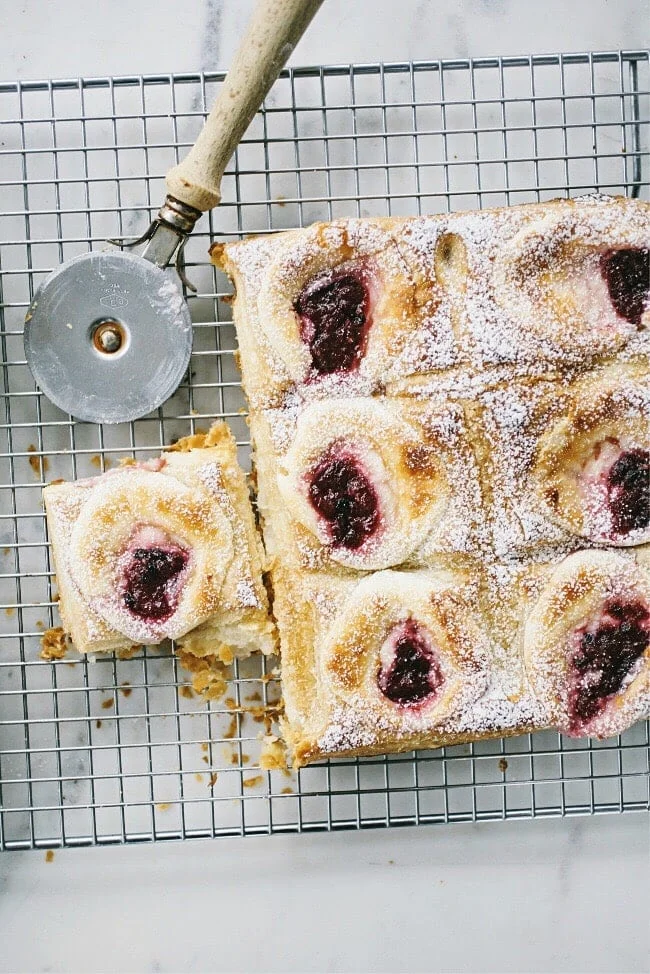
This American-style slab pie turns shop-bought puff pastry into a cream cheese Danish, with little pockets of jam across the top. It is a straightforward bake for brunch, a snack or an easy dessert, and the scored pastry makes it simple to portion.
Ingredients
- 1 sheetpuff pastry
- 226 g (8 oz)cream cheese, at room temperature
- 50 g (¼ cup)granulated sugar
- A pinchsalt
- ½ teaspoonpure vanilla extract
- ½–1 teaspoonlemon juice
- 2–3 tablespoonsjam
- For dustingicing sugar
Instructions
- 1
Heat the oven
Heat the oven to 200°C (400°F). Put a baking stone or a larger baking tray on the centre rack to heat as well. This helps the base brown and crisp; you can omit it if you do not have either.
- 2
Shape the pastry
Cut baking parchment to fit a 23 × 33 cm (9 × 13-inch) baking tray and dust it lightly with flour. Use it as a guide to roll the puff pastry to size. With a sharp knife, score the pastry almost all the way through in a noughts-and-crosses pattern to mark 8–12 portions. Slide the parchment and pastry into the tray and refrigerate.
- 3
Mix the filling
Using a stand mixer with a paddle attachment, beat the cream cheese at medium speed until smooth. Scrape down the bowl, then add the sugar, salt, vanilla and ½ teaspoon of lemon juice. Mix on low until combined. Taste the filling and add a little more lemon juice if it seems flat; it should have a slight lift without tasting distinctly of lemon.
- 4
Add the filling
Use a small scoop or two spoons to place cream cheese filling on each marked portion, using no more than 1–1½ tablespoons per portion. Keep the topping modest so it does not overwhelm or weigh down the pastry.
- 5
Top and bake
Make a small well in each mound of filling with the back of a spoon and add a scant ½ teaspoon of jam. Set the tray on the heated baking stone or larger tray and bake for 21–23 minutes, until the pastry is toasted brown and the cheese has begun to brown in places.
- 6
Dust and serve
Let the pie cool for only a moment, then dust it with icing sugar. For the best texture, cut and serve it barely warm, following the score lines with sharp scissors or a pizza wheel.
What is a Danish puff pastry slab pie?
A Danish is a pastry filled or topped with ingredients such as cream cheese and fruit. This slab version takes that familiar American bakery-style combination and bakes it as one sheet, rather than shaping individual pastries.
The scored puff pastry gives you ready-made portions, while small amounts of cream cheese and jam keep the layers from being buried under heavy toppings.
Nutrition and macros by portion
The nutrition label shows one serving as written: 310 calories, 4g protein, 27g carbs, 22g fat.
| Portion | Adjustment | kcal | Protein | Carbs | Fat |
|---|---|---|---|---|---|
| Lighter | Use less filling and jam | 217 kcal | 3g | 19g | 15g |
| This serving | As written | 310 kcal | 4g | 27g | 22g |
| Hungry | Take a larger slice | 465 kcal | 6g | 41g | 33g |
Most of the carbohydrates come from the puff pastry, sugar and jam, while the pastry and cream cheese provide most of the fat. Cream cheese and pastry contribute some protein, though each piece is not especially protein-rich. Pair a portion with fresh fruit, or serve it after a meal with a source of protein.
Why use shop-bought puff pastry?
Ready-made pastry keeps this bake simple and gives it its flaky layers without the work of making laminated dough. Keep it cold until you are ready to roll and top it, so it is easier to handle.
Keep the filling smooth
Room-temperature cream cheese beats more smoothly than cold cream cheese, helping the sugar and flavourings mix in evenly. Scrape the bowl as directed so there are no unmixed patches.
Lemon juice: Start with ½ teaspoon, then taste before adding more. It should brighten the cream cheese rather than make the filling taste lemony.
Score before topping
The shallow grid marks out the portions and guides the final cuts. Score nearly through the pastry, but leave it connected so the slab holds together while baking.
Filling size: Keep to 1–1½ tablespoons per portion at most, with a scant ½ teaspoon of jam in each well. Too much filling can weigh down the pastry layers.
Look for colour and crispness
Bake until the pastry is a toasted brown and the cream cheese shows a little browning in places; the stated baking time is 21–23 minutes. A preheated stone or larger tray helps the base crisp as well as the top.
The slab is best served barely warm, after a brief pause for the topping to settle. Cut along the score marks with scissors or a pizza wheel to reduce pressure on the flaky pastry.
Choose a jam and serve alongside
Blackberry-pear is one option, but the recipe works with your favourite jam. Spoon a small amount into each well so the fruit flavour complements rather than covers the cream cheese.
Serve a piece with fresh fruit for brunch or a light dessert. The pastry is richest on its own, so fruit makes a fresh contrast.
Recipe notes & tips
- Keep the pastry chilled while you prepare the filling so it stays manageable.
- Use parchment as a guide to roll the pastry to the baking tray's dimensions.
- Taste the cream cheese mixture before deciding whether it needs the full amount of lemon juice.
- Measure small portions of filling to avoid weighing down the pastry.
- Preheat the baking stone or larger tray if you want a crisper base.
- Use a pizza wheel or sharp scissors to cut along the score lines.
Variations
- Change the jam: Use your favourite flavour in place of blackberry-pear.
- Add citrus zest: Stir a little finely grated lemon zest into the cream cheese for a more pronounced citrus note.
- Try a berry mix: Use a berry jam for a tart, fruity topping.
- Make smaller portions: Score 12 portions instead of 8 before adding the filling.
- Finish simply: Dust with icing sugar just before serving so it stays visible.
Common mistakes to avoid
- Overfilling the pastry: Use no more than 1–1½ tablespoons of cream cheese per marked portion so the layers can puff.
- Using cold cream cheese: Let it come to room temperature first for a smoother filling.
- Skipping the score lines: Mark the portions before topping so you can cut neat pieces after baking.
- Adding too much lemon: Start with ½ teaspoon and taste; the filling should not taste distinctly of lemon.
- Cutting while piping hot: Let the pie cool for a moment, then cut along the marks to help the portions hold together.
How to store
Store leftovers covered in the refrigerator for up to 3 days. Reheat briefly in an oven until just warm to help the pastry regain some crispness; icing sugar may need refreshing after reheating.
Frequently asked questions
Can I use a different flavour of jam?
Yes. Use 2–3 tablespoons of your preferred jam, adding a scant ½ teaspoon to each well.
Do I have to preheat a baking stone or tray?
No. It is optional, though placing the pie tray on a preheated stone or larger tray helps the base brown and crisp.
How much cream cheese should go on each portion?
Use no more than 1–1½ tablespoons per marked portion. A lighter topping helps the pastry keep its layers.
How do I know when the pie is done?
The pastry should be toasted brown and the cream cheese should have begun to brown in a few places. The recipe gives a baking time of 21–23 minutes.
Can I prepare the pastry ahead?
You can roll and score the pastry, place it in the tray and refrigerate it as directed while you make the filling. For the best texture, bake it shortly before serving.
What is the best way to cut it?
Follow the score lines with sharp scissors or a pizza wheel. Cut it while barely warm, after letting it cool for a moment.
Cook it from the original
This recipe comes from thevanillabeanblog.com. Their page has the author’s own photos, notes and tips — the best place to cook it from.
Open the recipe on thevanillabeanblog.com