
Smooth & Creamy Coconut Butter
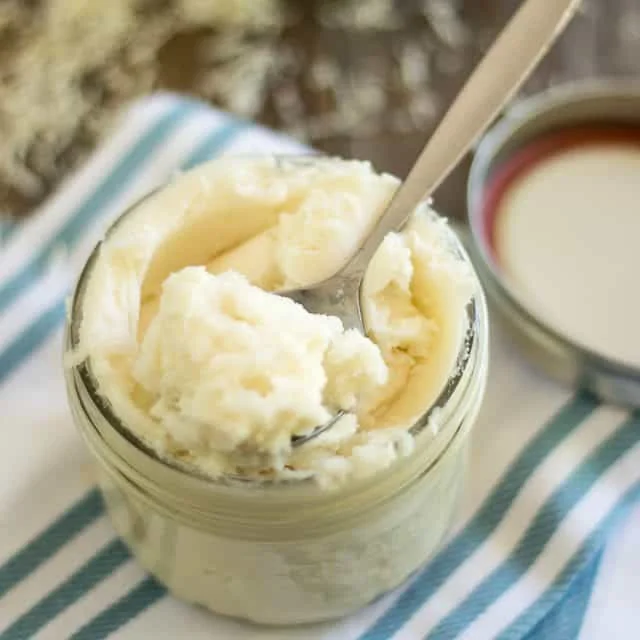
This homemade coconut butter blends unsweetened shredded coconut with coconut oil and salt into a smooth, rich spread. A food processor does most of the work, while straining separates out a coarser coconut mixture you can save as a garnish.
Ingredients
- 480 g (6 cups)unsweetened shredded coconut
- 120 ml (½ cup)coconut oil
- 1 g (¼ tsp)Himalayan salt
Instructions
- 1
Process the mixture
Put all the ingredients in the bowl of a food processor and process for 8–10 minutes in total, until creamy and fairly liquid. Stop and scrape down the sides a few times as needed.
- 2
Strain the butter
Press the coconut butter through a fine-mesh sieve with a ladle or rubber spatula.
- 3
Process the residue
Return the coarser mixture left in the sieve to the food processor and process for a few more minutes, until it becomes liquid again.
- 4
Strain again
Press the mixture through the fine-mesh sieve once more. Repeat this process one or two more times if you wish to extract more from the coconut.
- 5
Leave to set
Pour the smooth butter into a glass jar and leave it to set for at least 24 hours.
- 6
Save the grainy mixture
Do not discard the grainy coconut left from straining. Keep it in a separate jar and use it as a garnish for pancakes, muffins, scrambled eggs or salads.
What is coconut butter?
Coconut butter is a spread made by processing coconut until its natural fats and solids form a thick, creamy mixture. It is different from coconut oil, which is the extracted fat without the coconut solids.
This version adds a little coconut oil to help the shredded coconut blend, then strains the mixture for a smoother finish. The leftover grainy coconut is useful in its own right as a topping.
Nutrition and macros by portion
The nutrition label shows one serving as written: 133 calories, 1g protein, 5g carbs, 13g fat.
| Portion | Adjustment | kcal | Protein | Carbs | Fat |
|---|---|---|---|---|---|
| Lighter | Use a smaller spoonful | 93 kcal | 1g | 3g | 9g |
| This serving | As written | 133 kcal | 1g | 5g | 13g |
| Hungry | Serve a larger spoonful | 200 kcal | 2g | 7g | 20g |
Most of the energy and fat come from the shredded coconut and coconut oil; the coconut also contributes the carbohydrates, fibre and a little protein. Try a modest spoonful on fruit or toast, or pair it with a protein-rich food to make a more balanced snack.
Choosing the ingredients
Coconut: Use unsweetened shredded coconut so the flavour stays distinctly coconutty and the spread is not sweetened by the ingredient itself. The amount of oil the coconut needs can vary slightly with its texture and dryness.
Oil and salt: Coconut oil helps the mixture become more fluid as it processes, while Himalayan salt adds a small savoury note. Measure both before starting so they can go straight into the processor.
Getting a smooth blend
Food processor: The mixture needs several minutes of processing to move from dry shreds to a creamy, fairly liquid butter. Stop occasionally to scrape coconut from the sides and return it to the blades.
Straining: Press the mixture through a fine-mesh sieve with a ladle or rubber spatula. Reprocessing the coarse portion and straining it again helps separate more smooth butter from the grainy solids.
Knowing when it is ready
Before straining: Look for a creamy mixture that flows fairly easily rather than dry, distinct shreds. If it still looks coarse, keep processing and scrape down the bowl as needed.
After straining: The smooth butter should pass through the sieve when pressed, while the coarser solids remain behind. The jarred butter needs at least 24 hours to set.
Allowing time to set
The active processing takes 8–10 minutes, followed by a few additional minutes for the coarse portion. Straining and scraping add some hands-on time, so allow for those pauses.
The recipe does not give a total elapsed time. Plan to leave the jar undisturbed for at least 24 hours after pouring in the smooth butter.
Ways to use it
Spread: Once set, use the coconut butter as a rich spread or spoon it over pancakes and muffins. Its coconut flavour also pairs well with fruit or toast.
Grainy coconut: Keep the strained solids in a separate jar and sprinkle them over pancakes, muffins, scrambled eggs or salads, as suggested in the method.
Recipe notes & tips
- Use a food processor with enough capacity for the full batch.
- Scrape the sides whenever coconut builds up above the blades.
- Press the mixture firmly through the sieve to separate the smooth butter from the coarse solids.
- Return the coarse mixture to the processor for a few more minutes before straining again.
- Keep the strained grainy coconut instead of throwing it away.
- Allow at least 24 hours for the smooth butter to set in its jar.
Variations
- Add vanilla: Blend in a little vanilla extract for a warmer aroma.
- Use another salt: Substitute a fine sea salt for the Himalayan salt.
- Add cinnamon: Process a pinch with the other ingredients for a spiced version.
- Sweeten it: Blend in a small amount of your preferred sweetener and taste as you go.
- Keep it unsweetened: Use the butter as a neutral coconut base for both sweet and savoury toppings.
Common mistakes to avoid
- Stopping too early: The mixture may still be coarse; process for the full 8–10 minutes and check its flow.
- Skipping the scraping: Coconut stuck to the sides will not blend evenly; scrape it back towards the blades.
- Pressing too lightly: Too much smooth butter can remain with the coarse solids; press firmly through the sieve.
- Discarding the residue: The grainy coconut is still usable; save it separately for toppings.
- Using the butter before it sets: It needs at least 24 hours in the jar to set, so allow that time before serving.
How to store
Store the smooth butter in a clean, tightly closed glass jar and keep the grainy coconut in a separate jar. The recipe does not specify a storage duration or reheating method; if the butter firms up, warm a small amount gently until spreadable.
Frequently asked questions
Why is my coconut mixture still coarse?
It may need more processing time, with occasional scraping of the bowl sides. The recipe allows 8–10 minutes for the initial blend, followed by a few more minutes for the coarse portion.
Do I have to strain the coconut butter?
Straining is what separates the smoother butter from the grainier coconut. You can repeat the process one or two more times to extract more smooth butter.
Can I use the grainy part?
Yes. Keep it in a separate jar and use it as a garnish for pancakes, muffins, scrambled eggs or salads.
How long does it take to set?
Leave the jar for at least 24 hours. The recipe does not specify a precise setting time beyond that minimum.
Can I use sweetened shredded coconut?
The recipe calls for unsweetened shredded coconut. Sweetened coconut would change the flavour and sweetness of the finished butter.
Cook it from the original
This recipe comes from thehealthyfoodie.com. Their page has the author’s own photos, notes and tips — the best place to cook it from.
Open the recipe on thehealthyfoodie.com