
Easy Instant Pot Carrot Halwa (Gajar ka Halwa)
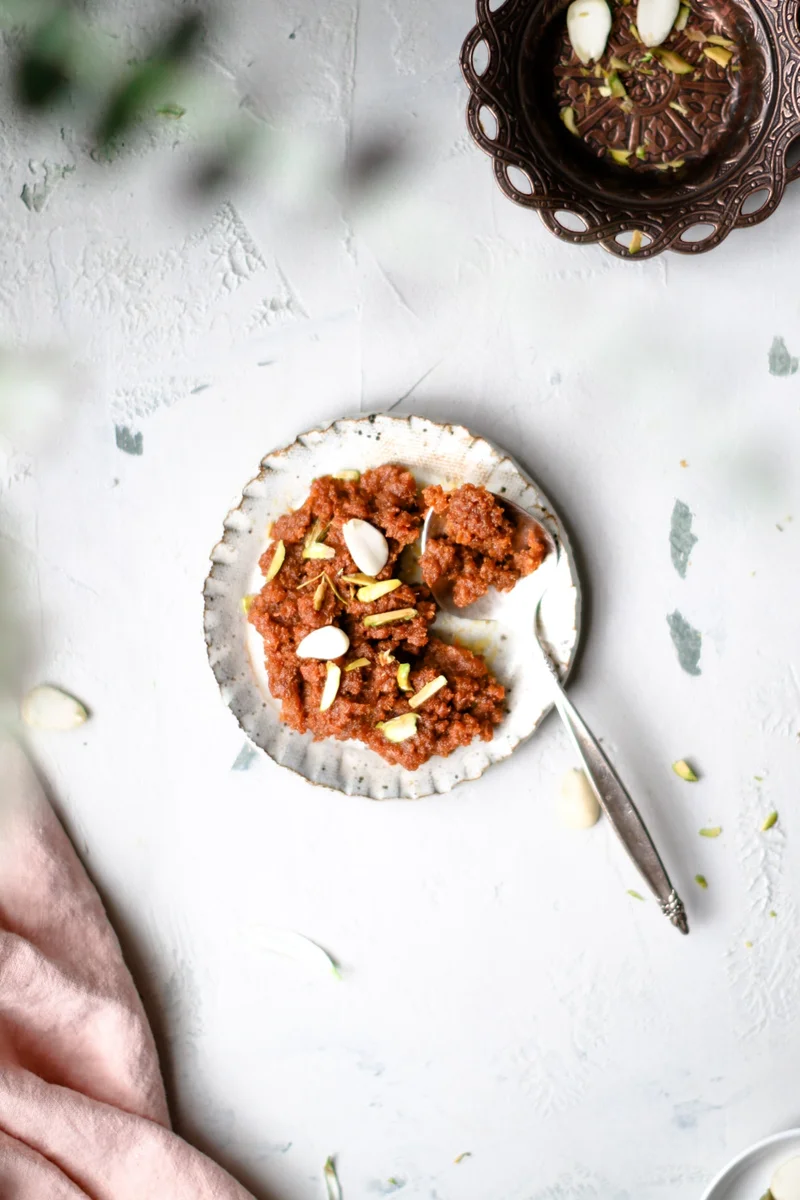
Gajar ka halwa is a warmly spiced carrot pudding, here made in an Instant Pot to cut down on hands-on time. Milk, cream and ghee give the grated carrots a rich, soft finish, while cardamom brings fragrant warmth.
Ingredients
- 454 g (1 lb), measured after removing tops and endsorganic carrots, tops and ends removed, peeled only where necessary
- 45 ml (3 tbsp), dividedghee
- 4–5green cardamom pods
- 240 ml (1 cup)whole milk
- 120 ml (½ cup)heavy whipping cream
- 52.5–60 ml (3½–4 tbsp)raw cane sugar or sweetener of choice, depending on how sweet the carrots are
- 15 ml (1 tbsp), optionalslivered pistachios, for garnish
- 15 ml (1 tbsp), optionalslivered almonds, for garnish
Instructions
- 1
Grate the carrots
Use a food processor's shredding attachment to grate the carrots thinly, working in batches if needed. Set them aside.
- 2
Sauté the carrots
Select Sauté on More/High. When the pot is hot, add 30 ml (2 tbsp) of the ghee, the cardamom pods and the grated carrots. Sauté for 5 minutes, stirring occasionally, until the carrots begin to change colour and reduce a little. Add the whole milk and cream, then stir to combine.
- 3
Pressure cook
Cancel Sauté, secure the lid and set Pressure Release to Sealing. Select Pressure Cook and cook on High pressure for 30 minutes.
- 4
Release pressure
Let the pressure release naturally for 3–5 minutes, then move Pressure Release to Venting to release any remaining pressure.
- 5
Reduce the mixture
Select Sauté on More/High. Cook, stirring occasionally, until most of the moisture has evaporated and the carrots begin to stick to the bottom, about 10 minutes.
- 6
Add ghee and sugar
Add the remaining 15 ml (1 tbsp) of ghee and the sugar. Sauté for another 8–10 minutes, scraping the bottom of the pot as you stir. This stage helps develop the halwa's colour and flavour.
- 7
Check the finish
When the halwa is dry, the ghee begins to separate and the carrots have turned a deep orange, closer to red, press Cancel to switch off the Instant Pot.
- 8
Garnish and serve
Spoon the halwa into a serving dish and scatter over the pistachios and almonds, if using.
What is gajar ka halwa?
Gajar ka halwa is a rich carrot pudding associated with Indian and Pakistani cooking. This version keeps the familiar combination of grated carrots, dairy, ghee, sugar and cardamom, while using an Instant Pot to shorten the time spent cooking it on the hob.
The carrots soften under pressure, then the mixture is reduced using the Sauté setting. That final stage concentrates the flavour and gives the halwa its characteristic deep colour and dense, spoonable texture.
Nutrition and macros by portion
The nutrition label shows one serving as written: 373 calories, 7g protein, 36g carbs, 25g fat.
| Portion | Adjustment | kcal | Protein | Carbs | Fat |
|---|---|---|---|---|---|
| Lighter | Use less ghee and cream | 261 kcal | 5g | 25g | 18g |
| This serving | As written | 373 kcal | 7g | 36g | 25g |
| Hungry | Serve a larger portion | 560 kcal | 11g | 54g | 38g |
The carrots and sugar provide most of the carbohydrates, while the ghee, cream and whole milk contribute much of the fat. Milk, cream and the optional nuts also contribute protein. For a more balanced plate, enjoy a modest serving after a meal that includes vegetables and a protein source.
Grate the carrots evenly
Carrot texture: Use the food processor's shredding attachment to make thin, fairly even strands. This helps the carrots cook down consistently and blend into the creamy mixture.
Build the flavour first
Ghee and cardamom: Briefly sauté the carrots with the cardamom pods in some of the ghee before adding the dairy. This brings out the cardamom's aroma and starts softening the carrots.
Milk and cream: Whole milk and heavy cream make the halwa rich and tender. Stir them through the carrots before pressure cooking so the mixture is evenly combined.
Let the pressure release briefly
Release timing: Allow 3–5 minutes of natural pressure release before venting the rest. Keep your hands clear of the steam when moving the pressure valve.
Reduce until thick
First reduction: After pressure cooking, sauté for about 10 minutes to evaporate most of the liquid. Stir occasionally and watch for the carrots beginning to stick to the bottom.
Final reduction: Add the remaining ghee and sugar, then scrape the bottom as you stir for another 8–10 minutes. The halwa is ready when it looks dry, the ghee starts separating and the colour deepens.
Adjust the sweetness
Sugar amount: The recipe gives a range of 3½–4 tablespoons because carrots vary in sweetness. Start at the lower amount if you prefer a less sweet pudding; the sugar is added during the final sauté.
Serve it warm or chilled
Garnish: Slivered pistachios and almonds add a little crunch against the soft carrots. They are optional, so the halwa can also be served without them.
On the plate: Serve it as a small dessert after a meal, or alongside a cup of tea. Its rich texture pairs well with a simple, unsweetened drink.
Recipe notes & tips
- Grate the carrots thinly so they soften evenly during pressure cooking.
- Stir the carrots occasionally during the first sauté to prevent them catching.
- Use the full 3–5 minutes of natural release before venting the remaining pressure.
- Scrape the base of the pot regularly during the final sauté, especially after adding sugar.
- Choose the sugar amount based on the sweetness of your carrots and your preference.
- Add the nuts just before serving to keep their texture distinct.
Variations
- Extra cardamom: Crush the pods lightly before cooking to release more of their aroma.
- Nut-free finish: Leave off the pistachios and almonds when serving.
- Pistachio topping: Use only the slivered pistachios for a single-nut garnish.
- Almond topping: Garnish with only the slivered almonds.
- Different sweetener: Replace the raw cane sugar with your preferred sweetener, as suggested in the recipe.
Common mistakes to avoid
- Uneven grating: Thick pieces soften at different rates, so use the shredding attachment for thin strands.
- Skipping the first sauté: The carrots miss the initial flavour-building stage, so cook them with the ghee and cardamom for 5 minutes.
- Venting immediately: Give the cooker 3–5 minutes of natural release before venting the rest.
- Stopping while watery: The halwa needs the Sauté reduction stages; keep cooking until most moisture has evaporated.
- Letting the base catch: Stir and scrape the bottom during the final 8–10 minutes, particularly after adding sugar.
- Serving before the colour deepens: Continue the final sauté until the mixture is dry and the ghee begins to separate.
How to store
Cool leftovers and store them in an airtight container in the fridge for up to 3 days. Reheat gently in a saucepan or microwave, stirring as needed; add a small splash of milk if the halwa has become too thick.
Frequently asked questions
Can I make this without an Instant Pot?
This method is written for an Instant Pot and uses its pressure-cooking and Sauté settings. For a stovetop version, use a separate recipe with stovetop timings and liquid adjustments.
How do I know when the halwa is ready?
It should look fairly dry, with the ghee beginning to separate and the carrots a deep orange, closer to red. The recipe allows about 10 minutes for the first reduction and another 8–10 minutes after adding ghee and sugar.
Do I have to peel the carrots?
Peel them only where necessary, as specified in the recipe. Remove the tops and ends before measuring the carrots.
Can I leave out the nuts?
Yes. Both the pistachios and almonds are optional garnishes, so you can omit either or both.
Can I adjust the sugar?
Yes. The recipe uses 3½–4 tablespoons depending on how sweet the carrots are. Choose an amount within that range to suit your preference.
Can I serve carrot halwa cold?
Yes. It can be served warm or chilled; refrigerate it in an airtight container and serve it cold, or reheat it gently.
Cook it from the original
This recipe comes from teaforturmeric.com. Their page has the author’s own photos, notes and tips — the best place to cook it from.
Open the recipe on teaforturmeric.com