
Easy White Bread
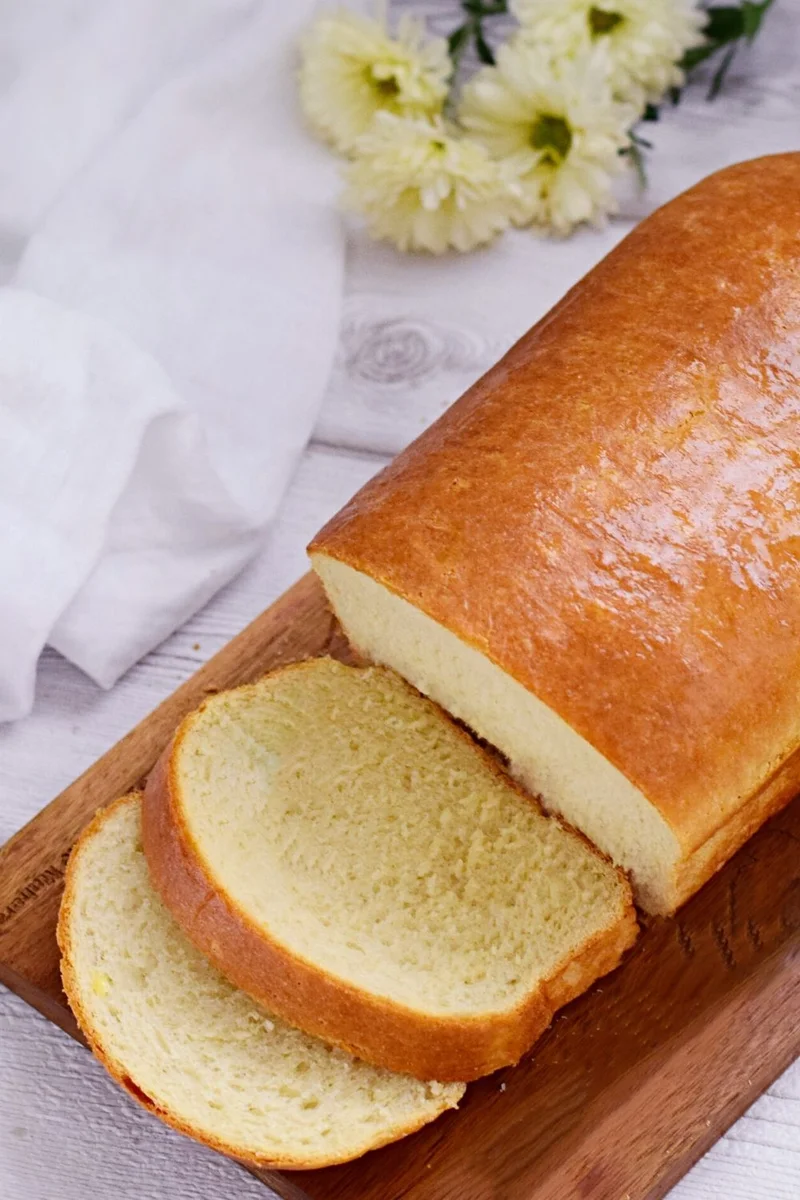
A simple homemade white loaf with a soft, slightly chewy crumb and a golden, buttery crust. Make it when you want fresh bread from a short list of everyday ingredients.
Ingredients
- 2 tspinstant yeast
- ¼ tspsalt
- 1 tbspgranulated sugar
- 750 ml (3 cups)cake wheat flour or plain flour
- 2 tbsp, plus 1 tbspbutter, melted and at room temperature
- 375 ml (1½ cups), dividedlukewarm water
Instructions
- 1
Mix dry ingredients
Put the flour, instant yeast, salt and sugar in a large bowl and stir to combine.
- 2
Add wet ingredients
Add 2 tablespoons of melted butter and 250 ml (1 cup) of lukewarm water. Mix, then add some of the remaining 125 ml (½ cup) water only if needed to make a soft, sticky dough; you may not need all of it.
- 3
Knead the dough
Bring the mixture together by hand until it forms a soft, slightly sticky dough. Knead by hand for 15 minutes, until soft and smooth, or use an electric mixer for about 8 minutes.
- 4
Leave to rise
Oil a bowl and lightly coat the dough with oil. Put the dough in the bowl, cover with cling film and leave somewhere warm for about 1 hour, until risen. Alternatively, set it in a warm oven that has been heated and switched off.
- 5
Shape the loaf
Remove the dough from the bowl and press out the air bubbles. Lightly flour a work surface and flatten the dough by hand into a rectangle about 35 × 20 cm. Starting at a short end, roll it tightly into a Swiss-roll shape. Put it in a greased loaf tin, with baking parchment on the base if you like; pinch the seam and tuck the ends in slightly. Cover with cling film and leave somewhere warm for a further 15 minutes. Preheat the oven to 180°C.
- 6
Bake the bread
Bake in the preheated oven at 180°C for 35 minutes, until golden brown and fragrant. Leave the loaf in the tin for 5 minutes, then brush the top with the remaining 1 tablespoon of butter.
- 7
Check the loaf
Remove the bread from the tin and tap the base. It should feel hollow when the loaf is cooked through.
What is white bread?
White bread is a yeast-raised loaf made with refined wheat flour, which gives it a pale, tender crumb. This straightforward homemade version uses a little sugar and butter for flavour and softness.
The method follows a familiar home-baking approach: knead the dough, let it rise, shape it into a tin and bake until golden. Its tightly rolled shape helps the loaf rise evenly in the pan.
Nutrition and macros by portion
The nutrition label shows one serving as written: 430 calories, 11g protein, 77g carbs, 10g fat.
| Portion | Adjustment | kcal | Protein | Carbs | Fat |
|---|---|---|---|---|---|
| Lighter | Use less butter | 301 kcal | 8g | 54g | 7g |
| This serving | As written | 430 kcal | 11g | 77g | 10g |
| Hungry | Serve a larger slice | 645 kcal | 17g | 116g | 15g |
Most of the carbohydrates come from the flour, while the flour also supplies most of the protein. Butter contributes most of the fat, and the small amount of sugar adds a little carbohydrate. Balance a slice or two with eggs or beans and vegetables for a more complete plate.
Choosing the flour
Flour: the recipe allows either cake wheat flour or plain flour. Plain flour is a practical choice for a familiar sandwich loaf; whichever you use, measure the stated quantity consistently.
Water: begin with 250 ml and add the remaining water gradually. Flour can absorb different amounts, so stop when the dough is soft and slightly sticky rather than wet.
Kneading and rising
Kneading: work the dough for 15 minutes by hand, or about 8 minutes with an electric mixer, until it feels smooth and elastic. The dough should come together without becoming stiff.
First rise: cover the oiled dough and leave it somewhere warm for about an hour, until it has risen. The recipe relies on this visual cue rather than an exact increase in size.
Shaping for an even loaf
Rectangle: flatten the dough to about 35 × 20 cm before rolling it from a short edge. A fairly even rectangle helps create a consistent spiral through the loaf.
Seam: roll tightly, pinch the join closed and tuck the ends in slightly. Place the loaf seam-side down in the greased tin so it holds its shape as it rises and bakes.
Checking when it is done
Colour and aroma: bake at 180°C for 35 minutes, looking for a golden-brown top and a fresh bread smell. Keep the loaf in the oven until it has reached those cues.
Base: after taking it out of the tin, tap the bottom; a hollow sound is the recipe’s final doneness check. Let it stand in the tin for 5 minutes before removing it.
Serving and timing
Rest: allow the loaf to cool enough to slice cleanly; cutting while it is very hot can compress the soft crumb. The method gives it 5 minutes in the tin before it is turned out.
Pairing: serve slices with soup, eggs or a savoury spread. For a simple meal, add a source of protein and some vegetables alongside the bread.
Recipe notes & tips
- Hold back some of the water at first, then add it a little at a time if the dough feels too firm.
- Use a warm, switched-off oven for the rise only, and make sure it is not hot before placing the covered dough inside.
- Lightly flour the work surface so the dough does not stick, but avoid adding so much flour that it becomes dry.
- Pinch the rolled seam closed before placing the dough in the tin.
- Use a loaf tin that gives the shaped dough room to rise without spilling over.
- Let the loaf stand for 5 minutes in the tin before turning it out.
Variations
- Seeded crust: scatter seeds over the top before baking for a crunchy finish.
- Herb loaf: knead dried herbs into the dough for a savoury variation.
- Garlic butter: mix garlic into the melted butter used to brush the baked loaf.
- Wholemeal blend: replace some of the white flour with wholemeal flour, adding the water gradually as the dough comes together.
- Sweet spice: add a pinch of cinnamon to the dry ingredients for a gently spiced loaf.
Common mistakes to avoid
- Adding all the water at once: the dough may become too wet, so reserve some and add it gradually.
- Using a hot oven for rising: excessive heat can affect the yeast, so use a warm place or a heated oven that has been switched off.
- Under-kneading: the loaf may lack structure, so knead until the dough is smooth and soft.
- Rolling loosely: gaps can form in the crumb, so roll the rectangle tightly from the short side.
- Skipping the second rest: the loaf may not rise as intended, so give it the full 15 minutes in a warm place.
- Slicing straight from the oven: the crumb can squash, so give the loaf time to settle before cutting.
How to store
Once completely cool, keep the loaf in an airtight bag or bread container at room temperature and use within 2–3 days. Refresh slices briefly in a toaster, or warm the loaf in the oven until heated through.
Frequently asked questions
Can I use plain flour instead of cake wheat flour?
Yes. The recipe lists cake wheat flour or plain flour, so either can be used.
Do I need to use all the water?
No. Start with 250 ml and add only as much of the remaining 125 ml as needed to make a soft, slightly sticky dough.
Can I knead the dough in a mixer?
Yes. The recipe suggests about 8 minutes in an electric mixer, compared with 15 minutes by hand.
How do I know when the dough has risen enough?
After about 1 hour in a warm place, it should look risen. The exact time can vary with the warmth of the room.
How can I tell whether the bread is baked?
Bake it for 35 minutes at 180°C, until golden brown and fragrant. Once out of the tin, tap the base; it should feel hollow.
Can I freeze the loaf?
Yes. Once cool, wrap it well and freeze it. Defrost at room temperature, then warm it in the oven or toast individual slices.
Cook it from the original
This recipe comes from tamarindnthyme.com. Their page has the author’s own photos, notes and tips — the best place to cook it from.
Open the recipe on tamarindnthyme.com