
Chewy Rice Noodles in Hoisin Sesame Sauce
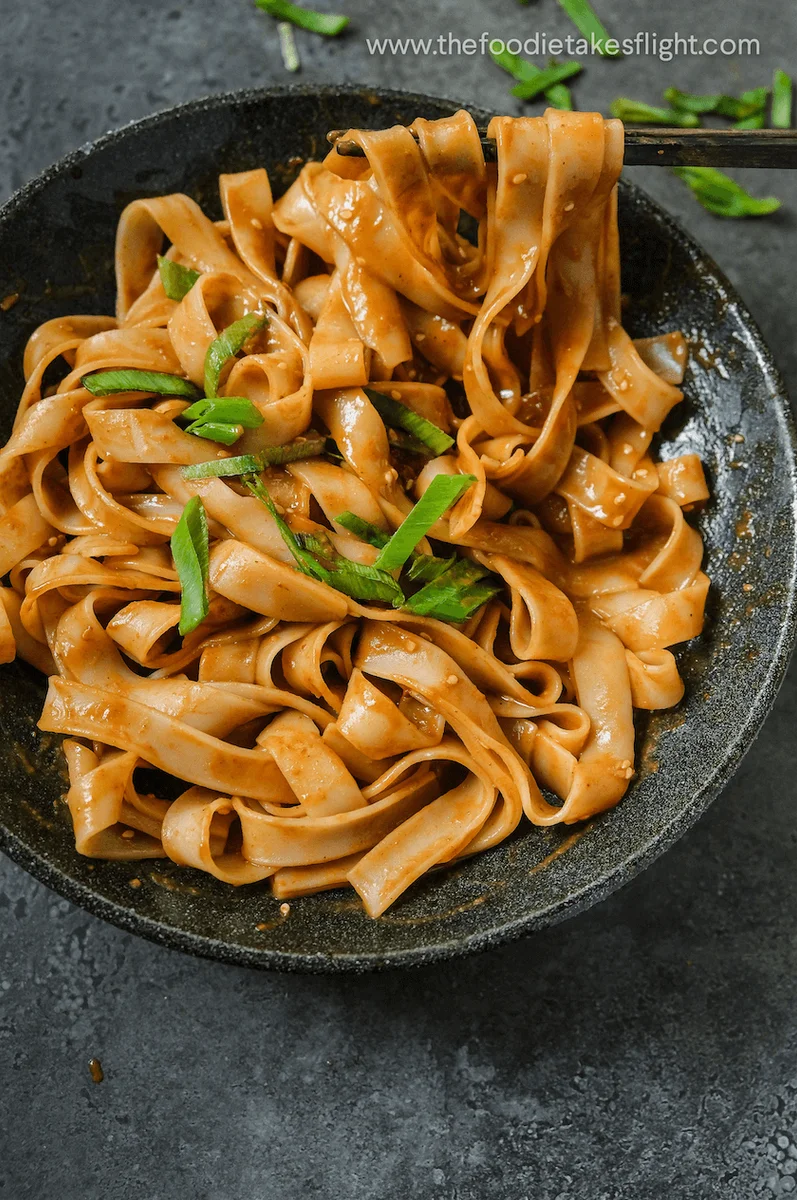
Thick rice noodles are tossed in a quick hoisin, sesame and garlic sauce for a chewy, sweet-savoury meal. Blanch vegetables in the same pot for an easy weekday dinner with minimal washing-up.
Ingredients
- 2 tbsphoisin sauce (use gluten-free hoisin sauce if needed)
- 1 tbspChinese sesame paste (see notes for a substitute)
- 2 tbspwarm water
- 1 tbspmaple syrup (or another sweetener)
- 1 clovegarlic, minced
- 1 tspsesame seeds
- 130 gdry thick rice noodles (the original recipe uses 10 mm noodles)
- to taste (optional)bok choy or other vegetables, such as mustard greens or spinach
- to taste (optional)soy sauce or tamari
- to tastechilli garlic sauce
- to tastespring onion, chopped
Instructions
- 1
Mix the sauce
Put the hoisin sauce, Chinese sesame paste, warm water, maple syrup, minced garlic and sesame seeds in a bowl. Mix until combined and set aside; have it ready before you cook the noodles.
- 2
Blanch the vegetables
Bring a small pot of water to the boil. If using vegetables, add them and cook until tender, then remove and set aside.
- 3
Cook the noodles
Use the same pot to cook the noodles until chewy. They are ready when they have turned solid white; taste one to check that the texture suits you.
- 4
Drain the noodles
Lift the noodles out of the pot and drain away the water.
- 5
Coat and serve
Transfer the freshly cooked noodles straight into the prepared sauce and mix to coat evenly. Add soy sauce and chilli garlic sauce to taste, if you like, then top with chopped spring onion and the blanched vegetables.
What are hoisin sesame rice noodles?
Rice noodles are a staple across many Asian cuisines, with different shapes and textures used in a wide range of dishes. This version pairs thick, chewy noodles with hoisin and Chinese sesame paste for a quick, glossy sauce.
The combination works because hoisin brings savoury sweetness while sesame paste adds a rich, nutty note. Garlic and sesame seeds round out the sauce, and optional greens make it a more complete bowl.
Nutrition and macros by portion
The nutrition label shows one serving as written: 351 calories, 4g protein, 70g carbs, 5g fat.
| Portion | Adjustment | kcal | Protein | Carbs | Fat |
|---|---|---|---|---|---|
| Lighter | More greens, fewer noodles | 246 kcal | 3g | 49g | 4g |
| This serving | As written | 351 kcal | 4g | 70g | 5g |
| Hungry | Larger noodle portion | 527 kcal | 6g | 105g | 8g |
Most of the carbohydrate comes from the rice noodles, while the sesame paste and hoisin contribute much of the fat and flavour; the dish is relatively modest in protein. Add a generous portion of vegetables and serve with a protein-rich side, such as tofu, to balance the plate.
Get the sauce ready first
Sauce: stir all six sauce ingredients together before the noodles go into the pot. This matters because freshly cooked noodles are easiest to coat while hot, and the recipe moves them directly from draining to the bowl.
Consistency: the warm water helps loosen the sesame paste and hoisin into a mixable coating. Stir until the sauce looks even rather than leaving pockets of paste.
Choose noodles with a substantial chew
Noodles: the recipe uses 130 g of dry, thick rice noodles, specifically a 10 mm variety. Thinner noodles may cook more quickly, so follow the packet guidance and check them as they cook.
Doneness: look for an even, solid white colour, then taste a strand. The intended texture is notably chewy, so drain them when they reach the firmness you enjoy.
Blanch vegetables in the same pot
Greens: bok choy, mustard greens or spinach can all be used, and the vegetables are optional. Cook them first in the boiling water, remove them, and reserve them for serving.
Timing: the method uses the same pot for the vegetables and noodles, keeping the cooking straightforward. Have a way to lift out the greens before adding the noodles.
Finish with toppings and seasoning
Seasoning: soy sauce or tamari and chilli garlic sauce are added to taste rather than mixed into the base sauce. Start with a little, toss, and adjust to suit your preference.
Serving: scatter chopped spring onion and the blanched greens over the coated noodles. Serve straight away while the noodles are warm and springy.
Recipe notes & tips
- Mix the sauce before starting to cook so the hot noodles can go straight into it.
- Taste a noodle rather than relying on colour alone to judge its doneness.
- Use a slotted spoon or tongs to remove the vegetables before cooking the noodles.
- Stir the sauce thoroughly so the sesame paste is evenly incorporated.
- Add soy sauce and chilli garlic sauce gradually, tasting as you go.
Variations
- Use tamari: swap it for soy sauce if you prefer, adding it to taste.
- Make it gluten-free: choose gluten-free hoisin sauce and use tamari instead of soy sauce.
- Change the greens: blanch mustard greens or spinach in place of bok choy.
- Add more heat: increase the chilli garlic sauce to your liking.
- Adjust the sweetness: use another sweetener in place of maple syrup.
Common mistakes to avoid
- Making the sauce late: the noodles are best coated immediately after draining, so mix the sauce first.
- Overcooking the noodles: check their texture as they cook and drain once they are chewy to your liking.
- Skipping the taste test: colour is a useful cue, but tasting confirms the centre is cooked as you prefer.
- Leaving sesame paste in lumps: stir the sauce until smooth and evenly combined.
- Adding all the extra seasoning at once: soy sauce and chilli garlic sauce are optional, so adjust them a little at a time.
How to store
Store leftovers in an airtight container in the fridge and eat within 2 days. Reheat gently in a pan or microwave, adding a splash of water if the noodles have tightened; the texture is best just after cooking.
Frequently asked questions
Can I make these noodles gluten-free?
Yes. Use gluten-free hoisin sauce and tamari in place of soy sauce, and check the noodle and chilli garlic sauce labels as well.
Can I use thinner rice noodles?
Yes, though their cooking time and texture will differ. Check them early and drain when they are cooked to your liking.
Do I have to add vegetables?
No, the vegetables are optional. Bok choy, mustard greens and spinach are suggested choices.
What can I use instead of Chinese sesame paste?
The recipe refers to notes for a substitute but does not specify one here. Use a suitable sesame paste you have available, keeping in mind that flavour and texture may vary.
How do I keep the noodles chewy?
Taste them as they cook and drain them once they have the chew you want. Transfer them to the sauce straight away rather than leaving them in the hot water.
Cook it from the original
This recipe comes from thefoodietakesflight.com. Their page has the author’s own photos, notes and tips — the best place to cook it from.
Open the recipe on thefoodietakesflight.com