
Easy Curry Fried Rice
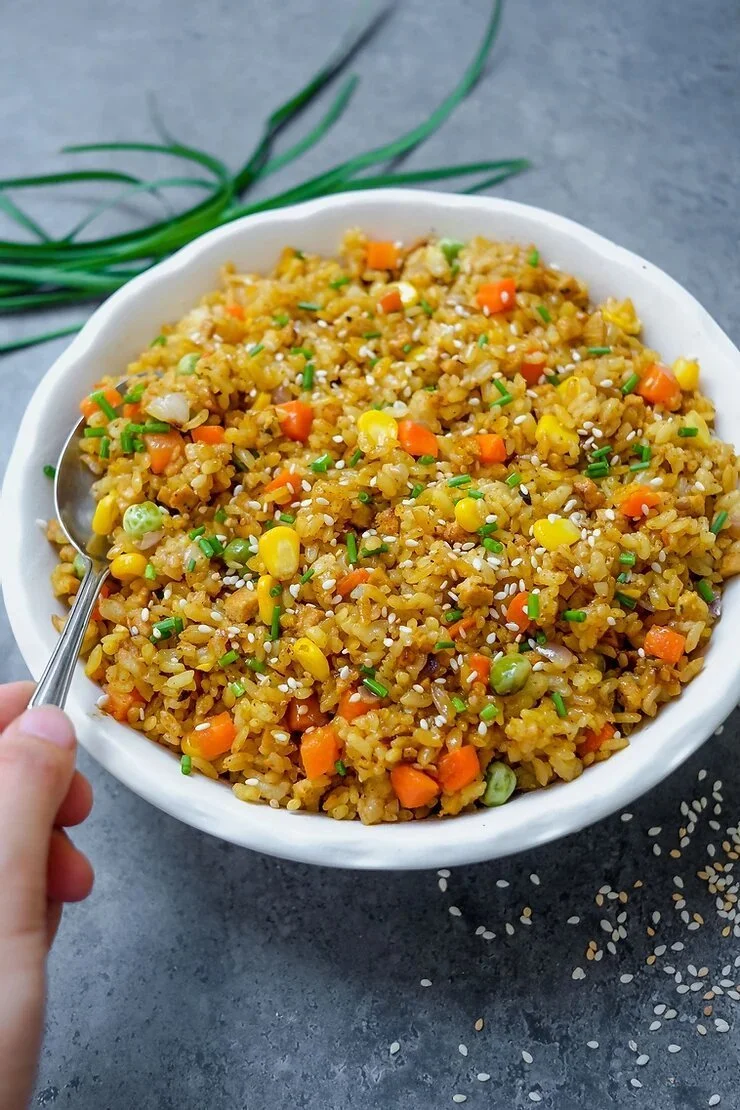
This quick curry fried rice combines leftover rice with vegetables, soy sauce and curry powder for a flavourful meal in about 15 minutes. It is an easy way to use up vegetables you already have.
Ingredients
- 300 g (2 cups)cooked, cooled rice (leftover rice is best)
- 15 ml (1 tbsp)sesame oil
- 15 ml (1 tbsp)diced onion or chopped spring onion
- 2 clovesgarlic, minced
- ½–1 tspsalt, to taste
- 15 ml (1 tbsp)soy sauce or liquid aminos
- 15 ml (1 tbsp)curry powder
- To tastesesame seeds, for topping
- To tastespring onions, for topping
- 40 g (¼ cup)carrots
- 40 g (¼ cup)corn
- 40 g (¼ cup)peas
- To tastecabbage, chopped
- To tastemushrooms, diced
- To tastebell peppers, diced
Instructions
- 1
Heat the oil
Set a large pan or wok over high heat and warm the sesame oil.
- 2
Cook the vegetables
Add the onion and garlic and sauté for 2 minutes. Add the vegetables and cook until tender.
- 3
Add the rice
Stir in the cooked rice, or another leftover grain of your choice.
- 4
Season and mix
Add the salt, soy sauce and curry powder, then mix well. Taste and adjust the seasoning if needed.
- 5
Garnish and serve
If you like, top with chopped spring onions and sesame seeds. Serve hot.
What is curry fried rice?
Fried rice is a flexible dish found in many Asian cuisines, commonly made by stir-frying cooked rice with seasonings and other ingredients. This version takes its flavour from curry powder, soy sauce and sesame oil.
Leftover rice and a mix of vegetables make it a practical, quick meal. The recipe keeps the method simple, so you can have it ready in around 15 minutes.
Nutrition and macros by portion
The nutrition label shows one serving as written: 290 calories, 7g protein, 48g carbs, 8g fat.
| Portion | Adjustment | kcal | Protein | Carbs | Fat |
|---|---|---|---|---|---|
| Lighter | Use less sesame oil | 203 kcal | 5g | 34g | 6g |
| This serving | As written | 290 kcal | 7g | 48g | 8g |
| Hungry | Serve a larger portion | 435 kcal | 11g | 72g | 12g |
The rice provides most of the carbohydrates, while sesame oil contributes much of the fat; the vegetables add some fibre and the recipe contains a modest amount of protein. For a more balanced plate, serve it with an extra portion of vegetables or a protein-rich side.
Why leftover rice works
Rice texture: Chilled, cooked rice is easier to separate and stir through the pan than freshly cooked rice, which can be softer and stickier.
Use what you have: Carrots, corn and peas are suggested, with cabbage, mushrooms and bell peppers also listed. The recipe leaves their quantities flexible.
Build flavour in the pan
Aromatics: The onion and garlic cook first in sesame oil, giving them time to soften and flavour the oil. The recipe specifies 2 minutes before adding the vegetables.
Seasoning: Curry powder and soy sauce are mixed in with the rice, spreading their flavour through the grains. Start with the lower amount of salt if you want to adjust it after tasting.
Look for tender vegetables
Vegetables: Cook them until tender before adding the rice. Cut the vegetables into small, similar-sized pieces so they are easier to mix through the dish.
Rice: Once added, stir until it is well combined with the vegetables and seasonings. Avoid leaving the pan unattended over high heat.
Make the quick timing work
Get ready first: Dice the vegetables and mince the garlic before heating the pan, as the recipe cooks over high heat.
Use cooked rice: The 15-minute total time relies on rice that is already cooked and cooled. This is a good way to turn leftovers into a hot meal.
Serving ideas
Finish: Add spring onions and sesame seeds just before serving for a fresh garnish and a little crunch.
Balance the plate: Serve alongside a simple vegetable dish or add extra vegetables to the pan if you want a larger share of the meal to come from them.
Recipe notes & tips
- Use rice that has been cooked and cooled, as the recipe recommends.
- Prepare and dice the vegetables before heating the pan.
- Keep the pan hot while cooking the onion, garlic and vegetables.
- Cook the vegetables until tender before stirring in the rice.
- Taste before adding the full amount of salt, since soy sauce also seasons the dish.
Variations
- Frozen vegetables: Use a frozen corn, carrot and pea mix in place of the separate vegetables.
- Other grains: Swap the rice for another cooked leftover grain, as the method allows.
- Spring onions: Use chopped spring onions in place of diced onion.
- Liquid aminos: Choose liquid aminos instead of soy sauce.
- Extra vegetables: Add cabbage, mushrooms or bell peppers from the ingredient list.
Common mistakes to avoid
- Using hot, freshly cooked rice: It may be softer and harder to stir through; use cooked, cooled rice if possible.
- Adding the rice too early: Cook the vegetables until tender first, then add the rice.
- Over-seasoning: Salt levels can vary with the soy sauce; taste the dish and adjust gradually.
- Leaving vegetables in large pieces: Dice them so they are easier to cook and mix with the rice.
- Skipping the final taste: Check the seasoning after mixing and adjust if needed.
How to store
Cool leftovers promptly and store them in a covered container in the fridge for up to 2 days. Reheat until piping hot, adding a small splash of water if the rice seems dry.
Frequently asked questions
Can I use freshly cooked rice?
The recipe works best with cooked, cooled rice, which is less soft and sticky. If cooking rice for this dish, allow it to cool before using.
Can I use frozen vegetables?
Yes. The recipe suggests a frozen mix of carrots, corn and peas as a convenient option. Cook the vegetables until tender before adding the rice.
How much salt should I add?
The recipe gives a range of ½ to 1 teaspoon. Start with less, taste after adding the soy sauce, then adjust as needed.
Can I replace the rice with another grain?
Yes. The method suggests using another cooked leftover grain of your choice.
What can I use instead of soy sauce?
Liquid aminos are listed as an alternative. Adjust the salt to taste after mixing in your chosen seasoning.
Cook it from the original
This recipe comes from thefoodietakesflight.com. Their page has the author’s own photos, notes and tips — the best place to cook it from.
Open the recipe on thefoodietakesflight.com