
Tomato-stuffed artichokes
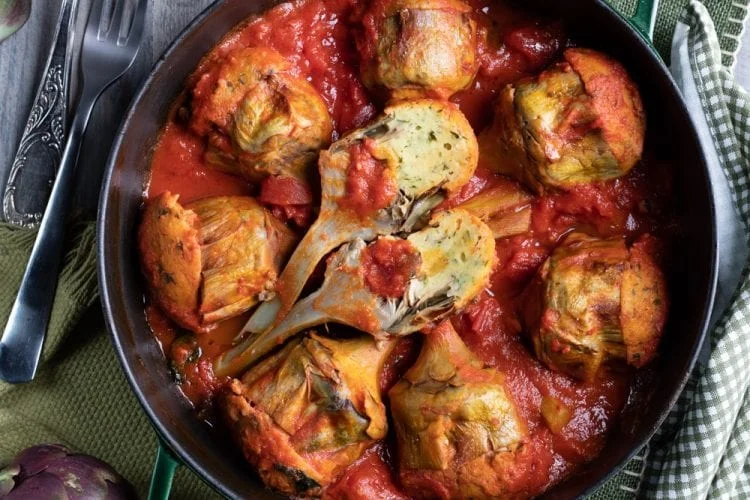
Sicilian-style artichokes are filled with eggs, breadcrumbs and two cheeses, fried until golden, then finished in a simple tomato and basil sauce. They make a hearty vegetable-centred main course, with the filling held snugly between the tender inner leaves.
Ingredients
- 8globe artichokes
- 1.2 kgpeeled tomatoes
- to tasteextra-virgin olive oil
- 2 clovesgarlic
- 1 bunchbasil
- to tastesalt
- 2lemons
- 90 ggrated Pecorino Romano
- 90 ggrated Parmigiano Reggiano
- 6 mediumeggs
- 60 gbreadcrumbs
- 2 tablespoonschopped parsley
- to tastesalt
- to tasteblack pepper
- 1 lpeanut oil
Instructions
- 1
Trim the artichokes
Remove the tougher outer leaves until you reach the paler, tender ones, then trim the tips of the remaining leaves. Gently open each artichoke and scoop out the central choke with a teaspoon or melon baller, taking care not to widen the heart too much.
- 2
Prepare the stems
Keep the stems attached and peel away only their fibrous outer layer. As you clean each artichoke, put it in a bowl of cold water with the juice of the lemons to help prevent discolouration.
- 3
Mix the filling
Combine the Pecorino Romano, Parmigiano Reggiano, eggs, breadcrumbs, parsley, salt and pepper in a bowl. Mix until evenly combined and firm enough to hold its shape without running.
- 4
Fill the artichokes
Drain and dry the artichokes, then gently open the centre of each one. Press the filling into the heart and between the inner leaves, shaping it into a firm cap; work carefully so the leaves do not split.
- 5
Fry until golden
Heat the peanut oil in a small pan to 175°C. Fry two artichokes at a time, holding them by their stems and keeping them from resting on the bottom, until well browned. Drain on kitchen paper and let the oil return to temperature before frying the next batch.
- 6
Make the tomato sauce
In a large pan, gently colour the garlic in the extra-virgin olive oil, then remove it. Crush the peeled tomatoes, add them to the pan and bring to the boil. Stand the artichokes in the sauce with their stems pointing towards the centre; the sauce should come about halfway up them.
- 7
Simmer and finish
Cover and cook for 15 minutes, then turn the artichokes upside down, add salt and cook covered for another 15 minutes. Uncover, add the basil and reduce the sauce until creamy. They are ready when the stems are tender and the filling stays in place.
What are tomato-stuffed artichokes?
This is a Sicilian-style main course built around whole artichokes filled with eggs, breadcrumbs and cheese, then fried and simmered in tomato sauce. The combination makes the vegetable substantial enough to serve as the centre of a meal.
The method brings together crisp, browned surfaces and a soft, savoury centre, with tomato and basil to finish. Keeping the artichokes whole also lets the filling sit among the inner leaves rather than getting lost in the sauce.
Nutrition and macros by portion
The nutrition label shows one serving as written: 760 calories, 34g protein, 57g carbs, 44g fat.
| Portion | Adjustment | kcal | Protein | Carbs | Fat |
|---|---|---|---|---|---|
| Lighter | Use less frying oil | 532 kcal | 24g | 40g | 31g |
| This serving | As written | 760 kcal | 34g | 57g | 44g |
| Hungry | Add bread and salad | 1140 kcal | 51g | 86g | 66g |
The eggs and cheeses provide much of the protein and fat, while the breadcrumbs and tomatoes contribute carbohydrates; the artichokes add fibre and further carbohydrates. Frying oil also contributes fat, though the amount absorbed can vary, so serve with a simple salad or other vegetables for a balanced plate.
Choosing and cleaning the artichokes
Tender leaves: Remove the tough outer layers, but stop once the leaves become paler and more yielding. Trim their tips and scoop out the fuzzy choke without enlarging the centre too much.
Stems: Keep them attached and peel away the fibrous outside. Lemon water helps limit browning while you clean the rest.
Getting the filling to hold
Cheese and eggs: Pecorino and Parmesan bring a salty, savoury base, while the eggs bind the mixture. The breadcrumbs help make it firm enough to pack into the artichoke.
Packing: Dry the artichokes well before filling, then tuck the mixture into the heart and between the inner leaves. A neat, compact cap helps keep the filling in place during frying and simmering.
Frying without breaking the leaves
Oil temperature: Bring the peanut oil to 175°C and fry only two artichokes at a time. Crowding or oil that has cooled too much can leave them less evenly browned.
Handling: Hold each artichoke by its stem and avoid letting it rest on the bottom of the pan. Drain each batch on kitchen paper and allow the oil to regain its temperature before continuing.
Finishing in the sauce
Arrangement: Set the fried artichokes upright with the stems towards the centre of the pan. The tomato sauce should reach about halfway up their sides, rather than covering them completely.
Doneness: After 15 minutes, turn them upside down, season the sauce and cook for another 15 minutes with the lid on. Finish uncovered until the sauce is creamy; tender stems and stable filling are the key cues.
Serving the dish
Serve the artichokes hot, with plenty of tomato sauce spooned over and around them. Crusty bread is useful for soaking up the sauce, while a simple green salad can add a fresh contrast.
Each serving includes two artichokes, so allow room on the plate for the filling and sauce as well as any side.
Recipe notes & tips
- Keep the artichokes in lemon water as you clean them to slow discolouration.
- Dry the artichokes thoroughly before adding the filling so it grips the leaves.
- Check the filling is firm enough to hold a shape before stuffing.
- Fry in small batches and let the oil return to 175°C between them.
- Use a pan that holds the artichokes upright without crowding.
- Reduce the sauce uncovered at the end, keeping an eye on the tender stems.
Variations
- Herb change: Use a little extra parsley alongside the basil for a greener, more herbal flavour.
- Cheese balance: Adjust the proportions of Pecorino and Parmesan while keeping the total cheese amount the same.
- Chilli: Add a pinch of chilli to the tomato sauce for a little heat.
- Tomato texture: Crush the peeled tomatoes more finely for a smoother sauce.
- Bread side: Serve with toasted bread to make the most of the tomato sauce.
Common mistakes to avoid
- Removing too many leaves: Keep the tender inner leaves so the artichoke can hold its filling.
- Widening the heart: Scoop out the choke carefully without making the centre too large.
- Loose filling: Mix until the stuffing is compact enough to hold its shape before packing it in.
- Overcrowded frying: Fry two artichokes at a time so the oil can brown them evenly.
- Cool oil: Wait for the oil to return to 175°C between batches.
- Too much sauce: Keep it around halfway up the artichokes rather than covering them.
How to store
Refrigerate leftovers in a covered container for up to 3 days. Reheat gently in a covered pan with the sauce until hot throughout; add a splash of water if the sauce has thickened too much.
Frequently asked questions
Can I prepare the artichokes ahead?
You can clean them in advance and keep them submerged in cold water with lemon juice. For the best texture, fill and cook them closer to serving.
How do I know when the artichokes are cooked?
The stems should be tender when pierced, and the filling should remain stable. If the stems are still firm, continue cooking gently until tender.
Why is the filling falling out?
It may be too loose or not packed firmly enough between the inner leaves. Mix the filling until compact, dry the artichokes well and avoid forcing the leaves apart.
Can I skip frying the artichokes?
Frying is part of this recipe's method and gives the stuffed artichokes a browned exterior before they simmer in sauce. Skipping it will change the texture and finish.
Can I use a different frying oil?
The recipe specifies peanut oil. If substituting, use an oil suitable for frying at 175°C and consider any relevant allergies.
What goes well with tomato-stuffed artichokes?
Crusty bread is a good match for the sauce. A simple green salad or cooked vegetables make a fresh accompaniment.
Cook it from the original
This recipe comes from soniaperonaci.it. Their page has the author’s own photos, notes and tips — the best place to cook it from.
Open the recipe on soniaperonaci.it