
Tuna pesto pasta
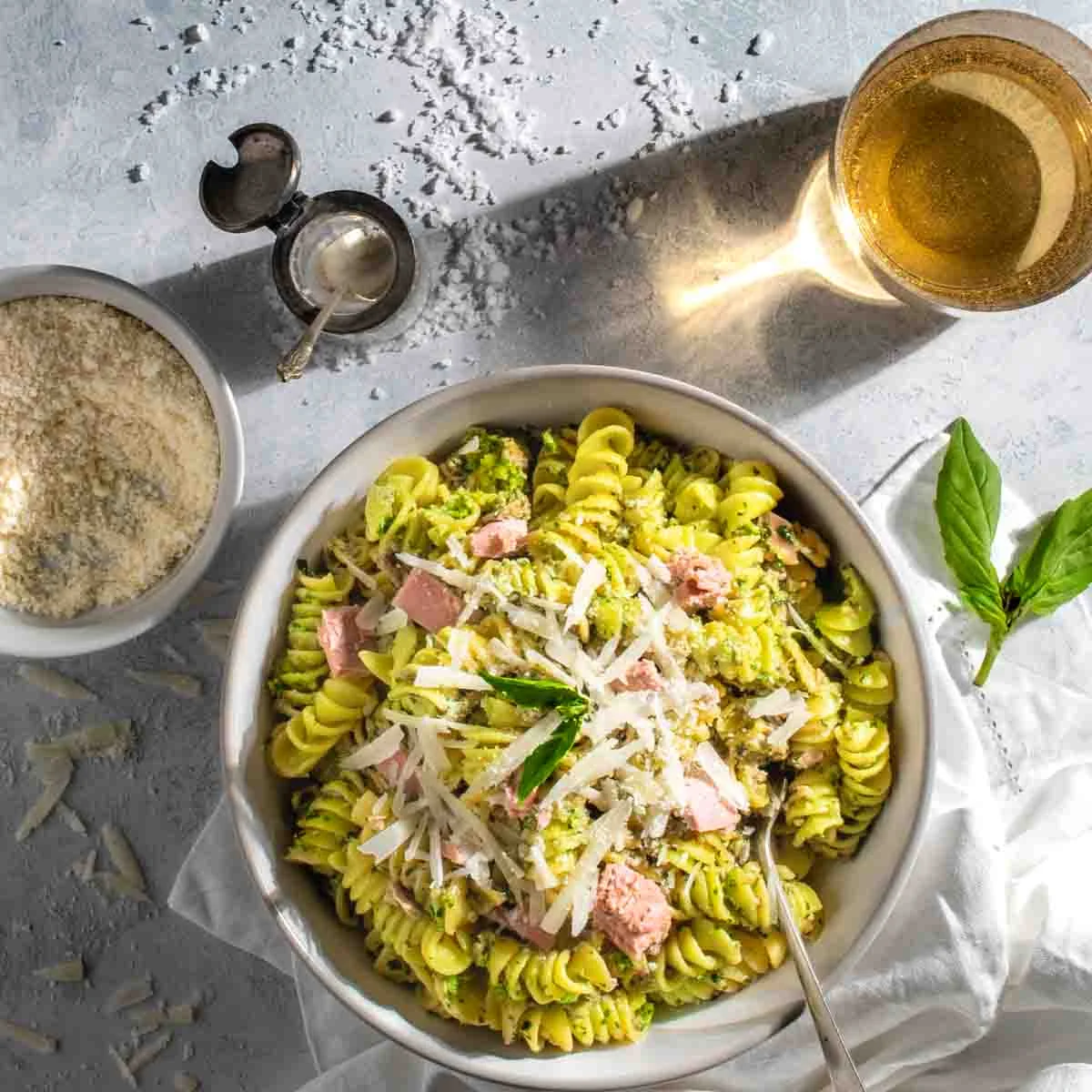
Tuna pesto pasta brings oil-rich tuna and fresh basil pesto together with al dente pasta for a quick, flavourful meal. It takes about as long to make as the pasta takes to cook, so it works well for a weeknight dinner or a packed lunch.
Ingredients
- 50 gwalnuts
- 80 gfresh basil
- 50 g, plus extra for servingParmesan
- 2 clovesgarlic, crushed or minced
- 1 tablespoonlemon juice
- Zest of 1 medium lemonlemon
- 120 ml (or 8 tablespoons)olive oil
- 350 g dried (or 500 g fresh)pasta of choice
- 1 teaspoonsalt
- 2 × 145 g tins (102 g drained each)tuna in oil (or tuna in water or brine)
- A few grindsblack pepper, optional
Instructions
- 1
Cook the pasta
Cook the pasta in a large saucepan with the salt, following the packet instructions. Stop when it is al dente.
- 2
Drain the pasta
Drain the pasta in a colander, then return it to the saucepan.
- 3
Toast the walnuts
Once the pasta is cooking, begin the pesto. Toast the 50 g walnuts in a small frying pan over a medium-high heat until lightly browned and fragrant.
- 4
Make the pesto
Put the toasted walnuts, basil, Parmesan, garlic, lemon juice, lemon zest and olive oil in a food processor. Blend until smooth, or leave it as coarse as you prefer.
- 5
Heat the tuna
Drain the tuna and warm it in a frying pan over a medium heat for about 2 minutes. If using tuna in oil, there is no need to add oil; if using tuna in water or brine, add a small dash of oil to the pan first.
- 6
Combine and serve
Add the pesto to the warm pasta, followed by the tuna, and mix well. Check the seasoning and add a few grinds of black pepper if you like. Serve warm with extra Parmesan. For a packed lunch the next day, let the pasta cool completely before refrigerating it.
What is tuna pesto pasta?
Pesto pasta is an Italian-inspired way to dress pasta with a sauce made from herbs, nuts, cheese and oil. This version adds tuna for a savoury, filling meal that can be made in the time it takes to cook the pasta.
Walnuts make a change from the pine nuts often used in pesto, while lemon brings brightness to the basil and Parmesan. The result is a fresh-tasting sauce paired with tender flakes of tuna.
Nutrition and macros by portion
The nutrition label shows one serving as written: 873 calories, 43g protein, 69g carbs, 47g fat.
| Portion | Adjustment | kcal | Protein | Carbs | Fat |
|---|---|---|---|---|---|
| Lighter | Use less pesto | 611 kcal | 30g | 48g | 33g |
| This serving | As written | 873 kcal | 43g | 69g | 47g |
| Hungry | Add extra pasta | 1310 kcal | 65g | 104g | 71g |
The pasta supplies most of the carbohydrates, while olive oil, walnuts and Parmesan contribute much of the fat. Tuna provides a substantial share of the protein, with further protein from the Parmesan. Pair a serving with salad or vegetables for a fresh side and a more balanced plate.
A quick homemade pesto
Walnuts: toast them until lightly browned and nutty-smelling to deepen their flavour. Keep an eye on the pan, as they can colour quickly.
Basil and lemon: blend the fresh leaves with lemon juice and zest for a lively, aromatic sauce. Add the olive oil with the other pesto ingredients, as the method directs.
Getting the pasta right
Al dente pasta: use the packet timing as a guide and check the pasta near the end of cooking. It should be tender with a slight firmness at the centre.
Warm pasta: return the drained pasta to its saucepan so it is ready to take the pesto and tuna. The recipe does not reserve cooking water, so mix the sauce directly through the pasta.
Warming the tuna
Tuna in oil: drain it before adding it to the frying pan; its oil means the pan does not need extra oil. Tuna in water or brine needs a small dash of oil in the pan.
Gentle heat: fry the tuna for about 2 minutes, just until heated through. This keeps the step brief while the pasta and pesto come together.
Texture and seasoning
Coarse or smooth: blend the pesto to the texture you enjoy. A shorter blend leaves more texture from the nuts and basil.
Final check: combine the pesto and tuna with the warm pasta, then taste before adding more salt. Finish with black pepper if desired and extra Parmesan at the table.
Make it a meal
Serve the pasta warm with a simple green salad or lightly cooked vegetables alongside. These offer a fresh contrast to the rich pesto and tuna.
For lunch, pack the pasta once it has cooled completely. It is also described as enjoyable cold, so it can be served straight from the fridge.
Recipe notes & tips
- Start the pesto while the pasta cooks to keep the preparation within the stated 15 minutes.
- Toast the walnuts in a dry pan and remove them as soon as they are lightly browned and fragrant.
- Blend the pesto briefly if you prefer a coarse texture.
- Drain the tuna before warming it so the finished pasta is not unnecessarily oily.
- Taste before adding extra salt, as the Parmesan and tuna can already be savoury.
- Cool the pasta completely before putting it in the fridge for a packed lunch.
Variations
- Use pine nuts: swap them for the walnuts and toast them until lightly golden.
- Choose fresh pasta: use 500 g fresh pasta instead of 350 g dried pasta.
- Use tuna in water: add a small dash of oil to the frying pan before warming it.
- Make it peppery: add a few grinds of black pepper when assembling the pasta.
- Add extra Parmesan: grate more over each portion just before serving.
Common mistakes to avoid
- Overtoasting the walnuts: take them off the heat when lightly browned and fragrant so they do not burn.
- Overcooking the pasta: follow the packet directions and stop at al dente for a pasta with a little bite.
- Adding tuna without draining: drain it first to avoid excess liquid or oil in the pan.
- Heating tuna in water without oil: add a small dash of oil before frying so it does not stick.
- Blending the pesto for too long: stop when it reaches your preferred texture, especially if you like it coarse.
- Packing the pasta while warm: let it cool completely before refrigerating for lunch.
How to store
For a packed lunch, let the pasta cool completely and store it in a covered container in the fridge. It can be eaten cold the next day; if reheating, warm it gently until heated through.
Frequently asked questions
Can I use fresh pasta?
Yes. The recipe gives 500 g fresh pasta as an alternative to 350 g dried pasta. Cook it according to its packet instructions and stop when al dente.
Can I use tuna in water or brine?
Yes. Drain it and add a small dash of oil to the frying pan before warming it for about 2 minutes.
Can I make the pesto less smooth?
Yes. Blend the pesto only until it reaches the texture you like; the recipe specifically allows for a coarser finish.
Can I serve tuna pesto pasta cold?
Yes. It is suitable for a packed lunch and can be enjoyed cold. Cool it completely before storing it in the fridge.
How do I know when the pasta is ready?
Use the packet timing as a guide and check that the pasta is al dente: tender, but still slightly firm in the centre.
Do I need to add salt to the finished pasta?
Taste it after combining the pesto and tuna, then adjust if needed. The Parmesan and tuna may already make it savoury.
Cook it from the original
This recipe comes from thecinnamonjar.com. Their page has the author’s own photos, notes and tips — the best place to cook it from.
Open the recipe on thecinnamonjar.com