
Healthy Chicken Noodle Soup
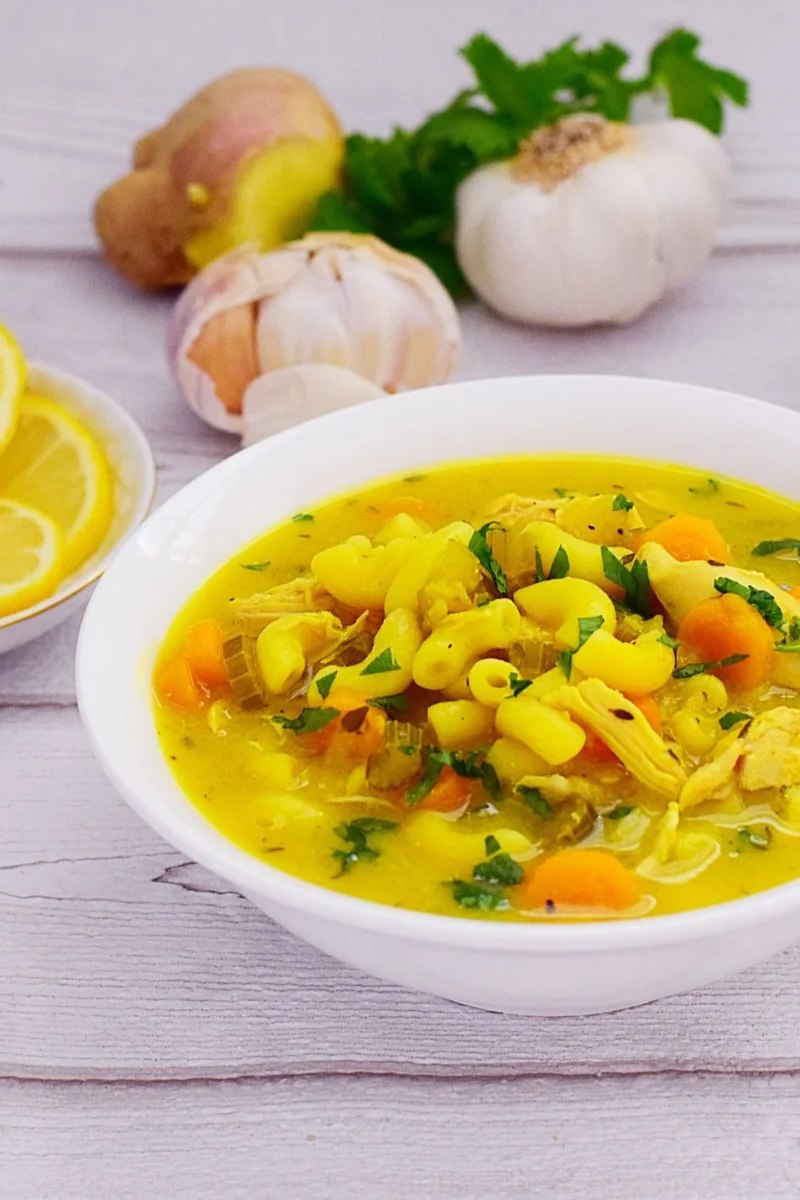
This comforting chicken noodle soup combines tender chicken and pasta with a gently aromatic broth flavoured with ginger, thyme and lemon. It makes a warming one-pot meal in about 40 minutes.
Ingredients
- 30 ml (2 tbsp)olive oil
- 1onion, finely chopped
- 2 mediumcelery sticks, finely chopped
- 120 g (1 cup)chopped carrots
- 2bay leaves
- 3 large clovesgarlic, minced
- 2 tspfinely grated ginger
- 4 sprigsfresh thyme
- ½ tspdried oregano
- ½ tspturmeric
- 1.44 litres (6 cups)chicken broth
- 2chicken breasts, sliced through the centre
- 100 g (1 cup)dry pasta
- to tastesalt
- to tastepepper
- 1 tbspchopped parsley
- 1lemon (optional)
Instructions
- 1
Soften the vegetables
Put the olive oil, bay leaves, onion, garlic, ginger, celery, carrots and thyme in a pot. Cook over a low heat until the vegetables are soft and tender.
- 2
Add the broth
Stir in the turmeric and oregano, then pour in the chicken broth. Bring it to the boil.
- 3
Cook the chicken
Add the chicken breasts and cook for about 2 minutes, until they turn white.
- 4
Shred the chicken
Lift the chicken out of the pot. Shred it with two forks and set it aside.
- 5
Cook the pasta
Add the pasta to the pot and cook for about 15 minutes, until tender.
- 6
Season the soup
Once the pasta is cooked, return the chicken to the pot. Taste and add more salt if needed, along with pepper.
- 7
Finish and serve
Scatter over the parsley and drizzle with lemon juice when serving, if using.
What is chicken noodle soup?
Chicken noodle soup is a familiar broth-based dish made with chicken, vegetables and noodles or pasta. Versions are cooked in many places, so there is no single origin or fixed set of ingredients.
This version builds flavour from onion, celery, carrots, herbs, ginger and turmeric, then finishes with parsley and optional lemon. Cooking the pasta in the broth lets it take on some of that savoury flavour.
Nutrition and macros by portion
The nutrition label shows one serving as written: 390 calories, 31g protein, 34g carbs, 13g fat.
| Portion | Adjustment | kcal | Protein | Carbs | Fat |
|---|---|---|---|---|---|
| Lighter | Less pasta, more vegetables | 273 kcal | 22g | 24g | 9g |
| This serving | As written | 390 kcal | 31g | 34g | 13g |
| Hungry | Larger bowl with bread | 585 kcal | 47g | 51g | 20g |
The pasta and carrots provide most of the carbohydrates, while the chicken breasts supply most of the protein. Olive oil contributes much of the fat, and the broth can be a significant source of sodium; serve with salad or extra vegetables for a more balanced plate.
Building flavour in the pot
Vegetable base: cook the onion, celery and carrots gently in olive oil until soft. Keep the heat low so they soften without browning quickly.
Aromatics: garlic and ginger bring a fresh, warming note, while thyme, oregano, bay and turmeric round out the broth. Stir in the dried spices before adding the liquid.
Getting tender chicken
Even thickness: slicing the chicken through the centre helps it cook more evenly. The method gives an approximate cooking time of 2 minutes, but use the change to white as the stated cue.
Shredding: remove the chicken before adding the pasta, then pull it apart with two forks. Returning it near the end helps keep the pieces in the soup without leaving them to cook throughout the pasta time.
Pasta and texture
Pasta choice: use a dry pasta that is easy to eat by spoon, such as small shapes or broken noodles. The recipe does not specify a particular variety.
Doneness: cook for about 15 minutes, checking the packet guidance and tasting a piece for tenderness. Pasta can continue to absorb broth as it sits, so serve once it is ready.
Seasoning and finishing
Salt and pepper: broth can vary in saltiness, so taste the soup after the chicken and pasta are back in the pot. Add salt only if it needs it, then season with pepper.
Lemon and parsley: parsley adds a fresh finish, and a little lemon juice can brighten the broth. Add the lemon at the table if you want everyone to adjust their own bowl.
What to serve with it
For a simple meal, serve the soup on its own while hot. Bread or toast makes a useful accompaniment for soaking up the broth.
A crisp green salad can add a fresh contrast to the warm, soft ingredients. Keep any extra sides lightly seasoned so they do not compete with the soup.
Recipe notes & tips
- Chop the vegetables to a similar size so they soften at roughly the same pace.
- Keep the heat low while softening the vegetables to prevent the garlic from browning.
- Taste the broth before adding extra salt, especially if your chicken broth is already seasoned.
- Check the pasta for tenderness rather than relying only on the suggested 15 minutes.
- Add lemon juice gradually so it does not overpower the broth.
Variations
- Use noodles: swap in dry noodles for the pasta, checking their cooking time as it may differ.
- Add greens: stir in a handful of spinach near the end and cook until wilted.
- Try rice: use cooked rice in place of pasta and add it near the end so it warms through.
- Make it herby: use extra fresh thyme or parsley for a more pronounced herbal flavour.
- Add chilli: season with a pinch of chilli flakes for a gentle heat.
Common mistakes to avoid
- Browning the garlic: keep the vegetables over low heat so the garlic softens without scorching.
- Overcooking the chicken: remove it once it has turned white as directed, then shred and return it later.
- Relying on the clock alone: taste the pasta and cook until tender, as shapes and brands vary.
- Adding salt too early: taste the finished broth first because the chicken broth may already be salty.
- Leaving the soup to stand too long: pasta absorbs liquid as it sits, so serve promptly or keep extra broth ready.
How to store
Refrigerate leftovers in a covered container and use within 3–4 days. Reheat gently on the hob until piping hot; the pasta may absorb broth, so add a little water or broth if needed. For best texture, freeze the soup without the pasta and cook fresh pasta when serving.
Frequently asked questions
Can I use a different type of pasta?
Yes. Small pasta shapes or broken noodles work well in soup. Follow the packet timing and check for tenderness.
Can I prepare this soup ahead?
You can make the broth and chicken ahead, but the pasta is best cooked close to serving because it continues to absorb liquid. Store components covered in the fridge and reheat thoroughly.
How do I know when the chicken is cooked?
The method uses the cue that the chicken turns white, at about 2 minutes. For food safety, check the thickest part with a food thermometer if you have one.
Can I leave out the lemon?
Yes, it is optional. The soup will still be flavourful without it; parsley alone can finish the bowls.
Why has the soup become thick after storing?
The pasta absorbs broth as it rests. Loosen it with a splash of water or chicken broth while reheating.
Cook it from the original
This recipe comes from tamarindnthyme.com. Their page has the author’s own photos, notes and tips — the best place to cook it from.
Open the recipe on tamarindnthyme.com