
Creamy Homemade Hummus
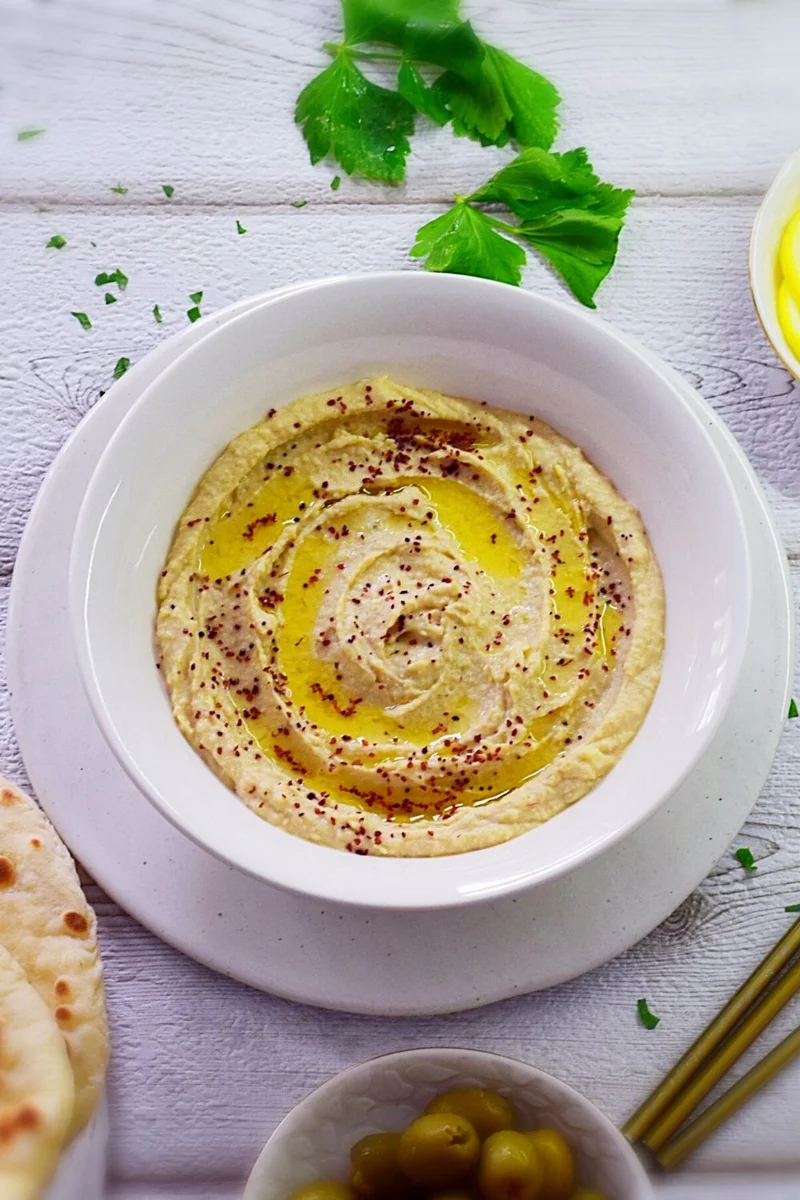
This smooth, creamy hummus blends chickpeas with tahini, lemon and garlic, then gets finished with olive oil and a dusting of sumac or paprika. It comes together in about 10 minutes and makes an easy dip or spread.
Ingredients
- 1 × 400 g canchickpeas
- 45 ml (3 tbsp)tahini (see note 1)
- 1 large clovegarlic, peeled and chopped
- 30 ml (2 tbsp)lemon juice
- 30 ml (2 tbsp), dividedolive oil
- 2.5 ml (½ tsp)ground cumin
- to tastesalt
- 45–60 ml (3–4 tbsp)water
- to tastesumac or paprika
Instructions
- 1
Rinse the chickpeas
Rinse the chickpeas a few times, rubbing them gently between your fingertips to loosen their skins. Discard the skins and set the chickpeas aside.
- 2
Blend tahini mixture
Put the tahini, lemon juice, 15 ml (1 tablespoon) of the olive oil and chopped garlic in a food processor. Pulse until smooth.
- 3
Add chickpeas
Add the chickpeas and cumin, then process for at least 2 minutes until smooth. Add the water a little at a time as you blend, until the hummus is creamy.
- 4
Garnish and serve
Drizzle the remaining 15 ml (1 tablespoon) olive oil over the hummus and sprinkle with sumac or paprika before serving.
What is hummus?
Hummus is a chickpea and tahini dip associated with the Levant and enjoyed across the Middle East and beyond. Its exact origins are shared and debated, but the combination of pulses, sesame paste and citrus is central to many versions.
Here, peeling the chickpeas and blending the tahini mixture first help give this quick version its smooth, creamy texture. Lemon and garlic bring brightness, while olive oil and sumac or paprika finish the bowl.
Nutrition and macros by portion
The nutrition label shows one serving as written: 200 calories, 7g protein, 18g carbs, 11g fat.
| Portion | Adjustment | kcal | Protein | Carbs | Fat |
|---|---|---|---|---|---|
| Lighter | Use less olive oil | 140 kcal | 5g | 13g | 8g |
| This serving | As written | 200 kcal | 7g | 18g | 11g |
| Hungry | Serve a larger scoop | 300 kcal | 11g | 27g | 17g |
The chickpeas provide most of the carbohydrates and fibre, while tahini and olive oil contribute most of the fat. Chickpeas and tahini also supply some protein. Serve a moderate scoop with plenty of vegetables and a protein-rich accompaniment to make a more balanced plate.
Why peel the chickpeas?
Loose skins can make hummus feel grainy, so this method rubs them off after rinsing. The step takes a little patience, but it helps the chickpeas blend more evenly.
Work in small handfuls and discard the skins as they separate. If a few remain, the hummus will still blend, though it may be slightly less silky.
Blend the tahini first
Tahini: blending it with lemon juice, garlic and some of the olive oil before adding the chickpeas creates a smooth base for the dip.
Chickpeas: process them with the cumin for at least 2 minutes, scraping down the bowl if needed. Add water gradually so you can stop when the hummus reaches a creamy consistency.
Adjust the texture
The recipe uses 3–4 tablespoons of water, added a little at a time. Start with less and add more only if the mixture still seems thick or difficult to blend.
The finished hummus should be smooth and easy to scoop, not watery. It may firm up slightly after standing, so serve it soon after blending for the loosest texture.
Finish with olive oil and spice
The final tablespoon of olive oil is drizzled over the surface rather than blended in, adding a glossy finish. Keep it for the garnish rather than adding it all to the processor.
Sumac adds a tangy note, while paprika gives a warmer, mellow finish. Sprinkle either over the hummus just before serving.
How to serve hummus
Serve it as a dip with flatbread, crackers or raw vegetables, or spread it in a sandwich or wrap. It also works alongside a meal of roasted vegetables, salad or grilled foods.
For a more filling snack or meal, pair it with vegetables and a source of protein. The hummus itself supplies chickpeas and tahini, while the rest of the plate can add variety.
Recipe notes & tips
- Rinse the chickpeas thoroughly before rubbing away their skins.
- Add the water in small amounts so you can control the consistency.
- Give the chickpeas at least 2 minutes in the food processor for a smooth result.
- Pause to scrape down the sides of the processor if the mixture is not blending evenly.
- Save the second tablespoon of olive oil for the garnish.
- Taste before serving and adjust the salt to your preference.
Variations
- Extra lemon: Add a little more lemon juice for a sharper finish.
- More garlic: Blend in another small clove for a stronger garlic flavour.
- Smoky paprika: Choose paprika for a warmer, smoky-style garnish.
- Herb finish: Scatter chopped parsley over the top just before serving.
- Spiced hummus: Add a pinch of chilli flakes with the cumin.
- Thicker dip: Start with less water and add only enough to blend smoothly.
Common mistakes to avoid
- Adding all the water at once: The hummus can turn loose; add it gradually and stop when creamy.
- Skipping the rinse: Residual canning liquid may affect the flavour; rinse the chickpeas before blending.
- Blending for too little time: The texture may stay coarse; process the chickpeas for at least 2 minutes.
- Leaving every skin on: The dip may be less smooth; rub the chickpeas gently to loosen and remove the skins.
- Using all the oil in the processor: You will miss the finishing drizzle; reserve 15 ml for the top.
- Overloading the garnish: Too much spice can dominate; sprinkle on sumac or paprika lightly.
How to store
Store leftover hummus in an airtight container in the fridge and use within 3–4 days. Stir before serving; it is usually served chilled or at room temperature, so no reheating is needed.
Frequently asked questions
Can I skip peeling the chickpeas?
Yes. The hummus will still work, but it may have a slightly less smooth texture.
How much water should I add?
The recipe gives 45–60 ml (3–4 tablespoons). Add it gradually and stop once the hummus is creamy and blends easily.
Can I make this without a food processor?
A high-powered blender may work, though you may need to stop and scrape down the sides. A less powerful appliance may leave the hummus more textured.
How can I make the hummus smoother?
Remove as many chickpea skins as you can, blend the tahini mixture first and process the chickpeas for at least 2 minutes.
Can I prepare it ahead?
Yes. Refrigerate it in an airtight container and add the olive oil and sumac or paprika garnish just before serving.
What can I use instead of sumac?
Paprika is the listed alternative. Sprinkle it over the hummus in place of the sumac.
Cook it from the original
This recipe comes from tamarindnthyme.com. Their page has the author’s own photos, notes and tips — the best place to cook it from.
Open the recipe on tamarindnthyme.com