
Four seasons pizza
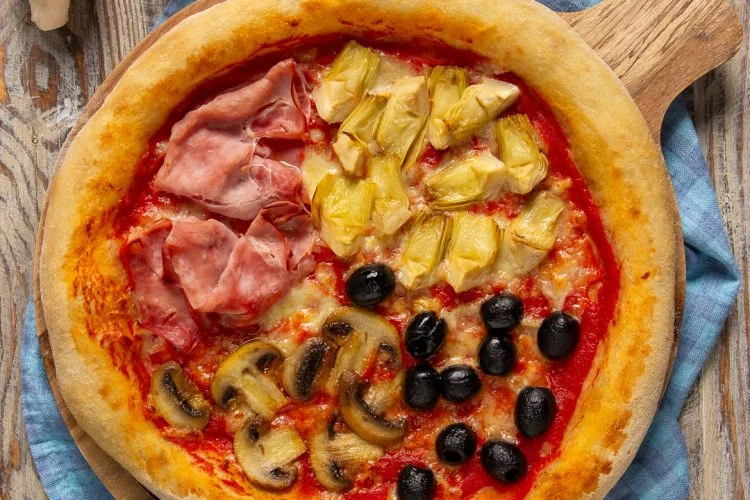
Four seasons pizza pairs a soft, slow-risen base with tomato, mozzarella, mushrooms, artichokes, olives and cooked ham. The toppings bring contrasting savoury flavours, while a very hot oven helps give the crust a well-baked base and puffed edge.
Ingredients
- 340 g00 flour
- 240 gwater, at room temperature
- 4 g (or 14 g fresh)dried baker’s yeast
- 8 gsalt
- 8 gextra-virgin olive oil
- 160 gpassata
- 100 gfiordilatte mozzarella
- 150 gbutton mushrooms
- 240 gartichoke hearts in oil, well drained
- 160 gsliced cooked ham
- 80 gpitted black olives
- 1 clovegarlic
- to tasteextra-virgin olive oil
- to tastesalt
- to tastedurum wheat semolina, for dusting
Instructions
- 1
Mix the dough
Fit a stand mixer with a dough hook and add the flour and dried yeast. Mix on low speed, pouring in half the room-temperature water in a thin stream, then adding the rest a little at a time. Let each addition absorb before adding more, until all the water is used.
- 2
Knead the dough
The dough may look loose or poorly combined at first; this is normal, so do not add extra flour. Keep mixing until it starts wrapping around the hook and pulling away from the sides of the bowl.
- 3
Add oil and salt
Add the oil in a thin stream, alternating it with the salt. Continue mixing until the dough is smooth, elastic and well developed, and the oil is absorbed. If the dough feels soft, do not try to correct it with extra flour; resting will strengthen it.
- 4
First rise
Transfer the dough to a lightly oiled bowl, cover with cling film and leave it in the switched-off oven for 3 hours, until visibly risen and roughly doubled in size.
- 5
Divide the dough
Turn the dough out onto a surface dusted with semolina. Use a dough scraper to divide it into 2 portions of about 300 g each, then shape each portion into a ball by rounding it on the work surface.
- 6
Second rise
Place the dough balls well apart on a lightly floured tray, cover and leave to rise for another 2 hours. If the room is cold, allow a little longer; the dough should feel soft and airy.
- 7
Cook the mushrooms
Clean the mushrooms and cut them into slices about 5 mm thick. Fry them in a pan with a little oil and a crushed garlic clove, seasoning lightly with salt. Cook until they release their water, without browning them too much.
- 8
Prepare toppings
Drain the artichoke hearts very well and cut them into quarters. Slice the mozzarella into strips and leave it to drain in a sieve for at least 30 minutes to help prevent a soggy pizza.
- 9
Shape the bases
Dust the work surface generously with semolina. Set one dough ball on it and stretch it with your fingers from the centre outwards, taking care not to press the rim; turn the dough often. Make a 28 cm disc with a centre about 4 mm thick and a raised edge no more than 2 cm high.
- 10
Top the pizzas
Season the passata with salt. Spread about 40 g over each pizza, leaving the edge clear, then add 50 g mozzarella to each. Arrange the mushrooms, artichokes, olives and finally the cooked ham over the top, then finish with a drizzle of oil.
- 11
Bake the pizzas
Heat the oven to 250 °C on the conventional setting, with an upturned baking tray or a baking stone inside. Once thoroughly hot, transfer a pizza using a semolina-dusted peel and bake for 6–8 minutes, until the base is well coloured and the edge is puffed and golden.
What is four seasons pizza?
Four seasons pizza is an Italian pizza topped with ingredients that represent different seasonal flavours, commonly including mushrooms, artichokes, olives and cooked ham. Its name is often reflected by arranging toppings in distinct sections, though this version spreads them across the surface.
Here, the slow-risen dough gives the toppings a light, chewy base, while pre-cooking the mushrooms and draining the mozzarella help keep excess moisture in check.
Nutrition and macros by portion
The nutrition label shows one serving as written: 940 calories, 39g protein, 128g carbs, 31g fat.
| Portion | Adjustment | kcal | Protein | Carbs | Fat |
|---|---|---|---|---|---|
| Lighter | Less ham and mozzarella | 658 kcal | 27g | 90g | 22g |
| This serving | As written | 940 kcal | 39g | 128g | 31g |
| Hungry | Larger pizza portion | 1410 kcal | 59g | 192g | 47g |
The flour supplies most of the carbohydrates, while the olive oil and mozzarella contribute much of the fat. The dough, mozzarella and cooked ham provide protein, with olives, cheese and ham also contributing to the salt content. Pair a pizza with a generous salad or other vegetables for a more balanced plate.
Build strength into the dough
Water first: adding it gradually gives the flour time to absorb it and lets the dough come together without extra flour. A loose, untidy-looking dough at the start is expected.
Oil and salt: incorporate these after the dough begins to gather around the hook. Keep mixing until it is smooth and elastic rather than trying to firm it up with more flour.
Give the dough time
First rise: the dough rests for 3 hours in a switched-off oven, until visibly swollen and roughly doubled. Covering the bowl helps prevent the surface from drying out.
Second rise: divide into two balls and leave them covered for another 2 hours. In a cold room, use the feel of the dough as your guide: it should be soft and airy before shaping.
Keep the toppings from making the base wet
Mushrooms: cooking them first lets their water escape before they go on the pizza. Stop once they have released their liquid; the method does not call for deeply browning them.
Mozzarella and artichokes: drain both thoroughly, and give the sliced mozzarella at least 30 minutes in a sieve. That small bit of preparation helps the centre bake rather than turn watery.
Shape without flattening the rim
Centre first: press and stretch the dough outwards with your fingers, turning it regularly so it opens evenly. Keep your hands away from the edge to preserve the raised crust.
Aim for a 28 cm round with a centre about 4 mm thick and an edge no higher than 2 cm. Dust the surface with semolina to make handling easier.
Bake on a thoroughly hot surface
Preheat the oven to 250 °C with an upturned baking tray or baking stone inside. Wait until it is properly hot before transferring the topped pizza.
The recipe gives a 6–8 minute bake. Look for a well-coloured underside and a puffed, golden edge, as ovens and baking surfaces can vary.
Serve it simply
Serve the pizza hot, when the base is crisp at the bottom and the cheese is freshly melted. A simple green salad or lightly dressed leaves make a fresh counterpoint to the salty, savoury toppings.
Bake the two pizzas one at a time if needed, keeping the unused dough ball covered while the first cooks. The hot tray or stone needs to stay in the oven between bakes.
Recipe notes & tips
- Weigh the dough portions so the two bases bake at a similar rate.
- Drain the mozzarella for at least 30 minutes, as specified, before topping the pizzas.
- Let the mushrooms release their moisture in the pan before using them.
- Keep the dough covered during its rises so its surface does not dry out.
- Preheat the baking tray or stone fully before putting the pizza in the oven.
- Use a semolina-dusted peel to help transfer the pizza to the hot baking surface.
Variations
- Keep the sections distinct: arrange the mushrooms, artichokes, olives and ham in separate areas for a classic four-part look.
- Use fresh yeast: replace the 4 g dried yeast with 14 g fresh yeast, as indicated in the ingredient list.
- Change the cheese: use another well-drained mozzarella if fiordilatte is unavailable.
- Add herbs: scatter a little dried oregano over the tomato before adding the other toppings.
- Make a vegetarian version: leave off the cooked ham and keep the mushroom, artichoke and olive toppings.
Common mistakes to avoid
- Adding flour to soft dough: resist the urge, because the dough is meant to gain strength as it rests.
- Adding all the water at once: pour it in gradually and let each addition absorb before adding more.
- Using wet toppings: drain the mozzarella and artichokes well, and cook the mushrooms before topping.
- Pressing the rim flat: stretch from the centre outwards and avoid pushing down the edge.
- Baking on a cool tray: preheat the tray or stone in the oven before transferring the pizza.
- Overcooking the mushrooms: cook them until their water has escaped, without browning them too much.
How to store
For the best texture, eat the pizzas freshly baked. Cool any leftovers, cover or seal them and refrigerate for up to 2 days; reheat in a hot oven until warmed through and crisped at the base.
Frequently asked questions
Can I use fresh yeast instead of dried yeast?
Yes. The recipe specifies 14 g fresh yeast in place of 4 g dried yeast.
Can I make the dough without a stand mixer?
The method uses a stand mixer with a dough hook. By hand, knead until the dough becomes smooth and elastic, adding the water gradually as directed.
Why does the mozzarella need to drain?
Mozzarella releases moisture as it bakes. Draining the sliced cheese for at least 30 minutes helps keep the pizza from becoming watery.
How can I tell when the dough is ready to shape?
After the second rise, it should feel soft and full of air. If the room is cold and it has not reached that feel, give it a little more time.
Can I bake the pizzas one after the other?
Yes. Bake each pizza for 6–8 minutes, keeping the baking tray or stone hot for the next one and the waiting dough covered.
Do the toppings have to be arranged in four sections?
No. This method distributes all the toppings over each pizza. You can arrange them in separate sections if you want a more traditional four-part appearance.
Cook it from the original
This recipe comes from soniaperonaci.it. Their page has the author’s own photos, notes and tips — the best place to cook it from.
Open the recipe on soniaperonaci.it