
Cochabamba pork crackling
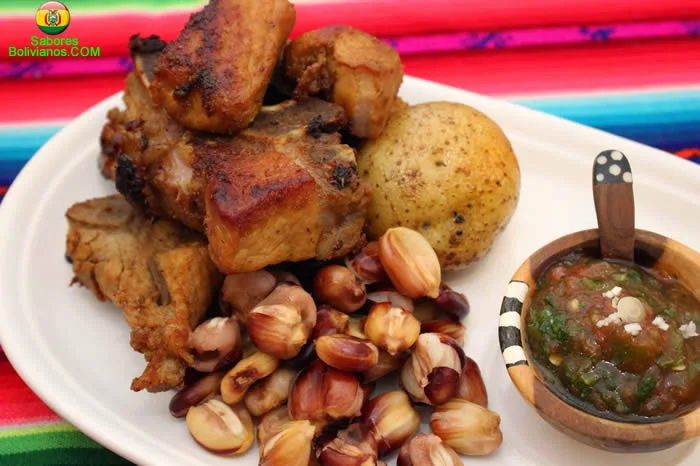
Cochabamba pork crackling combines pork skin, bacon, ribs and chops, slowly cooked with chicha and spices before being browned. Serve it hot with mote and potatoes for a traditional Bolivian meal.
Ingredients
- al gustopork skin
- plentywater
- al gustobacon
- 240 ml (1 cup)chicha
- al gustosalt
- al gustopork ribs
- al gustopork chops
- 240 ml (1 cup)chicha
- al gustogarlic
- al gustocumin
- al gustobay leaf
- al gustomint
- al gustosalt
- al gustolemon juice
- al gustomote
- al gustopotatoes
Instructions
- 1
Cook the skin
Cook the pork skin in a pot with plenty of water. Drain it, chop it and set it aside.
- 2
Brown the bacon
Chop the bacon and put it in a bronze pot over low heat. Add 240 ml (1 cup) of chicha and salt, and cook until golden; then drain the bacon.
- 3
Season the pork
Put the ribs and pork chops into the same rendered fat. Add 240 ml (1 cup) of chicha, the garlic, cumin, bay leaf, mint and salt.
- 4
Cook and brown
Cook over low heat until all the liquid has evaporated and only the rendered fat remains. Drain off the fat and leave the pork to brown.
- 5
Add skin and lemon
Add the lemon juice and the cooked pork skin. Once the meat is browned, remove the pot from the heat.
- 6
Serve hot
Serve hot with mote and potatoes.
What is Cochabamba pork crackling?
This Bolivian dish brings together several cuts of pork, including skin, bacon, ribs and chops, cooked with chicha and seasoning. It is associated with Cochabamba, where pork dishes are often served with mote and potatoes.
This version cooks the pork first in chicha and its own rendered fat, then adds the precooked skin and lemon. That sequence gives the meat time to take on the seasoning before its final browning.
Nutrition and macros by portion
The nutrition label shows one serving as written: 215 calories, 0g protein, 0g carbs, 0g fat.
| Portion | Adjustment | kcal | Protein | Carbs | Fat |
|---|---|---|---|---|---|
| Lighter | Less bacon, more vegetables | 151 kcal | 0g | 0g | 0g |
| This serving | As written | 215 kcal | 0g | 0g | 0g |
| Hungry | Larger pork portion | 323 kcal | 0g | 0g | 0g |
Pork and bacon provide most of the protein and fat, while mote and potatoes contribute most of the carbohydrates. Keep the mote and potato portions moderate and add vegetables or salad alongside to round out the plate.
The pork and its rendered fat
Pork skin: boiling it separately softens it before it joins the browned meat. Drain it well and chop it so it is ready to add near the end.
Bacon: cooking it slowly helps render its fat, which becomes the cooking medium for the ribs and chops. Drain the bacon once it has turned golden, as directed.
Cooking with chicha
First addition: chicha cooks with the bacon and salt, adding liquid as the bacon renders. Keep the heat low and cook until the bacon has browned.
Second addition: the remaining chicha goes into the pot with the ribs, chops and seasonings. Let the liquid cook away before draining the fat and browning the meat.
How to judge the browning
Liquid stage: the method calls for slow cooking until the liquid has dried up, leaving rendered fat in the pot. Watch closely as it approaches this point so the pork can brown rather than scorch.
Finish: add the cooked skin and lemon juice, then take the pot off the heat when the meat is browned. The recipe gives no internal temperature or exact browning time, so use the visual cue and ensure the pork is thoroughly cooked.
Seasoning and finishing
Garlic, cumin, bay leaf and mint season the ribs and chops as they cook. The recipe does not specify amounts, so add them to taste.
Lemon juice goes in near the end, along with the cooked skin. Adding it at this stage keeps the finishing step simple and lets the browned pork remain the focus.
Serving with mote and potatoes
Serve the pork hot with mote and potatoes, as suggested in the recipe. Their mild, starchy flavours make a straightforward accompaniment to the rich meat.
For a more balanced plate, add a fresh vegetable side such as a simple salad; it can be served alongside without changing the traditional accompaniments.
Recipe notes & tips
- Keep the bacon over low heat while it renders.
- Drain the boiled pork skin well before chopping it.
- Use the same pot and rendered fat for the ribs and chops, as directed.
- Stay nearby as the chicha evaporates so the meat browns without burning.
- Add the lemon juice and cooked skin only at the finishing stage.
Variations
- Milder seasoning: use less cumin and garlic to make their flavours subtler.
- More mint: add a little extra mint alongside the other seasonings.
- Extra lemon: serve with additional lemon juice for a sharper finish.
- More mote: increase the mote served alongside for a heartier accompaniment.
- Potato choice: serve with boiled potatoes, as suggested in the recipe.
Common mistakes to avoid
- High heat too early: the pork can brown before the liquid evaporates; keep the cooking gentle.
- Wet pork skin: excess water can dilute the pot; drain the skin well after boiling.
- Skipping the rendered fat: use the fat left from cooking the bacon for the ribs and chops.
- Leaving the pot unattended: liquid can disappear and the pork can scorch; watch it closely as it dries.
- Adding the skin too soon: it is meant to go in after the pork has browned; cook it separately first.
How to store
Refrigerate leftovers in a covered container and eat within 3 days. Reheat thoroughly in a pan over low heat, stirring as needed; add a small splash of water if the meat begins to stick.
Frequently asked questions
What is chicha?
Chicha is a fermented drink used here as a cooking liquid. The recipe calls for 240 ml in each of two stages.
Can I use a different pot instead of bronze?
The method specifies a bronze pot for the bacon. If you do not have one, use a sturdy pot that can handle slow cooking and browning.
Can I prepare the pork skin ahead?
Yes. Boil, drain and chop it ahead, then keep it covered in the fridge until you add it near the end.
How do I know when the liquid has cooked away?
The method says to continue until only rendered fat remains in the pot. Keep an eye on it as it dries so the meat does not burn.
What should I serve with this dish?
The recipe recommends mote and potatoes. A fresh salad or other vegetables can also be served alongside.
Cook it from the original
This recipe comes from saboresbolivianos.com. Their page has the author’s own photos, notes and tips — the best place to cook it from.
Open the recipe on saboresbolivianos.com