
Pique macho
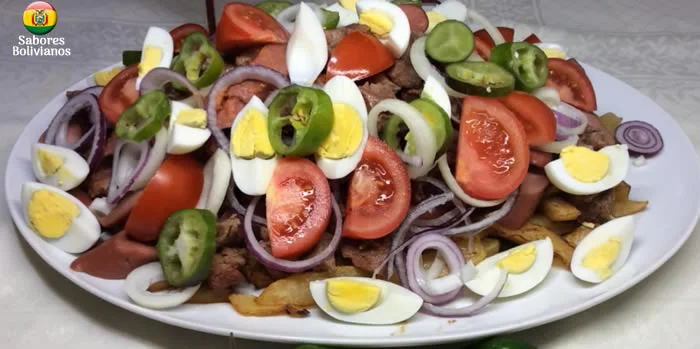
Pique macho is a Bolivian sharing platter of crisp chips, browned steak and chorizo, topped with onion, tomato, boiled eggs and fiery locoto. It is a hearty, sociable dish associated with Cochabamba, and this version brings its contrasting textures together on one generous plate.
Ingredients
- Quantity not specifiedPotatoes
- Quantity not specifiedVegetable oil
- Quantity not specifiedBeef steak
- Quantity not specifiedCriollo chorizo
- Quantity not specifiedOnion
- Quantity not specifiedTomato
- Quantity not specifiedHard-boiled eggs
- Quantity not specifiedBolivian locoto chilli
Instructions
- 1
Prepare the potatoes
Cut the potatoes into chips and fry them in hot vegetable oil until golden and cooked through. Drain them.
- 2
Cook the meat
Cut the steak into bite-sized pieces and season it. Brown it in a hot pan, then cook the chorizo until done.
- 3
Prepare the toppings
Slice the onion, tomato and hard-boiled eggs. Cut the locoto into slices, taking care when handling the chilli.
- 4
Assemble the platter
Arrange the chips on a serving platter and add the steak and chorizo. Scatter over the onion, tomato, eggs and locoto, then serve.
What is pique macho?
Pique macho, also called pique a lo macho, is a Bolivian platter of chips, meat and toppings, commonly shared among friends. It is particularly associated with Cochabamba, a city known for its food culture.
The dish is said to have originated in 1974 at a restaurant in Cochabamba, where it was made for customers who wanted something to share. Its name is linked to the punchy heat of locoto, which gives the platter its characteristic kick.
Nutrition and macros by portion
The nutrition label shows one serving as written: 215 calories, 0g protein, 0g carbs, 0g fat.
| Portion | Adjustment | kcal | Protein | Carbs | Fat |
|---|---|---|---|---|---|
| Lighter | More tomato, fewer chips | 151 kcal | 0g | 0g | 0g |
| This serving | As written | 215 kcal | 0g | 0g | 0g |
| Hungry | Larger shared platter | 323 kcal | 0g | 0g | 0g |
The potatoes provide most of the carbohydrates, while the frying oil and chorizo contribute much of the fat. Beef, chorizo and eggs provide protein. To balance the plate, serve it with a generous fresh salad and keep the chips to one side of the serving platter.
The ingredients that define it
Potatoes: Choose a firm, non-floury variety so the chips hold their shape rather than turning soft and waterlogged. Cut them evenly to help them cook at the same rate.
Locoto: This Bolivian chilli is the signature spicy element. Add it in slices so diners can choose how much heat to take with each mouthful.
Getting crisp chips
Dry the cut potatoes well before frying; surface moisture can cause splattering and makes crisping harder. Fry in batches rather than crowding the pan, and drain each batch before assembling the platter.
The recipe description recommends vegetable oil for frying. Keep an eye on the heat so the outside colours without the potatoes becoming too dark before the centres are tender.
Browning the steak and chorizo
Cut the steak into bite-sized pieces so it is easy to eat from a shared platter. A properly hot pan encourages browning; adding too much meat at once can make it steam instead.
Cook the chorizo through and let its savoury flavour mingle with the beef. If the pan becomes very crowded, work in batches.
Balancing the toppings
Tomato and onion bring freshness alongside the rich meat and fried potatoes. Add the boiled eggs in slices so they are easy to pick up with the other components.
Locoto is potent, so serve the slices visibly on top rather than hiding them throughout the dish. That makes the heat easier to judge when sharing.
Serving it to share
Bring the platter to the table while the chips are still crisp and the meat is warm. Pique macho is traditionally a sociable, substantial plate, often enjoyed with friends.
A simple salad on the side can add a fresh contrast. Serve any extra locoto separately for those who want more heat.
Recipe notes & tips
- Use a firm potato variety that does not turn floury when fried.
- Dry the cut potatoes thoroughly before they go into the oil.
- Fry the chips in batches to help them brown evenly.
- Cut the steak into similar-sized pieces for more even cooking.
- Handle locoto carefully and wash your hands after cutting it.
- Assemble the platter just before serving to keep the chips crisp.
Variations
- Extra locoto: Serve additional sliced chilli on the side for diners who prefer more heat.
- Add salchicha: Include sliced sausage alongside the chorizo for a common variation.
- Add chicken: Use cooked bite-sized chicken pieces in place of some of the beef.
- Add cheese: Scatter cheese over the hot meat so it softens before serving.
- Keep it milder: Serve the locoto separately so everyone can adjust their own portion.
Common mistakes to avoid
- Using floury potatoes: They can become soft and break apart; choose a firmer variety.
- Wet potato pieces: They splutter in the oil and brown less well; dry them before frying.
- Crowding the frying pan: The potatoes may cook unevenly; fry them in batches.
- Overloading the meat pan: The steak can steam instead of brown; cook it in batches.
- Mixing in all the locoto: The heat can become hard to control; leave it visible or serve it separately.
How to store
Store leftover components in separate airtight containers in the fridge and use within 2 days. Reheat the meat and chips separately until hot; the chips are best reheated in an oven or air fryer, as they soften in the microwave. Add the fresh toppings after reheating.
Frequently asked questions
How spicy is pique macho?
The heat depends on how much locoto is used and how fiery the chilli is. Serve it on top or on the side so each person can choose.
Can I make the chips ahead?
They are best freshly fried, as they lose crispness while they stand. If preparing ahead, keep them separate from the meat and toppings until serving.
What potatoes work best?
Choose a firm potato that is not floury, as recommended in the recipe description. It is more likely to hold its shape during frying.
What is criollo chorizo?
It is the sausage named in the recipe description for this Bolivian-style platter. If it is unavailable, another cooking chorizo can be used, though the flavour may differ.
Can I make it without locoto?
Yes, though locoto is the chilli that gives pique macho its characteristic heat. Leave it out for a mild platter or offer another chilli separately.
Cook it from the original
This recipe comes from saboresbolivianos.com. Their page has the author’s own photos, notes and tips — the best place to cook it from.
Open the recipe on saboresbolivianos.com