
Stove Top Vegetable Lasagna
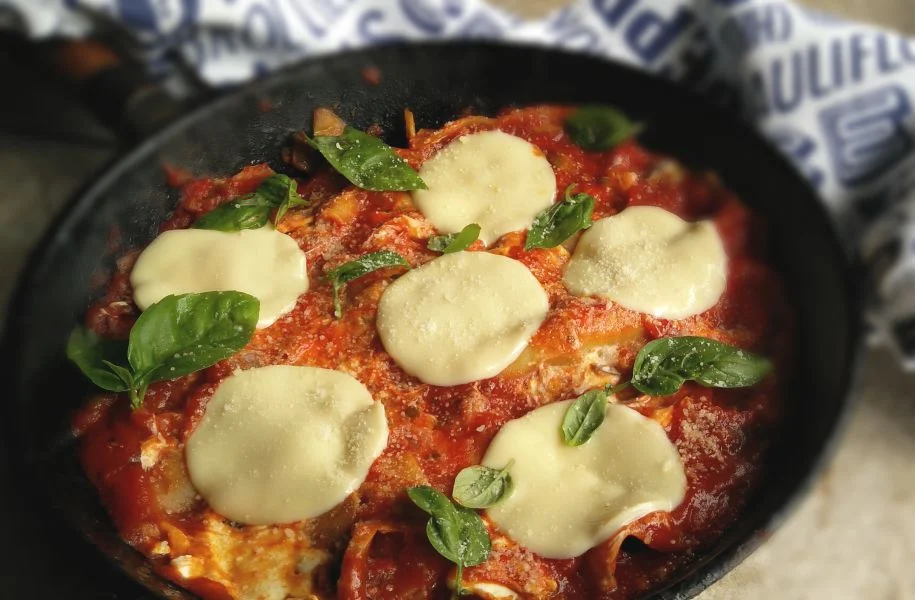
This one-pan vegetable lasagna layers broken lasagne sheets with peppers, mushrooms, sausage and tomato sauce, then finishes with creamy cheese. It is a cosy, practical dinner that cooks on the hob without assembling a traditional layered bake.
Ingredients
- 15 ml (1 tablespoon)oil
- 1 smallyellow or red onion, diced
- 1 smallred pepper, deseeded and diced
- 1 smallgreen pepper, deseeded and diced
- 4, cooked and slicedsausages of your choice (the original uses vegetarian sausages)
- 150 g (1 cup)fresh or frozen mushrooms, sliced
- 3 clovesgarlic, minced
- ½ teaspoonmixed dried herbs
- 8–10uncooked lasagne sheets
- 1 jar (400 g)pasta sauce
- 1 can (410 g)chopped tomatoes
- To tastesalt and black pepper
- 120 g (½ cup)ricotta, cottage cheese or cream cheese
- To taste, optionalfresh mozzarella, thinly sliced
- To tastefreshly grated Parmesan
- To tastefresh basil
Instructions
- 1
Heat the oil
Warm the oil in a large, heavy-based frying pan or skillet.
- 2
Cook the vegetables
Add the onion, peppers, cooked sliced sausages and mushrooms. Cook for 5–7 minutes, until the vegetables are tender.
- 3
Add the aromatics
Stir in the garlic and mixed dried herbs.
- 4
Add the lasagne
Break the uncooked lasagne sheets into large pieces and arrange them over the cooked vegetables and sausage.
- 5
Add the sauce
Pour the pasta sauce and chopped tomatoes over the lasagne pieces.
- 6
Cover the sheets
Check that every lasagne piece is covered with sauce.
- 7
Season the pan
Add salt and black pepper to taste.
- 8
Cover and simmer
Turn the heat down to low or medium-low and cover the pan with a lid.
- 9
Cook until tender
Cook for 20 minutes, or until the lasagne sheets are soft. Test a piece near the edge of the pan with a fork to check that it is cooked through.
- 10
Stir in the cheese
Take off the lid and gently stir the cream cheese into the tomato sauce at the top of the pan, without disturbing the lasagne sheets.
- 11
Melt and garnish
If using, lay the mozzarella on top and cover the pan until it has melted slightly, about 2 minutes. Remove the lid and finish with Parmesan and fresh basil.
- 12
Let it rest
Take the pan off the heat and leave it to stand for about 10 minutes before serving.
- 13
Serve warm
Serve the lasagne warm.
What is stove top vegetable lasagna?
Lasagne is an Italian pasta dish traditionally assembled in layers and baked. This stovetop version takes a more relaxed approach: broken sheets simmer directly in a tomato sauce with vegetables and sausage.
The combination of pasta, vegetables and creamy cheese gives it the familiar comfort of lasagne, while cooking everything in one pan keeps preparation and washing-up simple.
Nutrition and macros by portion
The nutrition label shows one serving as written: 650 calories, 28g protein, 72g carbs, 27g fat.
| Portion | Adjustment | kcal | Protein | Carbs | Fat |
|---|---|---|---|---|---|
| Lighter | Less cheese, extra vegetables | 455 kcal | 20g | 50g | 19g |
| This serving | As written | 650 kcal | 28g | 72g | 27g |
| Hungry | Larger lasagne portion | 975 kcal | 42g | 108g | 41g |
The lasagne sheets and tomato sauce provide most of the carbohydrates, while the oil and cheeses contribute much of the fat. Sausages and cheese supply protein, with the vegetables adding some fibre. Balance the plate with a generous green salad or another non-starchy vegetable.
Build the flavour base
Vegetables first: cooking the onion, peppers, sausage and mushrooms for 5–7 minutes softens them and gives the pan a flavourful base before the pasta goes in.
Garlic and herbs: add these after the vegetables have softened so the garlic has less time to scorch while the lasagne simmers.
Keep the pasta covered
Sauce coverage: the broken sheets need to sit beneath or be coated by the sauce so they can soften as they cook. Check around the pan before putting on the lid.
Gentle heat: a covered pan traps steam and helps cook the pasta. Keep the heat low to medium-low, and check for tenderness at the edges with a fork.
Finish with a light touch
Creamy layer: fold the ricotta, cottage cheese or cream cheese gently into the tomato sauce at the top rather than stirring through the whole pan. This keeps the pasta from breaking up.
Melted topping: mozzarella is optional; if using it, cover the pan for about 2 minutes, then add Parmesan and basil as a final garnish.
Rest before serving
The recipe allows the finished dish to stand in the pan for about 10 minutes. This gives the sauce a little time to settle and makes it easier to serve.
For the best pasta texture, check that the sheets are tender before taking the pan off the heat. Cooking time can depend on the size of the pieces and the pan.
What to serve alongside it
A crisp green salad or simply dressed leaves provide a fresh contrast to the rich tomato sauce and cheese. Steamed greens are another straightforward option.
If you would like bread, serve a modest amount for soaking up any extra sauce; the lasagne already contains pasta.
Recipe notes & tips
- Use a large, heavy-based pan with a lid so the broken pasta pieces can fit in a fairly even layer.
- Cut the lasagne sheets into generously sized pieces so they are easier to check and serve.
- If using frozen mushrooms, add them straight from frozen and allow the pan time to regain its heat.
- Check that all the pasta is covered with sauce before simmering.
- Test a piece near the edge of the pan with a fork, and give it a little longer if it is still firm.
- Add the cheese gently at the end to avoid breaking up the cooked pasta.
Variations
- Vegetarian sausages: use your preferred vegetarian variety for a meat-free version.
- Cheese choice: use ricotta, cottage cheese or cream cheese according to what you have.
- Extra greens: stir spinach into the sauce near the end of cooking so it wilts.
- No mozzarella: leave it out and finish with Parmesan and basil.
- Herb swap: use another dried herb blend in place of the mixed herbs.
Common mistakes to avoid
- Pasta above the sauce: uncovered pieces may stay firm; check that every sheet is coated before covering the pan.
- Heat too high: the sauce can catch before the pasta cooks; keep the pan at low to medium-low heat.
- Stirring too vigorously: the sheets can break apart; fold the creamy cheese into the top layer gently.
- Skipping the tenderness check: cooking times can vary; test a piece with a fork before serving.
- Serving straight away: the sauce may be loose; let the pan stand for about 10 minutes as directed.
How to store
Cool leftovers promptly, transfer them to an airtight container and refrigerate for up to 3 days. Reheat until piping hot, adding a splash of water or sauce if the pasta has absorbed too much liquid.
Frequently asked questions
Can I use fresh lasagne sheets?
The method is written for uncooked dried sheets, which simmer in the sauce for 20 minutes. Fresh sheets may cook more quickly, so check them earlier and adjust as needed.
Can I use frozen mushrooms?
Yes. The ingredient list allows fresh or frozen sliced mushrooms; cook them with the other vegetables until the vegetables are tender.
How do I know when the lasagne is cooked?
Test a sheet near the edge of the pan with a fork. It should be soft rather than firm in the centre.
Do I have to add mozzarella?
No, it is optional. You can finish the dish with Parmesan and basil without adding mozzarella.
Can I make it vegetarian?
Yes. Choose vegetarian sausages, as in the original cook's example, and check that the pasta sauce and cheeses suit your needs.
Why does the recipe rest before serving?
The method calls for a 10-minute rest in the pan. It gives the dish time to settle before you portion it.
Cook it from the original
This recipe comes from thegardeningfoodie.com. Their page has the author’s own photos, notes and tips — the best place to cook it from.
Open the recipe on thegardeningfoodie.com