
Majadito de charque
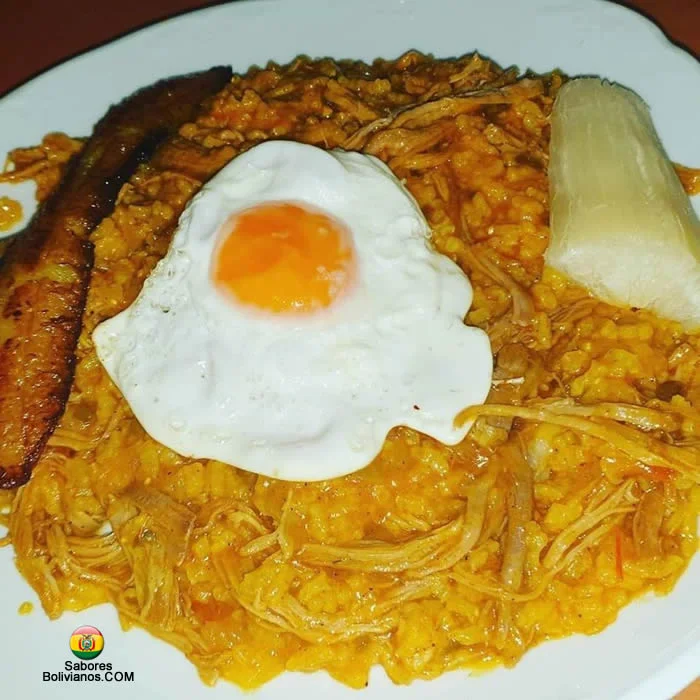
Majadito de charque is a Bolivian rice dish made with dried meat, urucú oil and broth, served with fried plantain and egg. Toasting the rice and aromatics first builds flavour before the rice cooks in the broth.
Ingredients
- to tasterice
- to tasteurucú oil
- to tasteonion
- to tastered pepper
- to tastegarlic
- to tastecharque (dried meat)
- 1.42 L (6 cups)stock
- a pinchcumin
- to tasteplantain
- to tasteeggs
- to tasteonion (for the optional salsa)
- to tastetomato (for the optional salsa)
Instructions
- 1
Toast the ingredients
Toast the rice in the urucú oil. Once it starts to turn golden, add the onion, red pepper and garlic, followed by the charque.
- 2
Cook the rice
When everything is well toasted, add 1.42 L (6 cups) of stock and a pinch of cumin. Simmer gently until the stock has reduced or been absorbed.
- 3
Serve the majadito
Serve with plantain and a fried egg. Add a salsa of onion and tomato if you like.
What is majadito de charque?
Majadito is a Bolivian rice dish, commonly associated with the country's eastern lowlands, made here with charque, or dried meat. The name refers to a pounded or crushed preparation, though this version centres on rice cooked with the meat.
Toasting the rice, vegetables and charque before adding stock gives the dish a savoury base. Plantain and fried egg make it a hearty plate, while an optional onion-and-tomato salsa adds freshness.
Nutrition and macros by portion
The nutrition label shows one serving as written: 215 calories, 0g protein, 0g carbs, 0g fat.
| Portion | Adjustment | kcal | Protein | Carbs | Fat |
|---|---|---|---|---|---|
| Lighter | Less oil, more salsa | 151 kcal | 0g | 0g | 0g |
| This serving | As written | 215 kcal | 0g | 0g | 0g |
| Hungry | Larger rice portion | 323 kcal | 0g | 0g | 0g |
Rice supplies most of the carbohydrates, while the urucú oil and fried egg contribute fat; the charque and egg are the main sources of protein. Serve with a generous amount of tomato and onion salsa or another vegetable side to balance the plate.
The ingredients that build flavour
Urucú oil: It lends the rice its characteristic warm colour and a mild, earthy note. Keep the heat moderate so the oil and rice toast without scorching.
Charque: Dried meat brings concentrated savouriness. Its saltiness can vary, so taste the cooked rice before adding any extra salt.
Toast before adding stock
Rice and aromatics: Stir the rice in the oil until it begins to turn golden, then add the onion, red pepper and garlic. This step gives the grains a toasted flavour; keep stirring so the garlic does not burn.
Charque: Add it after the vegetables and continue toasting until everything is well toasted, as the method directs. Then pour in the stock.
Watch the rice as it cooks
Gentle simmer: Once the stock and cumin are in, lower the heat and let the rice cook slowly. A hard boil can make the liquid evaporate before the grains are tender.
Doneness: The recipe calls for cooking until the stock has reduced or dried up. Check that the rice is tender at that point; if it is still firm, add a little more stock and continue cooking.
Make the accompaniments
Plantain and egg: Serve the rice with plantain and a fried egg, as suggested in the recipe. Their soft textures contrast with the savoury rice.
Fresh salsa: A simple mix of onion and tomato is optional. Add it just before serving for a bright, crisp contrast.
Plan the timing
The stated total time is 45 minutes. The rice cooks in the stock after the initial toasting, so prepare the plantain, egg and optional salsa while keeping an eye on the liquid level.
The ingredient list gives no specific quantities for most items, so use the stated 1.42 L of stock and adjust the other ingredients to suit your needs.
Recipe notes & tips
- Stir the rice as it toasts to help it colour evenly.
- Keep the heat moderate when toasting the garlic so it does not burn.
- Taste the charque before seasoning, since dried meat can be salty.
- Simmer gently and check the rice before all the stock has evaporated.
- Fry the egg and plantain separately while the rice cooks.
- Add the optional onion-and-tomato salsa just before serving.
Variations
- More vegetables: Add extra red pepper or serve with additional tomato and onion salsa.
- Milder flavour: Use less garlic to make the aromatics less pronounced.
- Extra urucú: Add a little more urucú oil for a deeper colour, taking care not to let the rice scorch.
- Different accompaniment: Serve with sliced avocado instead of plantain.
- Egg-free serving: Leave out the fried egg and serve with plantain and salsa.
Common mistakes to avoid
- Scorching the garlic: Add it with the other vegetables and keep stirring over moderate heat.
- Skipping the toasting: Toast the rice and the other ingredients before pouring in the stock for the method's intended flavour.
- Boiling too vigorously: Keep the stock at a gentle simmer so it does not disappear too quickly.
- Adding salt too soon: Taste the charque and finished rice first, then season only if needed.
- Waiting too long to check the rice: Test a grain as the stock reduces and add a little more liquid if it is still firm.
How to store
Cool leftovers promptly and store them in a covered container in the fridge for up to 3 days. Reheat until steaming hot, adding a splash of water or stock if the rice has dried out; cook fresh plantain and egg for serving where possible.
Frequently asked questions
What is charque?
Charque is dried meat used in Bolivian cooking. It has a concentrated savoury flavour, and its saltiness can vary.
What is urucú oil?
It is oil coloured and flavoured with urucú, also known as annatto. It gives the rice a warm colour and mild earthy flavour.
How do I know when the rice is done?
The stock should have reduced or been absorbed, and the rice should be tender. If the grains are still firm, add a little more stock and continue simmering.
Can I make the salsa ahead?
You can chop the onion and tomato ahead and keep them covered in the fridge. Add the salsa to the plate shortly before serving so it stays fresh.
Can I make majadito without the egg?
Yes. The recipe presents the egg as an accompaniment, so you can leave it out and serve the rice with plantain and the optional salsa.
Can I use a different stock?
Use a stock you enjoy, keeping in mind that the charque may already be salty. Taste the rice before adding extra seasoning.
Cook it from the original
This recipe comes from saboresbolivianos.com. Their page has the author’s own photos, notes and tips — the best place to cook it from.
Open the recipe on saboresbolivianos.com