
Greek Roast Chicken
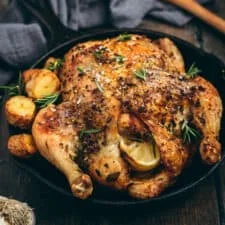
This Greek-style roast chicken is seasoned with a quick spice rub, butter, lemon and fresh herbs, then roasted until golden. Serve it with salad and creamy mashed potatoes for an easy family dinner.
Ingredients
- 1 wholeorganic chicken
- 80 gbutter
- 1 quantityGreek spice rub
- 1/2lemon
- 3 stalks and 1 sprigfresh parsley and rosemary
- 1 tbspextra virgin olive oil
Instructions
- 1
Heat the oven
Preheat the oven to 200°C (400°F).
- 2
Season under skin
Cut the butter into 12 pieces and roll them in the spice rub. With the chicken legs facing you, carefully slide your fingers beneath the skin over the breasts to loosen it. Push half the butter pieces under the skin, placing two on each breast and one on top of each leg; tuck one piece into the crease where each leg meets the breast.
- 3
Season the chicken
Put the remaining butter in the chicken cavity with the lemon and fresh herbs. Drizzle the olive oil over the chicken, then rub the remaining Greek spice rub all over it, massaging to coat it evenly.
- 4
Roast and baste
Put the chicken in the preheated oven for 1 hour and 15 minutes, basting it with the pan juices every 20 minutes. It is cooked when a skewer inserted into the thickest part releases clear juices and the skin is golden and crisp.
- 5
Rest and carve
Take the chicken out of the oven and leave it to rest for 10 minutes. Carve and serve.
What is Greek roast chicken?
Greek roast chicken draws on the Mediterranean habit of seasoning poultry with herbs, citrus and olive oil. This version adds a Greek spice rub and butter beneath the skin for a savoury, aromatic roast.
The method keeps the flavour concentrated around the chicken itself: lemon and herbs scent the cavity, while regular basting helps the skin brown.
Nutrition and macros by portion
The nutrition label shows one serving as written: 702 calories, 56g protein, 5g carbs, 50g fat.
| Portion | Adjustment | kcal | Protein | Carbs | Fat |
|---|---|---|---|---|---|
| Lighter | Less butter, skin removed | 491 kcal | 39g | 4g | 35g |
| This serving | As written | 702 kcal | 56g | 5g | 50g |
| Hungry | Larger chicken portion | 1053 kcal | 83g | 8g | 75g |
Most of the protein comes from the chicken, while the butter and olive oil provide most of the fat. The listed carbohydrate amount is low; serve the chicken with salad and a portion of mashed potatoes to make the meal more substantial.
Butter beneath the skin
Even pieces: cutting the butter into 12 pieces makes it easier to distribute beneath the skin. Slide your fingers in gently so the skin loosens without tearing.
Placement: the recipe divides half the butter between the breasts, legs and the creases where the legs meet the breast. Keep the butter under the skin rather than pushing it into the meat.
The spice rub
Coat evenly: roll the butter pieces in the rub, then use the remaining rub over the oiled chicken. The recipe does not list the rub's individual ingredients, so use the prepared Greek spice rub specified.
Good coverage: massage the seasoning over the whole bird so the breast, legs and sides are coated.
Lemon and herbs
Cavity aromatics: the lemon half, parsley stalks and rosemary sprig go inside the chicken with the remaining butter. They add fragrance as the bird roasts.
Keep them whole as directed; there is no need to chop the herbs for this method.
Roasting and doneness
Basting rhythm: spoon pan juices over the chicken every 20 minutes during the 1 hour and 15 minute roasting time. This keeps the surface seasoned as it cooks.
Check the thickest part: insert a skewer into the meat and look for clear juices, along with golden, crisp skin. Rest the chicken for 10 minutes before carving.
What to serve with it
The recipe description suggests serving the chicken with a salad and creamy mashed potatoes. Their fresh and creamy textures make a simple contrast to the seasoned roast.
Carve the chicken after resting and serve it with the pan juices if desired.
Recipe notes & tips
- Let the butter soften slightly if it is difficult to work beneath the skin.
- Loosen the breast skin gently to avoid tearing it.
- Set a timer to remind you to baste every 20 minutes.
- Use a skewer at the thickest part of the meat to check for clear juices.
- Rest the chicken for the full 10 minutes before carving.
Variations
- Add garlic: tuck a lightly crushed garlic clove into the cavity with the lemon and herbs.
- Use dried herbs: swap the fresh herbs for a small amount of dried herbs in the cavity.
- Add lemon zest: grate a little zest into the Greek spice rub before seasoning.
- Serve with greens: pair the roast with steamed or roasted seasonal vegetables.
- Make a pan sauce: spoon the roasting juices over the carved chicken at the table.
Common mistakes to avoid
- Tearing the skin: loosen it slowly with your fingers rather than forcing them through.
- Uneven seasoning: massage the remaining rub over all sides of the chicken.
- Skipping the basting: baste every 20 minutes as the recipe directs.
- Guessing doneness from colour alone: check that juices run clear from the thickest part.
- Carving straight away: rest the chicken for 10 minutes before cutting.
How to store
Refrigerate leftover chicken in a covered container within 2 hours and use within 3 days. Reheat until piping hot, or serve cold in salads or sandwiches.
Frequently asked questions
How long does this Greek roast chicken take?
The stated total time is 80 minutes. The method specifies 1 hour and 15 minutes of roasting, followed by a 10-minute rest.
How often should I baste the chicken?
Baste it with the pan juices every 20 minutes while it roasts.
How can I tell when the chicken is cooked?
Insert a skewer into the thickest part of the meat. The recipe says it is ready when the juices run clear and the skin is golden and crisp.
Can I prepare the chicken ahead?
You can season the chicken and place the butter beneath the skin ahead of roasting, then keep it covered in the fridge. Roast it as directed when ready to cook.
What should I serve with Greek roast chicken?
The recipe suggests salad and creamy mashed potatoes. The chicken also works with other simple vegetables.
Can I use dried herbs instead of fresh?
The recipe calls for three parsley stalks and a sprig of rosemary. Dried herbs can be used instead, though their flavour and texture will differ.
Cook it from the original
This recipe comes from theirishmanswife.com. Their page has the author’s own photos, notes and tips — the best place to cook it from.
Open the recipe on theirishmanswife.com