
Cinnamon Swirl
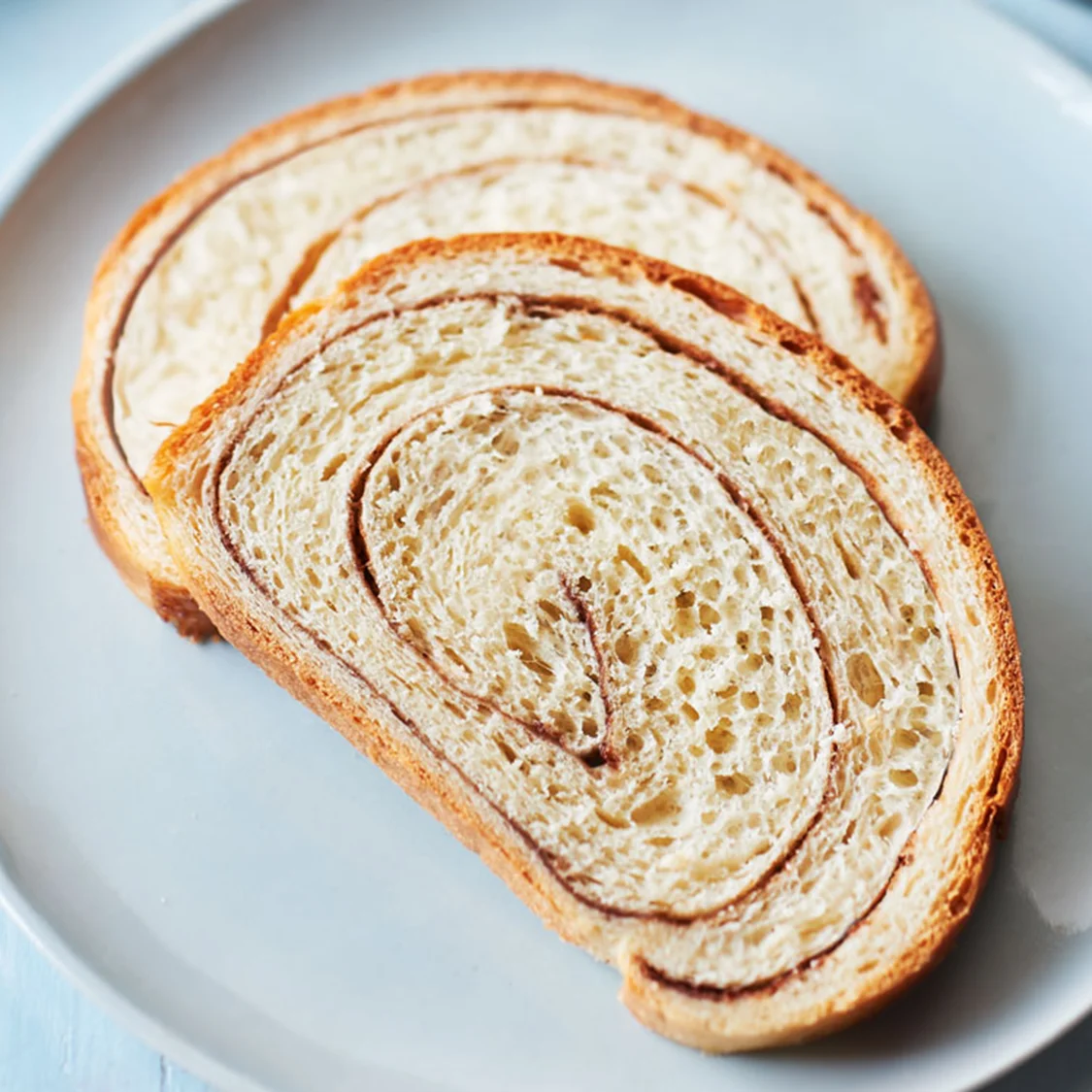
This cinnamon swirl loaf has a soft, rich crumb wrapped around a sweet, warmly spiced filling. Using fine caster sugar helps the filling melt evenly, while careful shaping and proving keep the spiral neat.
Ingredients
- 125 mlmilk
- 125 mlwater
- 25 gcaster sugar
- 50 gunsalted butter
- 1 mediumegg, at room temperature
- 500 g, plus extra for dustingstrong white bread flour
- 8 gsalt
- 7 g sachetfast-action dried yeast
- 60 gcaster sugar
- 1 tspstrong white bread flour
- 1 tbspground cinnamon
- 3 tbspmilk, for brushing
- small knobbutter, to finish
Instructions
- 1
Warm the liquids
Put the milk, water, 25 g sugar and 50 g butter in a small pan. Heat gently, stirring, until the sugar dissolves and the butter melts. Take the pan off the heat and cool the mixture until lukewarm, then beat in the egg with a fork.
- 2
Mix dry ingredients
Combine the flour and salt in a large bowl or the bowl of a stand mixer. Add the yeast and mix thoroughly, then make a well in the centre.
- 3
Make the dough
Pour the milk-and-egg mixture into the well and gradually work it into the flour by hand or with a dough hook on slow speed. Aim for a very soft dough that is not sticky. If dry crumbs remain at the bottom, add lukewarm milk or water a tablespoon at a time; if the dough sticks to the bowl, add flour a tablespoon at a time.
- 4
Knead and rise
Lightly flour the worktop and knead the dough for 10 minutes, or use a dough hook on slow speed for about 5 minutes, until silky, firmer and elastic. Return it to the bowl if needed, cover tightly and leave on the worktop for about 1 hour, until doubled in size.
- 5
Prepare the tin
Knock back the risen dough, turn it onto a very lightly floured worktop and knead it a couple of times. Pat it into a thick square of about 18 cm, cover loosely with clingfilm and leave to relax for 5 minutes. Meanwhile, grease the tin with butter and line the base and two short sides with a long strip of baking paper.
- 6
Add the filling
Mix the 60 g caster sugar, 1 teaspoon flour and 1 tablespoon cinnamon in a small bowl. Lightly flour a rolling pin and roll the dough into a neat, even rectangle measuring 26 x 48 cm, with straight sides and square corners. Brush it generously with 2 tablespoons of milk, then spread the sugar mixture evenly over it, leaving a 1 cm border at one short end.
- 7
Roll the loaf
Starting at the short end opposite the bare border, roll the dough up neatly and tightly. Pinch the seam firmly closed.
- 8
Prove the loaf
Lift the roll into the prepared tin and gently fold the ends underneath to neaten the shape. Put the tin in a large plastic bag, trapping some air so the bag does not touch the dough, and tie it closed. Leave on the worktop for about 50 minutes, until just doubled; keep the room from becoming too warm so the loaf does not overprove. Towards the end of this time, heat the oven to 180°C/160°C fan.
- 9
Bake until golden
Uncover the loaf and brush its top gently with the remaining 1 tablespoon of milk. Bake for 35–40 minutes, until well browned. Tap the base: it should sound hollow. If it gives a dull thud, return it to the oven directly on the oven shelf for another 5 minutes, then test again. Handle the loaf carefully because its crust is soft; it firms as it cools.
- 10
Cool and finish
Set the loaf on a wire rack and rub the top with a knob of butter using a scrap of kitchen paper or the butter wrapper. Leave it to cool completely before cutting into thick slices.
What is cinnamon swirl bread?
Cinnamon swirl bread is a yeasted loaf rolled around a sweet, spiced filling, so each slice shows a spiral through its soft crumb. It belongs to a broad tradition of enriched, filled breads found in many baking cultures rather than to one clearly defined origin.
This version uses a fine caster-sugar filling and careful rolling to help create an even spiral without gaps. The milk, butter and egg enrich the dough and give it a tender texture.
Nutrition and macros by portion
The nutrition label shows one serving as written: 2750 calories, 77g protein, 472g carbs, 66g fat.
| Portion | Adjustment | kcal | Protein | Carbs | Fat |
|---|---|---|---|---|---|
| Lighter | Thinner slices | 1925 kcal | 54g | 330g | 46g |
| This serving | As written | 2750 kcal | 77g | 472g | 66g |
| Hungry | Larger slices | 4125 kcal | 116g | 708g | 99g |
For the stated yield of one loaf, most of the carbohydrates come from the bread flour and both additions of sugar; butter, milk and egg supply much of the fat, while flour and egg provide most of the protein. Pair a slice with fruit and plain yoghurt, or serve it alongside a protein-rich breakfast, to balance the plate.
Why use caster sugar?
Filling sugar: caster sugar has fine crystals that spread and melt readily as the loaf bakes. The small amount of flour in the filling helps keep it together.
Cinnamon: ground cinnamon gives the centre its warm, fragrant flavour. Mix it thoroughly with the sugar and flour so it is distributed evenly.
Getting the dough right
Soft dough: the liquid should be worked in gradually, since flour can absorb it differently. The finished dough should feel very soft but not cling to the bowl.
Kneading: continue until the dough feels smooth and elastic, rather than stopping as soon as it comes together. This helps it stretch neatly when rolled.
How to keep the swirl neat
Even rectangle: roll the dough to the stated 26 x 48 cm size, keeping the sides straight and corners square. An even sheet gives the loaf a more regular spiral.
Tight roll: roll from the short end opposite the bare border and pinch the seam shut. Keep the roll snug without stretching or tearing the dough.
Proving and baking cues
First rise: leave the covered dough for about 1 hour, or until doubled. The exact time depends on how warm the room is.
Final prove: allow about 50 minutes, stopping when the loaf has just doubled. If it grows too much or too quickly, it may lose its shape and swirl.
Doneness: look for a good golden-brown top and tap the base for a hollow sound. If the sound is dull, bake for another 5 minutes and test again.
Serving the loaf
Let the loaf cool completely before slicing so the soft crumb can set and the spiral stays defined. Thick slices are especially good plain or lightly toasted.
Serve it with fruit and plain yoghurt for a more balanced breakfast, or enjoy a slice with tea or coffee as a sweet snack.
Recipe notes & tips
- Use caster sugar in the filling for a finer, more even swirl.
- Keep the milk mixture lukewarm before adding the egg.
- Add any extra flour or liquid a tablespoon at a time when adjusting the dough.
- Leave the dough to relax for 5 minutes before rolling it out.
- Trap air in the plastic bag during the final prove so it stays clear of the dough.
- Cool the loaf completely before slicing to help the spiral hold its shape.
Variations
- More spice: add a little extra cinnamon to the filling for a stronger flavour.
- Mixed spice: replace some of the cinnamon with mixed spice for a more rounded aroma.
- Raisin filling: scatter raisins over the cinnamon mixture before rolling the dough.
- Citrus note: add finely grated orange zest to the filling for a fresh contrast.
- Toasted slices: toast slices after the loaf has cooled for a crisp edge and warm centre.
Common mistakes to avoid
- Hot liquid: it can affect the yeast; cool the milk mixture until just lukewarm before combining.
- Sticky dough: add flour gradually, a tablespoon at a time, rather than tipping in a lot at once.
- Uneven rolling: irregular thickness can make the swirl lopsided; aim for a neat 26 x 48 cm rectangle.
- Loose seam: the roll can open during proving; pinch the seam firmly closed.
- Overproving: the loaf may lose its shape; stop the final rise when it has just doubled.
- Cutting while warm: the crumb can compress and the swirl may smear; wait until the loaf is completely cold.
How to store
Once completely cool, store the loaf in an airtight container at room temperature and eat within 2–3 days. Toast slices to refresh them, or wrap slices and freeze them for up to 3 months; thaw at room temperature or toast from frozen.
Frequently asked questions
Can I use muscovado sugar for the filling?
Caster sugar is recommended for a finer, more even swirl. Muscovado is coarser and can melt less evenly in the filling.
How do I know when the dough has risen enough?
For the first rise, wait until it has doubled in size. For the final prove, aim for just doubled and avoid letting it become overlarge.
Can I knead the dough by hand?
Yes. Knead it on a lightly floured worktop for 10 minutes, until it is smooth and elastic.
Why does the recipe leave a border at one end?
The uncovered 1 cm edge helps the dough seal when rolled. Pinch the seam firmly after rolling.
How can I tell whether the loaf is baked through?
It should be golden brown and sound hollow when tapped on the base. If it sounds dull, bake it directly on the oven shelf for another 5 minutes and test again.
Should I slice the loaf while it is warm?
No. Let it cool completely so the soft crumb sets and the swirl is easier to cut cleanly.
Cook it from the original
This recipe comes from thegreatbritishbakeoff.co.uk. Their page has the author’s own photos, notes and tips — the best place to cook it from.
Open the recipe on thegreatbritishbakeoff.co.uk