
Easy Rough Puff Pastry
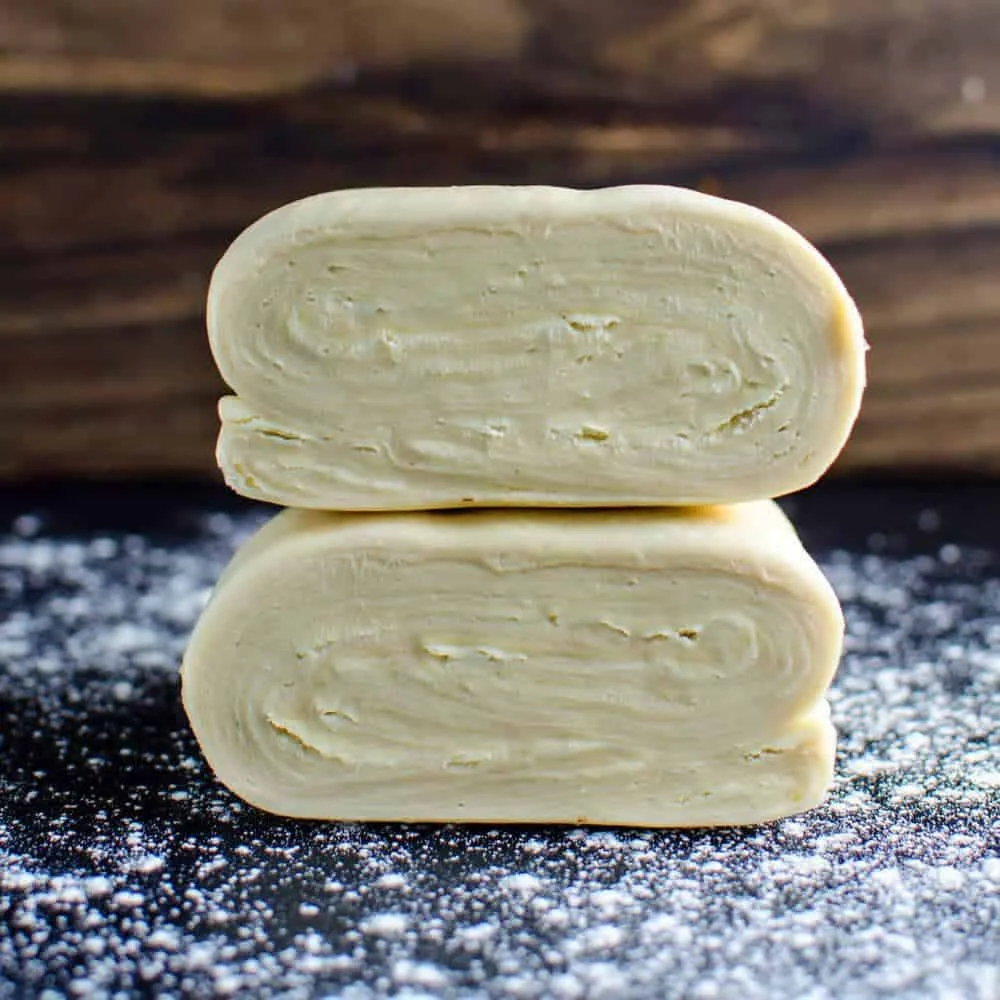
This rough puff pastry layers grated butter through a simple flour dough to create crisp, flaky pastry without the lengthy process of classic puff. Make it ahead and use it for sweet or savoury bakes.
Ingredients
- 60 g (2.1 oz), grated and frozenunsalted butter
- 200 g (7 oz), grated and frozen; weigh the butter after gratingunsalted butter
- 350 g (12.3 oz), chilled in the freezer for about 1 hour if possibleplain flour
- 120–150 mlice-cold water
- 1 tspsalt
- ½ tsplemon or lime juice, or white vinegar
Instructions
- 1
Rub in butter
Put the flour, salt and 60 g (2.1 oz) butter in a bowl. Quickly rub the butter into the flour with your fingertips.
- 2
Bring dough together
Add the lemon or lime juice and ice-cold water a tablespoon at a time, mixing with a wooden spoon or your fingertips until the dough comes together. Use only enough water to make a firm dough that is neither tacky nor too wet.
- 3
Rest the dough
Knead the dough on a floured surface for about 1 minute, then leave it to rest in the fridge for about 5 minutes.
- 4
Roll the rectangle
Roll the dough into a long rectangle about 15–18 cm (6–7 inches) wide and 38–41 cm (15–16 inches) long.
- 5
Add first butter
Sprinkle 100 g (3.5 oz) of the grated butter over two-thirds of the rectangle.
- 6
Make first fold
Fold the uncovered third towards the middle, then fold the opposite end over it to complete one fold and enclose the butter.
- 7
Add remaining butter
Turn the dough 90 degrees and roll it into another long rectangle, about 13–15 cm (5–6 inches) wide and 38–41 cm (15–16 inches) long. Sprinkle the remaining butter over two-thirds of the dough, then fold it as before and turn it 90 degrees.
- 8
Complete the folds
Make 3 more folds, bringing the total to about 5. You should not need to chill the dough between folds if you work quickly, but if it is a hot day and butter starts to seep out, put the dough in the freezer for about 10 minutes to firm the butter before continuing.
- 9
Wrap and chill
After the fifth and final fold, wrap the dough in cling film and keep it in the fridge until needed.
- 10
Rest before using
Let the dough rest for at least 2 hours before using. A longer rest, even overnight, is preferred.
- 11
Freeze for later
If you are not using the pastry straight away, cut it in half, wrap the pieces individually in cling film and store them in the freezer.
What is rough puff pastry?
Rough puff is a quicker, less intricate take on classic puff pastry, a layered pastry used across European baking. Instead of enclosing a whole sheet of butter in dough, grated butter is folded through it in stages.
This version uses two butter additions and five folds. The grated pieces help distribute butter through the dough, while chilling and resting give the pastry time to firm up before baking.
Nutrition and macros by portion
The nutrition label shows one serving as written: 220 calories, 3g protein, 22g carbs, 17g fat.
| Portion | Adjustment | kcal | Protein | Carbs | Fat |
|---|---|---|---|---|---|
| Lighter | Use a smaller pastry portion | 154 kcal | 2g | 15g | 12g |
| This serving | As written | 220 kcal | 3g | 22g | 17g |
| Hungry | Serve a larger portion | 330 kcal | 5g | 33g | 26g |
The flour supplies most of the carbohydrate, while the butter contributes most of the fat; the pastry provides a modest amount of protein from the flour. For a more balanced plate, serve a savoury pastry dish with vegetables or salad.
The butter and flour
Grated butter: keep it frozen until you need it so it stays in distinct pieces as you work. The recipe uses 60 g in the initial dough, then the remaining 200 g in two additions of 100 g.
Chilled flour: cooling the flour for about an hour in the freezer is suggested, especially if your kitchen is warm. Use plain flour, listed as all-purpose flour in the source recipe.
Bring the dough together gently
Water: add it a tablespoon at a time with the juice, stopping as soon as the dough holds together. The stated 120–150 ml is a range because how much the flour takes up can vary.
Texture: aim for a firm dough, not a sticky or wet one. Mix just enough to combine, then knead for about a minute rather than working it for an extended time.
How the folds build layers
First layer: spread the first 100 g of grated butter over two-thirds of the rolled dough, leaving one third bare. Fold the bare section in, then fold the other end over it.
Second layer: turn the dough 90 degrees before rolling again, then add the second 100 g of grated butter and fold. Three more folds finish the sequence, giving about five folds altogether.
Watch the temperature
Work briskly while rolling and folding so the butter stays firm and separate from the dough. If it begins to soften or seep out, pause and put the dough in the freezer for about 10 minutes.
Once the folds are done, wrap the pastry and chill it for at least 2 hours before using. The recipe notes that leaving it longer, even overnight, is preferred.
Using the pastry
Keep the pastry chilled until you are ready to roll or shape it for your chosen bake. The recipe does not specify baking temperatures or times, so follow the instructions for the particular tart, pie or pastry you are making.
Its buttery, flaky character suits both savoury fillings and fruit-based bakes. Serve a savoury bake with vegetables or salad, or pair a sweet pastry with fruit.
Recipe notes & tips
- Freeze the grated butter and chill the flour ahead of time so they are ready when you begin.
- Add the water gradually and stop when the dough is firm and comes together.
- Keep the butter on two-thirds of the dough so the folds enclose it properly.
- Turn the dough 90 degrees between rolling rounds as directed.
- Chill the dough for about 10 minutes in the freezer if the butter begins to seep out.
- Allow at least 2 hours of fridge time after folding before using the pastry.
Variations
- Savoury tart: use the pastry as a base for a savoury filling.
- Fruit tart: pair the flaky pastry with fruit for a sweet bake.
- Vinegar option: use white vinegar instead of lemon or lime juice.
- Citrus choice: use either lemon or lime juice in the dough.
- Make ahead: leave the wrapped dough in the fridge overnight before using.
Common mistakes to avoid
- Adding all the water at once: add it a tablespoon at a time and stop when the dough just comes together.
- Making the dough too wet: aim for a firm dough that is not tacky.
- Letting the butter soften: chill the dough in the freezer for about 10 minutes if butter starts to seep out.
- Skipping the turns: rotate the dough 90 degrees between the rolling rounds as directed.
- Using the pastry too soon: rest it in the fridge for at least 2 hours before use.
How to store
Keep the wrapped dough in the fridge until needed, and let it rest for at least 2 hours before using. For longer storage, cut it in half, wrap the pieces individually in cling film and freeze them; thaw before using.
Frequently asked questions
How long does the pastry need to rest?
Rest it in the fridge for at least 2 hours after folding. The recipe recommends a longer rest, even overnight, if convenient.
Do I need to chill it between folds?
Not if you can work quickly and the butter stays firm. If it starts to seep out, chill the dough in the freezer for about 10 minutes before continuing.
How much water should I use?
The recipe gives a range of 120–150 ml. Add it a tablespoon at a time and stop once the dough is firm and holds together.
Why is the butter grated and frozen?
Grating makes the butter easier to distribute across the dough, and freezing helps it stay firm while you fold.
Can I freeze the pastry?
Yes. Cut it in half, wrap the pieces separately in cling film and store them in the freezer.
Can I use lemon, lime or vinegar?
Yes. Use ½ tsp of lemon juice or lime juice, or substitute white vinegar.
Cook it from the original
This recipe comes from theflavorbender.com. Their page has the author’s own photos, notes and tips — the best place to cook it from.
Open the recipe on theflavorbender.com