
Ginger Shortbread
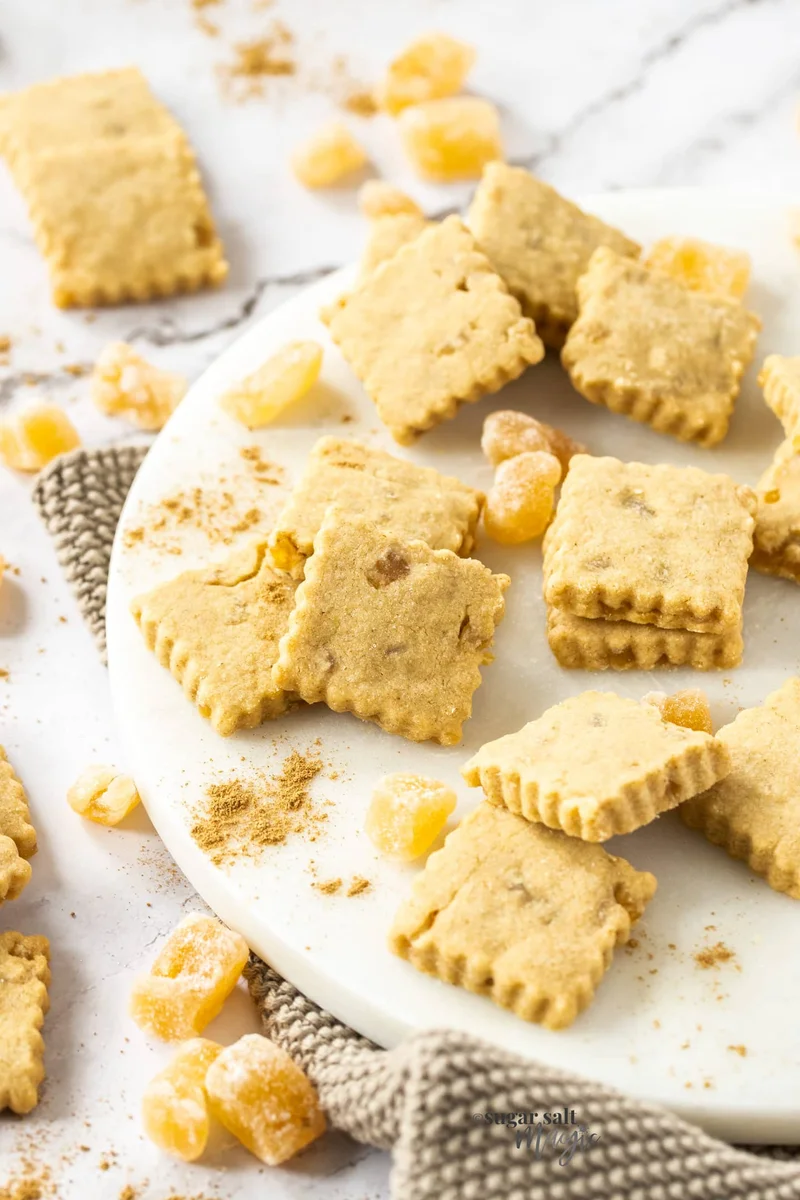
These Scottish-style ginger shortbread biscuits are buttery and crumbly, with warm ground ginger and sweet, chewy pieces of crystallised ginger. They are simple to make and make a welcome homemade holiday gift.
Ingredients
- 115 gunsalted butter, softened
- 50 gcaster sugar
- 130 gplain flour
- 2 tablespoons (20 g)cornflour (cornstarch)
- 3 teaspoonsground ginger
- 60 g (⅓ cup)crystallised ginger, finely chopped
Instructions
- 1
Prepare the trays
Heat the oven to 180°C (160°C fan) and line two baking trays with baking paper.
- 2
Cream butter and sugar
In a medium bowl, or a stand mixer fitted with a paddle attachment, beat the butter and sugar until pale and creamy.
- 3
Mix dry ingredients
Add the plain flour, cornflour and ground ginger. Beat until the mixture resembles wet sand.
- 4
Add the ginger
Beat in the crystallised ginger, then bring the dough together with your hands.
- 5
Roll and cut
Roll the dough between two sheets of baking paper to about 8 mm thick, then use a 5 cm cutter to cut out the biscuits. If the dough is too sticky, chill it briefly or lightly flour the dough and work surface.
- 6
Chill the biscuits
Arrange the biscuits about 5 cm apart on the prepared trays and chill for 10 minutes.
- 7
Bake until golden
Bake for around 14 minutes, or until the edges begin to turn golden.
- 8
Cool completely
Leave the biscuits on the trays for a few minutes, then transfer them to a wire rack to cool completely.
What is ginger shortbread?
Shortbread is a Scottish biscuit traditionally made with butter, sugar and flour. This version keeps that simple, crumbly base and adds both ground ginger and finely chopped crystallised ginger.
Ground ginger seasons the dough throughout, while the crystallised pieces bring little sweet, chewy pockets. The short ingredient list makes this a straightforward bake for sharing or gifting.
Nutrition and macros by portion
The nutrition label shows one serving as written: 96 calories, 1g protein, 11g carbs, 5g fat.
| Portion | Adjustment | kcal | Protein | Carbs | Fat |
|---|---|---|---|---|---|
| Lighter | Serve one biscuit | 67 kcal | 1g | 8g | 4g |
| This serving | As written | 96 kcal | 1g | 11g | 5g |
| Hungry | Serve two biscuits | 144 kcal | 2g | 17g | 8g |
Most of the carbohydrate comes from the sugar and flour, while butter supplies most of the fat; the flour and butter contribute a little protein. Enjoy a biscuit alongside fruit or yoghurt, or serve it after a meal with a drink.
The ingredients that matter
Butter: Softened butter creams smoothly with the sugar, helping the biscuits bake into a tender, rich shortbread. It should be soft enough to beat but not melted.
Cornflour: Along with plain flour, cornflour helps give the biscuits their delicate, sandy crumb. Measure it carefully so the dough still holds together.
Ginger: Ground ginger provides an even, warm flavour, while crystallised ginger adds sweetness and texture. Chop it finely so it distributes through the dough.
Getting the dough together
Creaming: Beat the butter and sugar until pale and creamy before adding the dry ingredients. This gives the dough a smooth starting point.
Texture: Once the flour mixture is added, it should look like wet sand rather than a smooth batter. Bring it together by hand after mixing in the crystallised ginger.
Rolling and cutting
Thickness: Roll the dough to about 8 mm between baking paper for even biscuits. The paper also helps avoid adding too much extra flour.
Stickiness: If the dough is difficult to handle, chill it briefly or dust the surface and dough lightly with flour. Very soft butter or differences between flour brands can affect how sticky it feels.
Chilling and baking cues
Chill: Space the cut biscuits about 5 cm apart and chill them for 10 minutes before baking. This firms the dough and helps the biscuits keep their shape.
Doneness: Bake at 180°C (160°C fan) for around 14 minutes. Look for edges just beginning to turn golden; the centres may still feel soft while hot.
Serving and gifting
With a drink: Serve the biscuits with tea or coffee, or add them to a festive biscuit plate. Their ginger flavour also pairs well with a mild cup of black tea.
For gifts: Let them cool completely before packing so trapped warmth does not soften them. Use a snug tin or box to help protect the crumbly biscuits.
Recipe notes & tips
- Soften the butter enough to beat easily, but do not melt it.
- Chop the crystallised ginger finely so each biscuit gets a more even mix.
- Roll between baking paper to keep the dough from sticking without adding much extra flour.
- Chill the cut biscuits for the full 10 minutes before baking.
- Start checking at around 14 minutes and take them out when the edges begin to colour.
- Let the biscuits cool fully on a rack before storing or wrapping them as gifts.
Variations
- More ginger: Add a little extra ground ginger for a stronger, warmer flavour.
- Citrus note: Mix finely grated orange zest into the creamed butter and sugar.
- Dipped edges: Once cool, dip one edge in melted dark chocolate and leave it to set.
- Different cutter: Cut the rolled dough into simple shapes with a cutter of your choice.
- Smaller biscuits: Use a smaller cutter and check them early, as they may bake more quickly.
Common mistakes to avoid
- Butter too soft: If it is oily or melted, chill it until soft but able to hold its shape before creaming.
- Sticky dough: Chill it briefly or use a light dusting of flour rather than adding a lot more flour.
- Uneven thickness: Keep the dough close to 8 mm throughout so the biscuits bake at the same rate.
- Crowded trays: Leave about 5 cm between biscuits so they have room on the trays.
- Overbaking: Remove the biscuits when the edges just start to turn golden; they will firm as they cool.
- Moving them too soon: Give the hot biscuits a few minutes on the tray before transferring them, as they are fragile while warm.
How to store
Once completely cool, keep the biscuits in an airtight tin at room temperature for up to 5 days. They are best eaten as biscuits rather than reheated; warming can make them softer and more crumbly.
Frequently asked questions
Can I make the dough ahead?
Yes. Wrap the dough and refrigerate it, then let it soften enough to roll. If it becomes sticky, chill it again briefly before cutting.
Why is my dough too sticky to roll?
The butter may be very soft, or the flour may absorb moisture differently. Chill the dough or lightly flour the work surface and dough.
Can I use a different cutter?
Yes. Use a cutter of your choice, keeping the biscuits a similar thickness so they bake evenly. Smaller shapes may need less time in the oven.
How do I know when the biscuits are done?
Bake for around 14 minutes, looking for edges that are just beginning to turn golden. They may feel soft in the centre until they cool.
Can I freeze ginger shortbread?
You can freeze the baked biscuits in a well-sealed container, with baking paper between layers. Thaw them at room temperature before serving.
Cook it from the original
This recipe comes from sugarsaltmagic.com. Their page has the author’s own photos, notes and tips — the best place to cook it from.
Open the recipe on sugarsaltmagic.com