
Cherry Vareniki Dumplings Recipe With Frozen Cherry Pierogies | Sip Bite Go
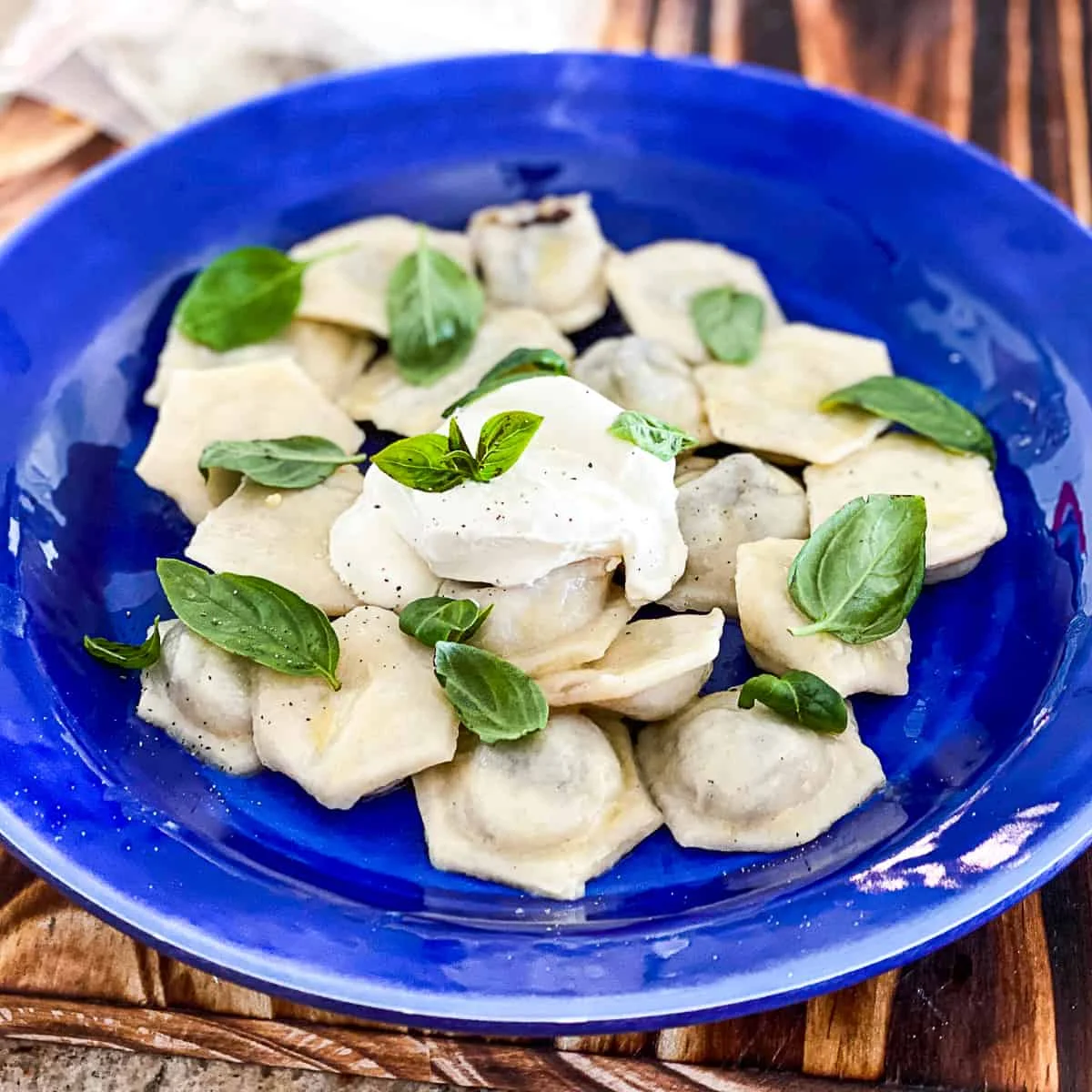
Cherry vareniki are filled dumplings served here with melted butter, a little vinegar and a cool sour-cream topping. Using frozen dumplings makes this a quick way to put a sweet-savoury Eastern European-inspired dish on the table.
Ingredients
- 397 g (14 oz)frozen cherry vareniki dumplings
- to tastesalt
- 28 g (2 tbsp)unsalted butter
- 10 ml (2 tsp)Champagne vinegar (or white wine vinegar)
- 30 ml (2 tbsp)sour cream
- to tastefresh basil
- to tastefreshly cracked pepper
Instructions
- 1
Boil the water
Bring a large pot of water to the boil with a pinch of salt. Add the frozen cherry vareniki and boil for about 5 minutes, until cooked through.
- 2
Dress the dumplings
Drain the vareniki, then put them in a large bowl. Add the butter, Champagne vinegar and a pinch of salt, and gently mix until the butter has melted.
- 3
Add the toppings
Transfer the dumplings to a serving dish. Top with sour cream, fresh basil and a pinch of freshly cracked pepper, then serve immediately.
What are cherry vareniki?
Vareniki are filled dumplings associated with Ukrainian cooking and also enjoyed in neighbouring Eastern European food traditions. Their fillings can be savoury or sweet; here, tart cherries sit inside tender dough.
This version keeps preparation simple by starting with frozen dumplings. Butter gives them a glossy coating, while vinegar and sour cream add a tangy contrast to the fruit.
Nutrition and macros by portion
The nutrition label shows one serving as written: 249 calories, 1g protein, 1g carbs, 27g fat.
| Portion | Adjustment | kcal | Protein | Carbs | Fat |
|---|---|---|---|---|---|
| Lighter | Use less butter | 174 kcal | 1g | 1g | 19g |
| This serving | As written | 249 kcal | 1g | 1g | 27g |
| Hungry | Serve a larger portion | 374 kcal | 2g | 2g | 41g |
The cherry dumpling dough supplies most of the carbohydrates, while butter and sour cream contribute much of the fat. The dumplings provide little protein in the supplied nutrition information, so balance the plate with a protein-rich side such as beans or a suitable savoury accompaniment.
Why frozen dumplings work
Frozen vareniki go straight into boiling water, so there is no need to thaw them first. Use a large pot and enough water for the dumplings to move freely as they cook.
Follow the package guidance if it differs, and check that the dumplings are cooked through after about 5 minutes.
A gentle finish with butter
Drain the dumplings before dressing them so excess water does not dilute the butter and vinegar. Handle them gently when mixing to help keep the dough intact.
The residual heat melts the butter in the bowl. Toss carefully until each dumpling is lightly coated.
Balancing sweet and tangy
Vinegar brings a sharp note that offsets the cherry filling and buttery coating. Champagne vinegar is specified, with white wine vinegar as a substitute.
Sour cream adds a cool, creamy finish, while fresh basil and cracked pepper provide aromatic and savoury accents. Add the toppings just before serving.
Serving the dumplings
Serve the vareniki as soon as they are dressed, while the butter is melted and the dumplings are warm. A simple green salad or lightly dressed vegetables can make a fresh side.
For a more substantial meal, serve them alongside a savoury soup or other Eastern European-inspired dishes.
Timing and doneness
The stated boiling time is about 5 minutes, after the water comes to the boil. Keep an eye on the dumplings and check that they are heated through rather than relying on timing alone.
Have the butter, vinegar and toppings ready before draining, so the warm dumplings can be dressed and served without delay.
Recipe notes & tips
- Use a large pot so the frozen dumplings have room to cook evenly.
- Add the dumplings only once the water is boiling.
- Drain them well before adding the butter and vinegar.
- Mix gently to avoid splitting the filled dumplings.
- Prepare the toppings ahead so you can serve the dish straight away.
Variations
- Use white wine vinegar: Swap it for the Champagne vinegar if that is what you have.
- Try another herb: Use a small amount of fresh mint in place of basil.
- Add extra tang: Serve with a little more sour cream at the table.
- Bring more savoury flavour: Finish with a little extra freshly cracked pepper.
- Keep the topping simple: Omit the basil if you prefer the cherry filling to stand out.
Common mistakes to avoid
- Thawing the dumplings first: Add them frozen as directed so they go straight into the boiling water.
- Crowding a small pot: Use a large pot and plenty of water so the dumplings can move freely.
- Overcooking: Check the dumplings at about 5 minutes and stop once they are cooked through.
- Leaving excess water on them: Drain thoroughly so the dressing stays buttery rather than watery.
- Mixing too vigorously: Fold the butter and vinegar through gently to keep the dumplings intact.
How to store
Refrigerate leftovers in a covered container and eat within 2 days. Reheat gently in a pan or microwave until hot; the dumplings may soften, so stir carefully.
Frequently asked questions
Can I cook the vareniki from frozen?
Yes. The method adds them directly to boiling salted water and cooks them for about 5 minutes, until cooked through.
Can I use fresh cherry vareniki?
Yes, but fresh dumplings may cook faster than frozen ones. Check them as they cook and use the package instructions if available.
What can I use instead of Champagne vinegar?
White wine vinegar is the stated substitute. Add it in the same amount.
How can I tell when the dumplings are done?
The recipe calls for about 5 minutes of boiling and says to cook them through. Check one carefully, as the exact time can vary between brands and sizes.
Can I make the dish ahead?
It is best dressed and served immediately, while the dumplings are warm and the butter is melted. You can measure out the toppings in advance.
What can I serve with cherry vareniki?
A simple green salad or lightly dressed vegetables make a fresh accompaniment. For a heartier meal, add a savoury soup or a protein-rich side.
Cook it from the original
This recipe comes from sipbitego.com. Their page has the author’s own photos, notes and tips — the best place to cook it from.
Open the recipe on sipbitego.com