
New York Strip Steak
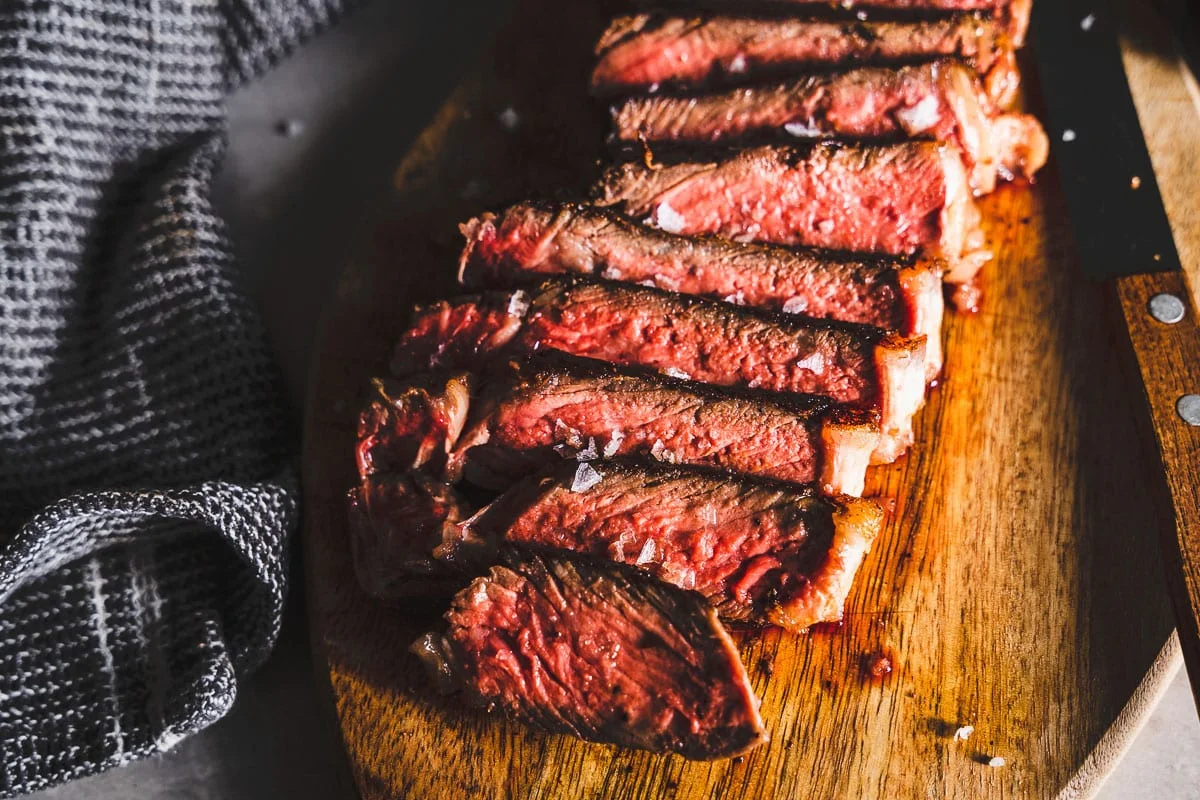
New York strip steak is a richly flavoured cut cooked in a skillet using a simple fast-flip technique. Starting in a cold pan and turning the steak every two minutes helps you control the sear and reach your preferred doneness.
Ingredients
- 1 or 2 steaks, 3.8 cm thick (12 to 16 oz / 340 to 454 g each)New York strip steaks
- to tasteDiamond Crystal kosher salt
- to tasteblack pepper
- to tastefinishing salt, such as Maldon sea salt flakes
Instructions
- 1
Salt the steak
Trim some of the fat from the steak’s edge so it can make more even contact with the pan. Season generously with kosher salt at least 45 minutes before cooking, or preferably 24 hours ahead. Place it uncovered on a cooling rack in the refrigerator until you are ready to cook.
- 2
Dry and pepper
Take the steak out of the refrigerator and pat it dry with a paper towel. Season it with black pepper.
- 3
Start the sear
Put the cold steak in a cold skillet and turn the heat to high. Set a timer for 2 minutes. Flip the steak when the timer goes off and lower the heat to medium-low.
- 4
Flip until ready
Keep flipping the steak every 2 minutes until its internal temperature reaches 54–57°C (130–134°F) for medium-rare; this should take about 10 to 14 minutes in total. Begin checking after about 8 minutes, inserting an instant-read thermometer through the side rather than the top to gauge how much longer it needs.
- 5
Sear the edges
Briefly sear the sides of the steak near the end of cooking.
- 6
Rest and serve
Take the steak out of the skillet and rest it uncovered on a cutting board for 5 minutes. Slice against the grain and add a little finishing salt, or serve it whole.
What is New York strip steak?
A New York strip is a tender, beefy steak cut from the short loin and often served as a straightforward American steakhouse-style main. This skillet method keeps the focus on the meat, with salt and pepper for seasoning and finishing salt for a final savoury crunch.
The repeated flips are the defining technique here. Starting with both the steak and skillet cold gives you a controlled way to build a sear while checking the centre as it cooks.
Nutrition and macros by portion
The nutrition label shows one serving as written: 381 calories, 35g protein, 0g carbs, 26g fat.
| Portion | Adjustment | kcal | Protein | Carbs | Fat |
|---|---|---|---|---|---|
| Lighter | Serve with vegetables | 267 kcal | 25g | 0g | 18g |
| This serving | As written | 381 kcal | 35g | 0g | 26g |
| Hungry | Choose the larger steak | 572 kcal | 53g | 0g | 39g |
The steak supplies most of the protein and fat, while the recipe contains no meaningful source of carbohydrate. Pair a portion with vegetables and a potato or another grain if you want a more balanced plate.
Choose a thick steak
Thickness: Choose a steak at least 3.8 cm thick, as specified in the recipe. A thicker cut gives you more time to brown the outside while monitoring the centre for medium-rare.
Fat edge: Trimming some of the side fat helps the steak sit more evenly against the skillet. Keep the trim modest so the steak retains its flavour.
Season ahead
Salt: Season generously at least 45 minutes before cooking, or ideally 24 hours ahead. Leaving the steak uncovered on a rack in the refrigerator gives the surface time to dry.
Pepper: Add black pepper after patting the steak dry, just before it goes into the pan. This keeps the seasoning steps easy to manage.
Use the fast-flip method
Cold start: Put the steak in a cold skillet before turning the heat to high. Set a timer for 2 minutes so the first turn is not left to guesswork.
Regular turns: After the first flip, lower the heat to medium-low and turn the steak every 2 minutes. Use an instant-read thermometer through the side to check the centre without repeatedly piercing the top.
Check doneness carefully
Temperature: For the recipe’s medium-rare target, look for 54–57°C (130–134°F) internally. Start checking at around 8 minutes; the stated total cooking time is about 10 to 14 minutes, but the thermometer is the most useful guide.
Edges: Briefly turn the steak onto its sides near the end to sear the edges. Keep this step short, then take the steak out once it reaches the target temperature.
Rest, slice and serve
Rest: Leave the steak uncovered on a cutting board for 5 minutes before slicing. This pause also gives you time to finish the rest of the plate.
Slice: Cut against the grain for shorter, easier-to-chew pieces, or leave the steak whole. A little finishing salt adds a crisp, salty accent at the table.
Recipe notes & tips
- Use a skillet large enough for the steak to sit flat.
- Keep the steak uncovered on a rack in the refrigerator during the advance salting step.
- Pat the steak dry before peppering it.
- Set a timer for each 2-minute turn to keep the flipping rhythm consistent.
- Check the temperature through the side of the steak, not through the top.
- Rest the steak for the full 5 minutes before slicing.
Variations
- Garlic finish: Add a little garlic to the plate alongside the sliced steak.
- Herb finish: Scatter chopped fresh herbs over the steak just before serving.
- Pepper-forward: Add extra black pepper to suit your taste.
- Flaky salt: Use Maldon sea salt flakes as the finishing salt for a crisp final seasoning.
- Whole steak: Serve the rested steak whole instead of slicing it.
Common mistakes to avoid
- Hot-pan start: Begin with a cold skillet and cold steak, as directed, rather than heating the pan first.
- Skipping the dry: Pat the steak dry before it goes into the pan so its surface is not wet.
- Guessing doneness: Use an instant-read thermometer through the side instead of relying only on the cooking time.
- Infrequent flipping: Turn the steak every 2 minutes after the first flip to follow the recipe’s method.
- Cutting straight away: Let the steak rest uncovered for 5 minutes before slicing.
- Slicing with the grain: Cut across the visible muscle fibres for more tender slices.
How to store
Refrigerate leftover steak in a sealed container and use within 3 to 4 days. Reheat gently in a covered skillet over low heat until warmed through, or enjoy it cold in thin slices.
Frequently asked questions
Can I salt the steak the day before?
Yes. Season it with kosher salt up to 24 hours ahead and leave it uncovered on a cooling rack in the refrigerator.
Why does the recipe start with a cold skillet?
The method is designed around putting the cold steak in a cold skillet, then bringing the heat up. Follow the 2-minute flipping pattern and use the thermometer to judge doneness.
How long does the steak take to cook?
The recipe gives about 10 to 14 minutes in total. Begin checking the internal temperature after around 8 minutes, since the steak’s thickness and your pan can affect timing.
What temperature is medium-rare?
This recipe specifies 54–57°C (130–134°F). Check through the side of the steak with an instant-read thermometer.
Do I have to slice the steak?
No. After its 5-minute rest, you can serve it whole or slice it against the grain.
Can I cook more than one steak at once?
The recipe uses 1 or 2 steaks. Make sure each steak has room to sit flat in the skillet; if they do not fit comfortably, cook them separately.
Cook it from the original
This recipe comes from saltpepperskillet.com. Their page has the author’s own photos, notes and tips — the best place to cook it from.
Open the recipe on saltpepperskillet.com