
Christophe Michalak’s wonderful tarte Tatin
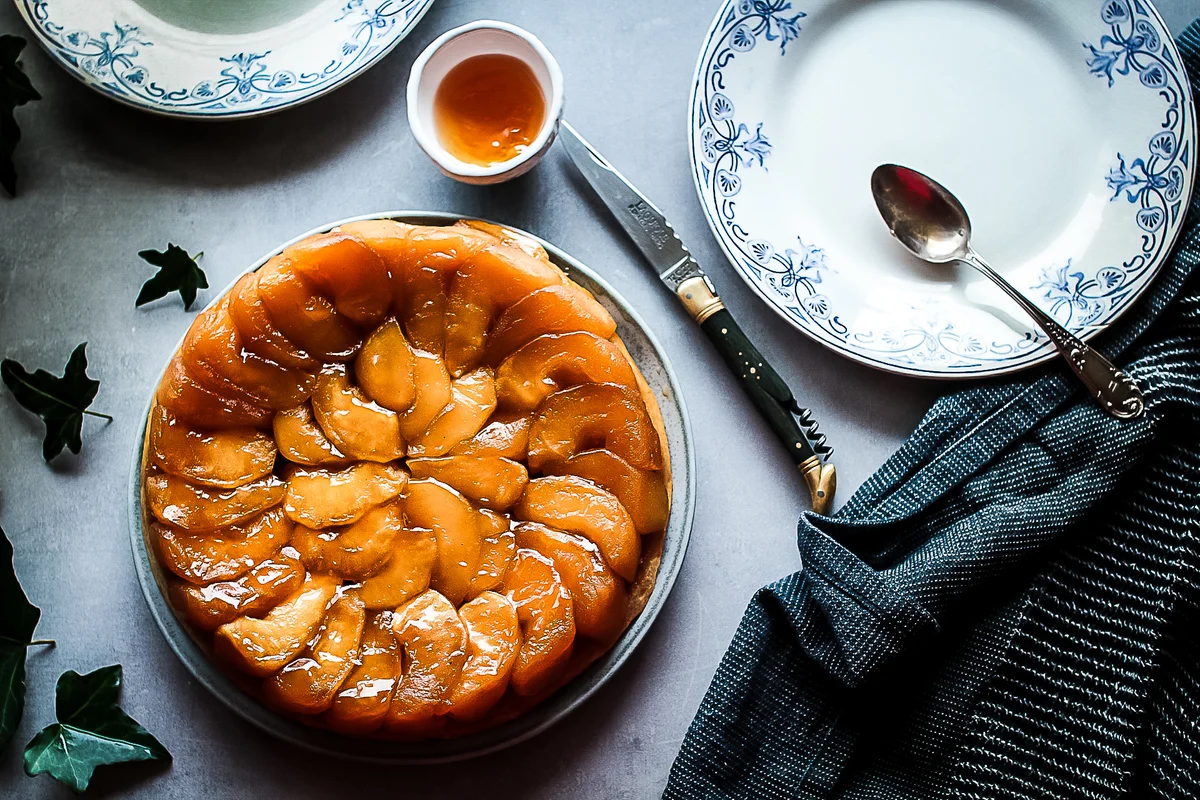
This French tarte Tatin layers apples poached in vanilla syrup over caramel, then bakes them beneath pastry before being turned out. It is a striking centrepiece, with tender fruit, crisp pastry and a glossy caramel finish.
Ingredients
- 1.2 kg (8–9 medium)apples
- 100 gsugar, for the caramel
- 250 gpuff pastry, or shortcrust pastry
- 1vanilla pod (or 2 teaspoons vanilla powder)
- 250 gsugar
- 250 gbutter
- 250 mlwater
- to tasteapple jelly
Instructions
- 1
Prepare the tin
Use a tin 22 cm in diameter.
- 2
Prepare the apples
Peel the apples and cut each into quarters. Remove the pips and the firm central parts.
- 3
Make the syrup
Bring the vanilla, 250 g sugar, butter and water to the boil to make the poaching syrup.
- 4
Poach the apples
Boil the apple quarters in the syrup for 10 minutes. With these reduced quantities, poach them in two or three batches if needed.
- 5
Chill the fruit
Drain the apples and leave them on a plate in the fridge for several hours, until cold and firm enough to handle without breaking.
- 6
Make the caramel
Melt the 100 g sugar in a dry pan over a low heat, swirling the pan as it begins to melt rather than stirring with a spoon. As soon as it is amber, spread it over the base of the tin; avoid cooking it further, as it can taste bitter.
- 7
Assemble and bake
Arrange the apples tightly over the caramel. Lay a pastry circle slightly larger than the tin on top, fold the edges down and press the pastry against the sides. Prick the pastry and bake for 35 minutes at 180 °C.
- 8
Turn out the tart
Once the pastry is cooked, let the tart cool completely, then turn it out onto a serving plate.
What is tarte Tatin?
Tarte Tatin is a French upside-down tart in which fruit cooks beneath pastry and the finished tart is inverted for serving. Apples and caramel are its familiar pairing, giving the fruit a rich, deep sweetness.
This version uses Christophe Michalak’s method of poaching the apples in vanilla syrup before baking them with the pastry. Chilling the fruit first makes it easier to arrange neatly in the tin.
Nutrition and macros by portion
The nutrition label shows one serving as written: 790 calories, 4g protein, 107g carbs, 44g fat.
| Portion | Adjustment | kcal | Protein | Carbs | Fat |
|---|---|---|---|---|---|
| Lighter | Smaller slice, less pastry | 553 kcal | 3g | 75g | 31g |
| This serving | As written | 790 kcal | 4g | 107g | 44g |
| Hungry | Larger slice | 1185 kcal | 6g | 161g | 66g |
The apples and added sugar provide most of the carbohydrates, while butter and puff pastry contribute much of the fat; the pastry also supplies a little protein. Serve a slice with plain yoghurt and fresh fruit, or alongside a lighter meal, to balance the rich tart.
Choosing the apples
Firm apples: choose fruit that can hold its shape through poaching and baking. Cut the quarters evenly so they soften at a similar rate.
Close arrangement: pack the apples tightly over the caramel, as they will shrink as they cook. This also helps the tart hold together when turned out.
Poaching and chilling
Vanilla syrup: the apples simmer with vanilla, sugar, butter and water before they go into the tin. The recipe calls for 10 minutes of boiling, so keep an eye on the quarters and handle them gently when draining.
Cold fruit: allow several hours in the fridge for the apples to cool and firm up. This is important for arranging them without breaking; the chilling time means the method takes longer than the stated 95 minutes of total time.
Getting the caramel right
Dry sugar: melt the 100 g sugar in a dry pan over low heat, swirling rather than stirring. Watch for an even amber colour, then quickly spread it across the tin base.
Stop early: caramel continues to darken with heat, so take care not to let it become too dark. Overcooked caramel can taste bitter.
Pastry and baking cues
Pastry choice: puff pastry gives a light, layered top, while shortcrust is the alternative suggested in the recipe. Use a circle just larger than the tin so the edges can be tucked down around the fruit.
Ready to turn: bake at 180 °C for 35 minutes, until the pastry is cooked. Let the tart cool completely before inverting it, as the apples are easier to keep in place when set.
Serving the tart
Serve the tart at room temperature or gently warmed, once it has been turned out. Apple jelly can be used as a finishing touch.
A spoonful of crème fraîche or plain yoghurt makes a cool contrast to the sweet, buttery apples. Keep accompaniments simple so the caramel and vanilla remain the focus.
Recipe notes & tips
- Use a 22 cm tin so the apple and pastry quantities fit as intended.
- Poach the apples in batches if they cannot sit in a single layer in the syrup.
- Chill the drained apples for several hours before arranging them.
- Swirl the caramel pan gently instead of stirring the melting sugar.
- Take the caramel off the heat as soon as it turns amber.
- Cool the baked tart completely before turning it out.
Variations
- Use shortcrust pastry: swap it for the puff pastry if you prefer a firmer, less flaky top.
- Use vanilla powder: use the 2 teaspoons noted in the ingredient description instead of a vanilla pod.
- Add apple jelly: brush a little over the turned-out tart for a glossy finish.
- Serve with crème fraîche: add a spoonful alongside each slice for a tangy contrast.
Common mistakes to avoid
- Dark caramel: stop cooking when it is just amber, since darker caramel can taste bitter.
- Broken apples: chill the drained quarters for several hours before handling and arranging them.
- Loose arrangement: pack the apple quarters tightly so the tart is supported when inverted.
- Pastry not cooked through: check that it is cooked after the full 35 minutes at 180 °C.
- Turning out too soon: let the tart cool completely before inverting it onto a plate.
How to store
Keep the tart covered in the fridge for up to 3 days. Bring it towards room temperature before serving, or warm slices gently in a low oven; avoid overheating, which can soften the pastry.
Frequently asked questions
Can I use shortcrust pastry instead of puff pastry?
Yes. The recipe explicitly offers shortcrust pastry as an alternative.
Why do the apples need to chill for several hours?
Cold apples are firmer and easier to arrange without breaking. This chilling period is part of the method even though it extends beyond the stated 95-minute total time.
Can I poach all the apples at once?
Only if they fit comfortably in the syrup. With these quantities, the method suggests poaching them in two or three batches if needed.
How do I know when the caramel is ready?
It should be just amber. Swirl the pan as the sugar melts and take it off the heat before it darkens too much.
When should I turn out the tart?
Wait until it has cooled completely, then invert it onto a serving plate.
How should I serve tarte Tatin?
Serve it at room temperature or gently warmed. Crème fraîche or plain yoghurt works well alongside its sweet, buttery flavour.
Cook it from the original
This recipe comes from royalchill.com. Their page has the author’s own photos, notes and tips — the best place to cook it from.
Open the recipe on royalchill.com