
Classic Norwegian Lomper - Potato Flatbread
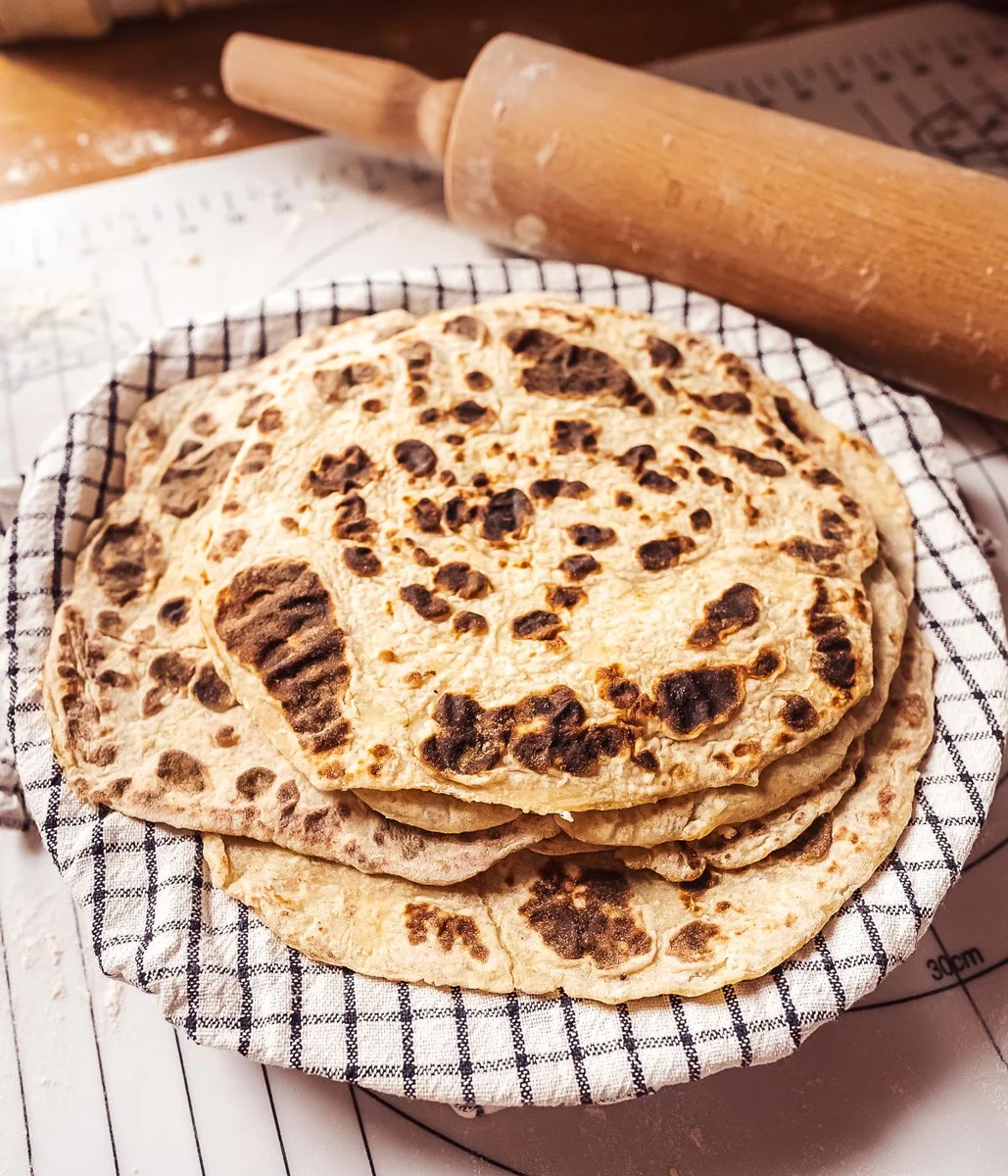
Lomper are soft Norwegian potato flatbreads, made with mashed potato and just enough flour to roll the dough. They cook quickly in a dry pan and can be served warm with sweet or savoury toppings.
Ingredients
- 1.02 kg (2¼ lb)potatoes
- 1 tsp (5 ml)salt
- 60 g (½ cup)plain flour
- 40 g (⅓ cup)rye flour
Instructions
- 1
Boil and mash
Boil the potatoes, then drain and peel them. Add the salt and mash until smooth.
- 2
Add the flour
Gradually mix in both flours, using as little as possible while keeping the dough workable enough to roll.
- 3
Shape the dough
Divide the dough into 10–12 equal pieces and roll each piece into a ball.
- 4
Roll the lomper
On a floured surface, use a rolling pin to roll each ball into a 20 cm (8 inch) circle, adding a little more flour if needed.
- 5
Cook in a pan
Cook the lomper in a dry pan over medium to medium-high heat for about 30–60 seconds per side. They are ready when still light in colour, with brown spots. Stack them as they cook and cover with a cloth.
What are lomper?
Lomper are Norwegian flatbreads traditionally made from cooked potatoes and flour. Their simple dough gives them a soft, pliable texture rather than the chew of a leavened bread.
This version combines plain and rye flour for structure and a gentle earthy flavour. Keeping the flour to the minimum needed helps the potato stay at the centre of each bite.
Nutrition and macros by portion
The nutrition label shows one serving as written: 372 calories, 10g protein, 81g carbs, 1g fat.
| Portion | Adjustment | kcal | Protein | Carbs | Fat |
|---|---|---|---|---|---|
| Lighter | Smaller lomper portion | 260 kcal | 7g | 56g | 1g |
| This serving | As written | 372 kcal | 10g | 81g | 1g |
| Hungry | Extra lomper | 558 kcal | 14g | 121g | 1g |
Most of the carbohydrates come from the potatoes and flours, while the flours also provide much of the protein; this recipe contains very little fat because the lomper cook in a dry pan. To balance a serving, pair it with vegetables and a protein-rich filling or side.
Choosing the flour
Plain flour: it helps bind the mashed potato into dough that can be shaped and rolled.
Rye flour: it adds a mild, distinctive flavour alongside the plain flour. Add both gradually, since the potato may need less flour than expected.
Getting a smooth dough
Mash the potatoes until smooth before adding the flour, so lumps do not make the dough difficult to roll evenly. Mix in the flour slowly and stop once the dough is workable.
The dough can feel soft, but if it cannot be rolled without sticking, dust the surface and rolling pin lightly with flour rather than adding a large amount to the whole batch.
Rolling evenly
Equal pieces: dividing the dough into 10–12 similar portions helps the lomper cook at roughly the same rate.
Thin circles: roll each piece to about 20 cm across, using only enough flour to prevent sticking. Try to keep the thickness even so the bread cooks through without drying out.
Cooking and doneness
Use a dry pan over medium to medium-high heat; no cooking fat is called for in this recipe. Cook each side for about 30–60 seconds.
Look for a light surface with scattered brown spots. Stack the cooked lomper and cover them with a cloth to help keep them soft while you finish the batch.
Serving ideas
Serve lomper warm, either plain or folded around a topping. Their mild potato flavour works with both savoury fillings and simple sweet accompaniments.
For a meal, pair them with a protein-rich filling and some vegetables. They can also take the place of bread alongside a soup or stew.
Recipe notes & tips
- Mash the potatoes thoroughly before adding the flour.
- Add the flour in stages so you can stop as soon as the dough is rollable.
- Dust the work surface lightly to avoid making the dough unnecessarily floury.
- Keep the portions similar in size for more even cooking.
- Cover the cooked lomper with a cloth as you stack them.
Variations
- Herb topping: serve warm lomper with chopped fresh herbs and a savoury filling.
- Smoked fish: fill a lompe with smoked fish and a spoonful of a creamy accompaniment.
- Cheese: add a little sliced cheese while the lompe is warm so it softens.
- Sweet serving: pair a warm lompe with a sweet spread for a simple snack.
- Rye-forward dough: shift the flour balance towards rye for a more pronounced rye flavour, keeping the total flour modest.
Common mistakes to avoid
- Adding all the flour at once: mix it in gradually so the dough does not become unnecessarily firm.
- Leaving lumps in the mash: mash until smooth before mixing in the flour for easier rolling.
- Using too much bench flour: dust lightly, as excess flour can make the finished lomper dry.
- Rolling unevenly: aim for an even 20 cm circle so the bread cooks consistently.
- Cooking for too long: take the lomper off when they are still light with brown spots, after about 30–60 seconds per side.
How to store
Let any leftovers cool, then store them in an airtight container in the fridge for up to 3 days. Reheat briefly in a dry pan until warm, or microwave until heated through.
Frequently asked questions
How many lomper does this recipe make?
The dough is divided into 10–12 pieces, so the recipe makes 10–12 lomper.
Can I make the dough ahead?
The method is written for shaping and cooking the dough straight away. For the best texture, make and cook the lomper in one session.
Why is my dough sticky?
Potatoes can vary in moisture. Add flour gradually and dust the surface lightly as needed, using only enough to make the dough rollable.
Do I need oil in the pan?
No. The recipe uses a dry pan; cook the lomper over medium to medium-high heat.
How can I tell when a lompe is cooked?
It should remain light in colour and have brown spots after about 30–60 seconds on each side.
Cook it from the original
This recipe comes from scandinaviancookbook.com. Their page has the author’s own photos, notes and tips — the best place to cook it from.
Open the recipe on scandinaviancookbook.com